
Wood and metal remain the two dominant bed frame materials on the Indian market, and the choice comes down to a handful of genuine, practical differences rather than style preference alone. Both have loyal buyers, and both have real trade-offs worth understanding before you commit to one for the next decade of your sleep.
The Case for Metal
Metal frames, typically made from powder-coated steel or iron, are lighter and generally cheaper upfront than a comparable solid wood piece. They assemble quickly, ship in flatter packaging, and hold up reasonably well under moderate use. Their biggest weakness shows up over years rather than months: welded joints tend to develop a metallic creak as the frame flexes under repeated weight and movement, and once that sound starts, it rarely goes away on its own. Metal also carries none of the visual or tactile warmth that wood brings to a bedroom, which matters more to some buyers than others.
The Case for Wood
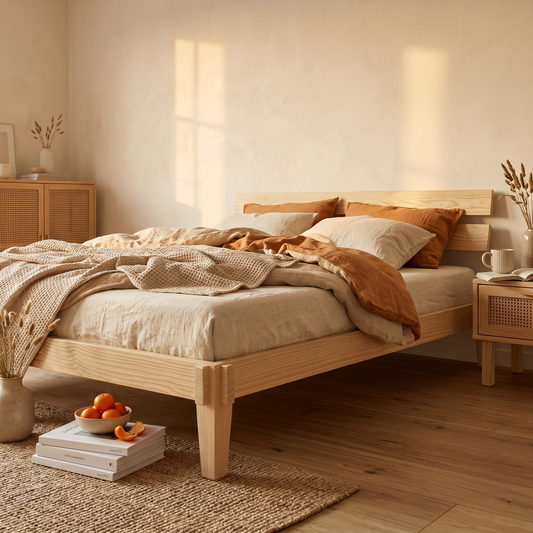
A solid wood frame, like The Poka Bed, brings genuine warmth to a bedroom in a way no metal frame can replicate, both visually and to the touch. Wood also resists the specific metallic creak that develops in welded joints over time, and because it's a repairable material, minor damage can be sanded and refinished rather than requiring full replacement. The trade-off is weight, a solid wood frame is heavier to move, and typically costs more upfront than an equivalent metal option.
What About Durability Under Weight?
Both materials can be built to handle substantial weight, but the way they fail differs. Metal frames tend to fail suddenly, a weld cracks or a joint gives way, while wood frames tend to fail gradually, showing wear before any structural issue develops. For many buyers, that gradual warning is a genuine safety advantage, not just an aesthetic one.
The Honest Verdict
Metal suits a fast, budget-driven purchase for short-term use, a guest room, a rental, a child's growing years. Wood suits a bedroom you're furnishing for the long term, where both feel and durability matter across years of daily use, and where the higher upfront cost is offset by rarely needing to buy again.