
A home does more than shelter daily life. It shapes it. The rooms we move through each day influence how we begin the morning, how we recover from stress, and how easily we settle into rest. This is why the feeling of a home matters so much. It is not only about appearance. It is about atmosphere.
A calm home does not need to be large, expensive, or perfectly styled. It simply needs to reduce friction and support ease. When a space feels visually quieter, more organized, and more grounded, it can change the way the day feels from the inside.
This effect is often subtle. You may not notice it all at once. But over time, a calmer home can support a calmer mind.
Why the home affects mood so strongly
The home is where routine repeats. It is where we wake up, eat, rest, work, think, and return after moving through the outside world. Because it holds so much of daily life, even small environmental cues begin to shape our emotional state.
A cluttered or visually noisy space can create low level stress without us naming it clearly. It can make tasks feel heavier and rest feel less complete. On the other hand, a home that feels ordered and intentional can create a sense of relief.
This does not mean the home must be perfect. It means the home should support rather than interrupt.
What makes a home feel calm
Calm usually comes from a combination of things rather than one dramatic design choice.
A home often feels calmer when it has:
- Less visual clutter
- Better storage for daily essentials
- Natural materials
- Soft and balanced tones
- Furniture that supports routine
- Open surfaces and breathing space
These elements work together to reduce overstimulation. They make the home easier to read and easier to move through.
Calm is often created through usefulness
One of the most overlooked parts of a calm home is function. A room feels more peaceful when it works well. If keys have a place, if surfaces are not overloaded, if furniture supports daily use, the home becomes easier to live in.
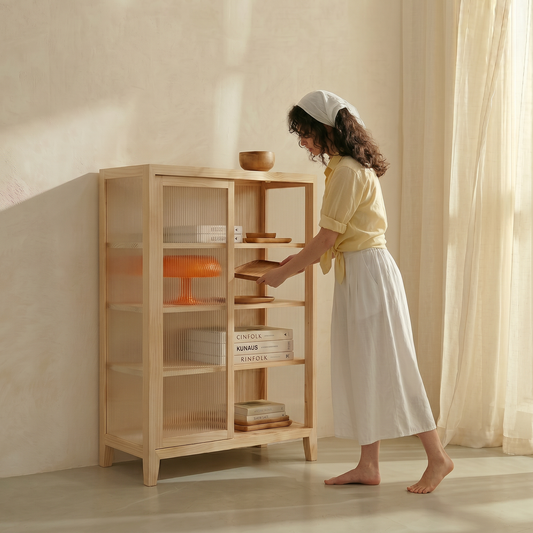
This is why functional decor matters so much. Useful objects can also bring warmth and beauty. A bench near the entrance, a console table that holds essentials, a storage cabinet that reduces clutter, or a tissue holder that replaces visual packaging all contribute quietly to calm.
If you want to explore furniture shaped by this kind of thinking, the furniture collection offers pieces that support both atmosphere and everyday use.
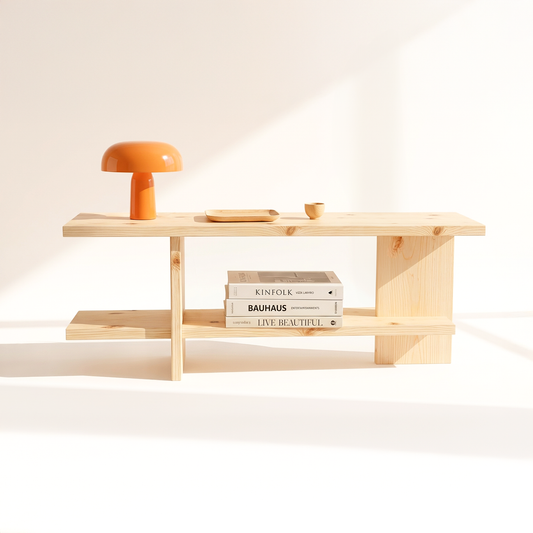
A piece like the Quiet Console Table can help create a more grounded feeling in an entryway or living room simply by offering structure, warmth, and a place for daily essentials.
Natural materials help the nervous system slow down
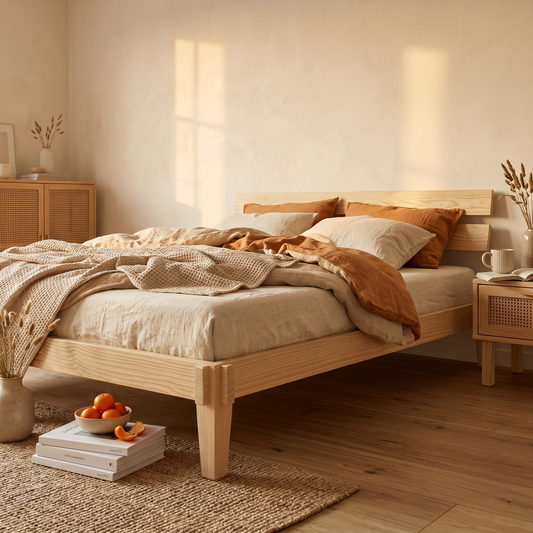
There is a reason natural materials often feel comforting. Wood, linen, cotton, stone, and woven textures bring softness and variation that synthetic environments sometimes lack. They help a room feel more human.
Wood in particular adds warmth without demanding attention. It can make a home feel settled and lived in rather than overly polished. In calm interiors, this kind of material presence matters because it supports quiet beauty instead of visual intensity.
A calm home is not an empty home
Many people confuse calm with emptiness. But a calm home is not one where everything has been removed. It is one where what remains feels intentional.
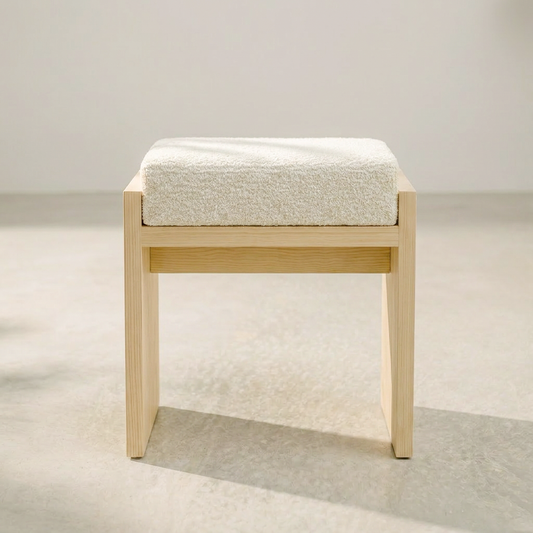
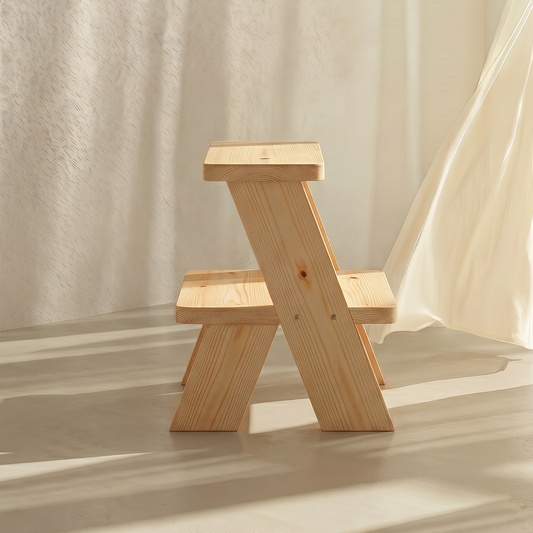
A book on the bedside table, a tray for keys, a soft throw on a bench, a wooden stool in the corner. These are not signs of clutter. They are signs of life. Calm comes not from absence, but from clarity.
Final thoughts
A calm home can improve the way you feel every day because it reduces friction, supports routine, and creates a softer emotional backdrop for daily life. It does not solve every problem, but it can make the experience of living feel lighter, steadier, and more nourishing.
That is why thoughtful design matters. Not because a home needs to impress, but because it has the power to care for the people inside it in quiet and lasting ways.
FAQ
How does a calm home affect mental well being?
A calm home can reduce visual stress, support routine, and create an environment that feels easier to rest and think in.
A calm home can reduce visual stress, support routine, and create an environment that feels easier to rest and think in.
Do I need a large home to create a calm atmosphere?
No. Even small homes can feel calm when they are organized well and shaped with intention.
No. Even small homes can feel calm when they are organized well and shaped with intention.
What helps make a home feel calmer?
Less clutter, useful storage, natural materials, soft tones, and furniture that supports daily life all help.
Less clutter, useful storage, natural materials, soft tones, and furniture that supports daily life all help.
Can furniture really affect how a home feels?
Yes. Furniture shapes movement, storage, and atmosphere, so the right pieces can make a home feel more grounded and peaceful.
Yes. Furniture shapes movement, storage, and atmosphere, so the right pieces can make a home feel more grounded and peaceful.