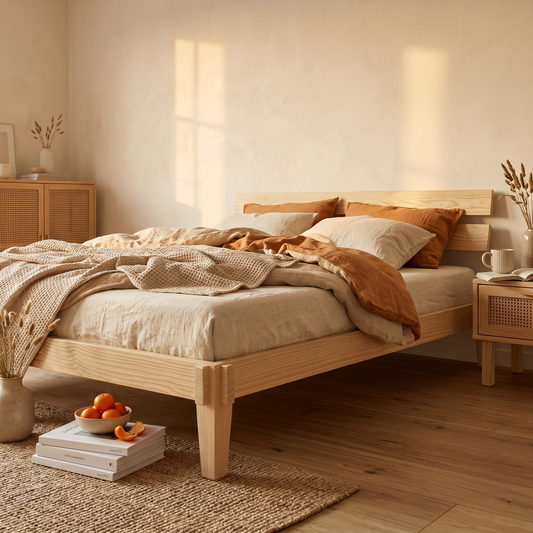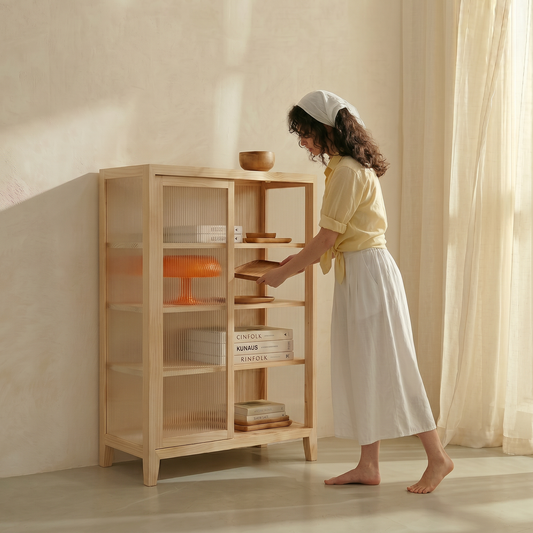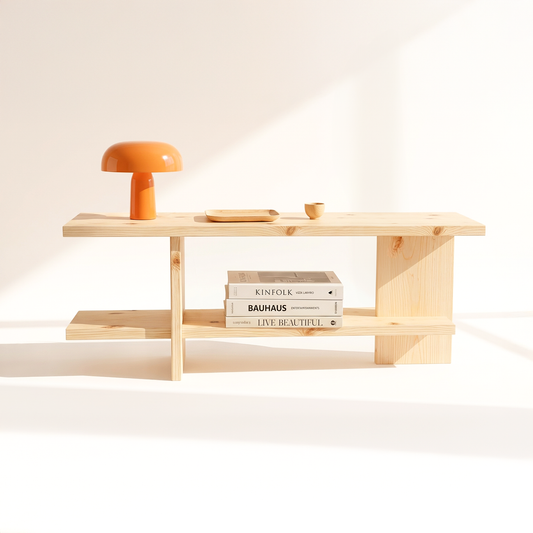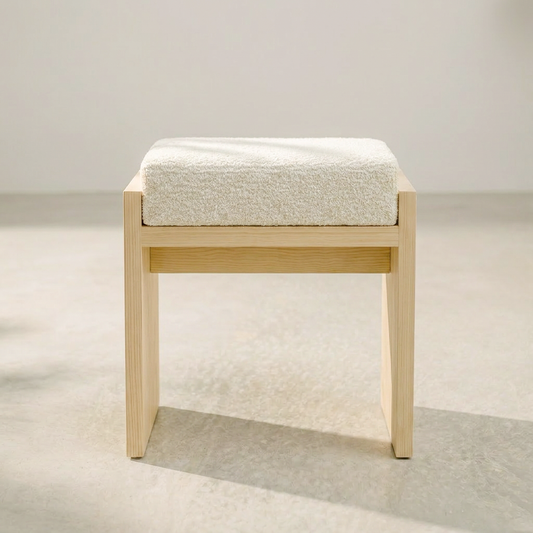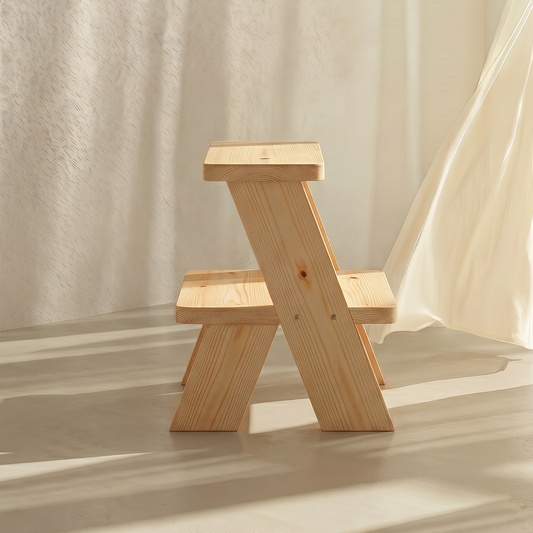

Look at the furniture in the world's most admired bedrooms — the ones that appear in design publications, in the homes of architects and in the spaces that people save to their inspiration boards — and you will notice something they almost all share. The furniture has no visible hardware. No bolt heads. No Allen key holes. No metal brackets. No visible screws. The surfaces are uninterrupted. The lines are clean. The material speaks for itself without the visual noise of mechanical fasteners.
This is not an accident. It is a design principle, and understanding it changes how you evaluate every piece of furniture you consider buying.
What Visible Hardware Does to a Room
Visible hardware is visual noise. Each bolt head, each screw, each bracket is a point of visual interruption that the eye registers and processes. In a bedroom designed for rest and visual calm, these interruptions accumulate into a low-level visual complexity that works against the calm the room is trying to achieve.
This effect is subtle. No single bolt head ruins a room. But a bed frame with twelve visible bolt heads, a wardrobe with eight visible hinges and a bedside table with four visible screws creates a room that has thirty-two points of visual interruption that would not exist if the furniture were made without visible hardware. The cumulative effect is a room that feels slightly more complex and slightly less calm than it should.
What No-Hardware Design Requires
Furniture without visible hardware is not furniture without joinery. It is furniture where the joinery is hidden inside the wood rather than expressed on the surface. This requires a higher level of craft than bolt-together construction. The joints must be precise enough to hold without mechanical fasteners. The wood must be seasoned and stable enough to maintain the joint geometry over time. The design must accommodate the joinery method rather than being designed for bolt-together assembly.
Screwless joinery — mortise-and-tenon, dowel, interlocking wood geometry — is the method that produces furniture without visible hardware. It is also the method that produces furniture that gets tighter with use rather than looser, that handles the seasonal movement of wood in Indian humidity without loosening and that lasts significantly longer than bolt-together alternatives.
The absence of visible hardware is therefore not just an aesthetic quality. It is a structural one. The furniture that looks cleanest is also the furniture that is most durably constructed.
The Design Language of Clean Lines
A bed frame without visible hardware reads differently in a room from one with visible hardware. The surface is uninterrupted. The line of the wood runs from one end of the frame to the other without a bolt head breaking it. The eye travels along the surface rather than stopping at each point of interruption. The result is a piece of furniture that reads as a single, resolved object rather than as an assembly of components.
This is the quality that makes Japandi furniture so visually compelling. The clean lines are not just an aesthetic preference. They are the visual expression of a construction method that hides the joinery inside the wood. The furniture looks simple because it is made with complexity. The simplicity is earned.
The Poka Bed: No Hardware, No Compromise
The Poka Bed by A Good Life uses screwless joinery throughout. The solid pinewood frame has no visible bolt heads, no Allen key holes and no metal brackets. The surface of the wood runs uninterrupted from one end of the frame to the other. The joints are inside the wood, held by the geometry of the material rather than by mechanical fasteners.
The result is a bed frame that reads as a single, resolved object in the room. The visual noise of hardware is absent. The lines are clean. The material speaks for itself. In a bedroom with the Akari Pinewood Mirror — a full length floor mirror in the same solid pinewood with the same matte finish — the room has a visual coherence that is immediately felt. No hardware. No interruption. Just the material, honestly expressed.
The Detail That Reveals the Quality
When you are evaluating a bed frame, look for the hardware. If you can see bolt heads, Allen key holes or metal brackets, the frame is bolt-together. If you cannot find them, the frame uses traditional joinery. This single observation tells you more about the quality and longevity of the frame than any other detail in the product listing. The best bedroom furniture has no visible hardware. Now you know why.