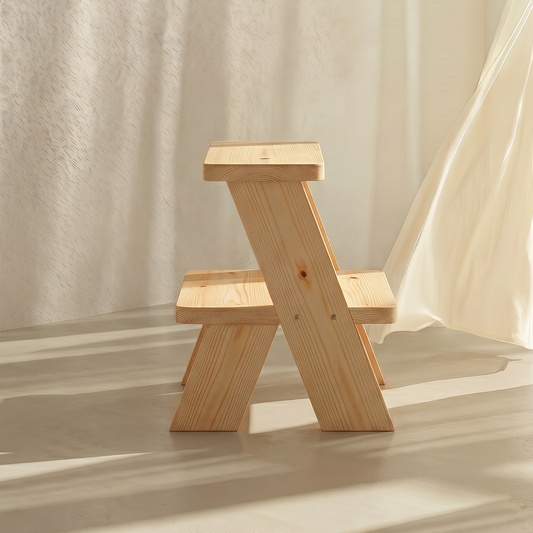

Japandi has become one of the most searched interior design terms in India. It appears on furniture brand websites, in home decor magazines and in the captions of Instagram posts showing bedrooms with light wood, linen textiles and a single plant. But most of what is described as Japandi is not Japandi. It is a visual approximation of Japandi — the surface aesthetic without the underlying philosophy. Here is what Japandi actually means and what it does not.
What Japandi Is
Japandi is the synthesis of two design philosophies: Japanese wabi-sabi and Scandinavian hygge. Wabi-sabi finds beauty in imperfection, impermanence and incompleteness. Hygge finds beauty in warmth, comfort and the quality of being at home. Together, they produce a design philosophy that values honest materials, considered simplicity and the kind of beauty that improves with age rather than degrading with use.
In a Japandi home, every object is chosen rather than accumulated. The materials are natural and honest — solid wood, linen, cotton, stone. The finishes are matte rather than glossy, breathable rather than sealed. The palette is drawn from nature — warm whites, sand, stone, the natural colour of wood. The visual complexity is low. The tactile quality is high.
What Japandi Is Not
Japandi is not minimalism. Minimalism removes objects until the room is empty. Japandi removes objects until only the right ones remain. The distinction is significant. A Japandi bedroom is not sparse. It is sufficient — it has everything it needs and nothing it does not.
Japandi is not a colour palette. Light wood and warm white are consistent with Japandi, but they do not produce Japandi on their own. A room with light wood laminate furniture, synthetic textiles and a warm white wall is not a Japandi room. It is a room with a Japandi colour palette and none of the Japandi philosophy.
Japandi is not a trend. The design philosophies it draws from — wabi-sabi and hygge — are centuries old. The synthesis of these philosophies into a contemporary design direction is recent, but the underlying values are not. A room designed around Japandi principles will not look dated in five years because it is not designed around trend. It is designed around values that do not change.
Japandi in an Indian Context
Japandi finds a natural home in India because the underlying values — honest materials, considered craft, warmth and simplicity — are deeply embedded in Indian design tradition. The carved wooden furniture of Rajasthan, the handwoven textiles of the Northeast, the terracotta and stone of the South — these are all expressions of the same values that Japandi draws from. Japandi in an Indian home is not a foreign aesthetic. It is a contemporary expression of values that were always present in Indian design.
The Indi-Japandi direction — the synthesis of Indian craft tradition and Japandi philosophy — is the most interesting design direction in Indian homes right now. It takes the warmth and craft of Indian material culture and applies the considered simplicity of Japandi to produce rooms that feel genuinely Indian and genuinely contemporary simultaneously.
The Poka Bed as Japandi
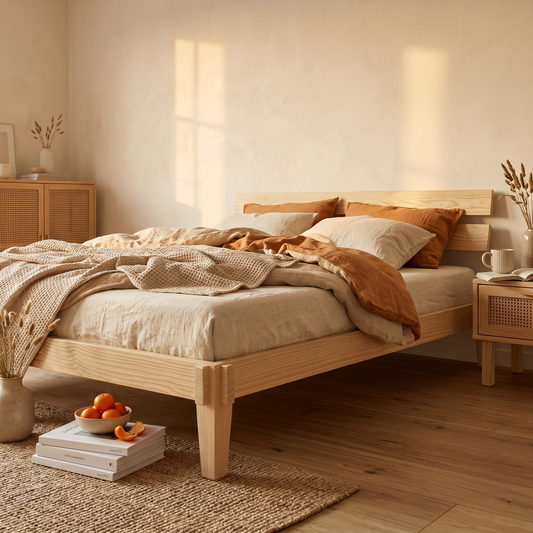
The Poka Bed by A Good Life is a Japandi bed in the genuine sense. Solid pinewood that shows its grain. Screwless joinery that hides the construction inside the wood. A matte oil finish that breathes and develops a patina. A low profile that grounds the room and makes the ceiling feel higher. These are not visual approximations of Japandi. They are the material expression of Japandi values.
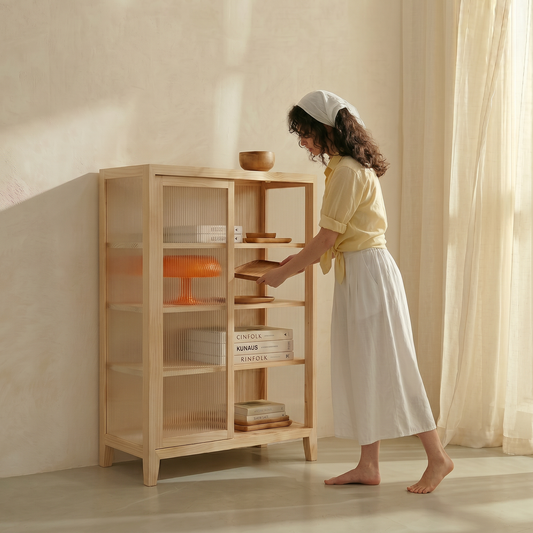
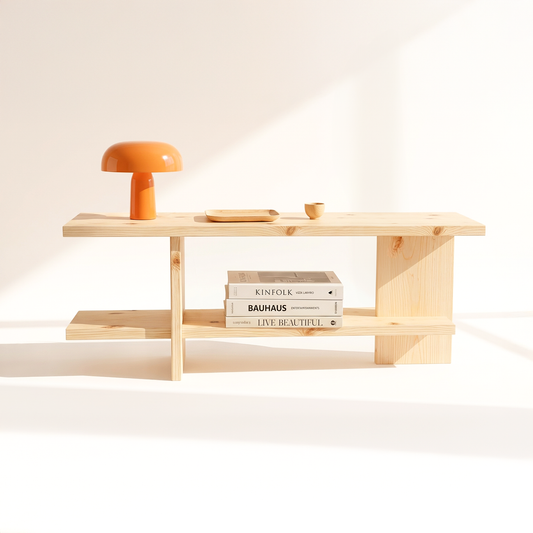
Alongside the Akari Pinewood Mirror, the Nagomi Console and the Kanso Fluted Cabinet, the Poka Bed is part of a home where Japandi is expressed in materials and construction rather than in colour palette and surface appearance. This is the distinction that matters. Japandi is not how a room looks. It is what a room is made of.