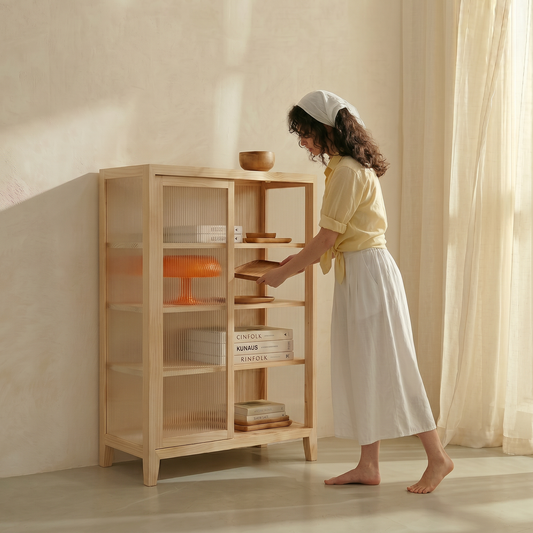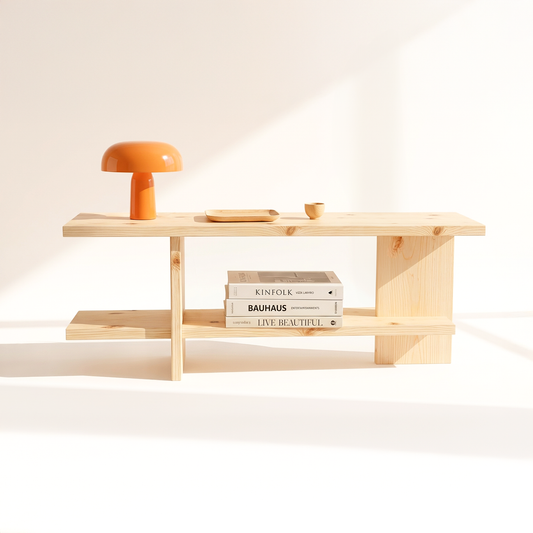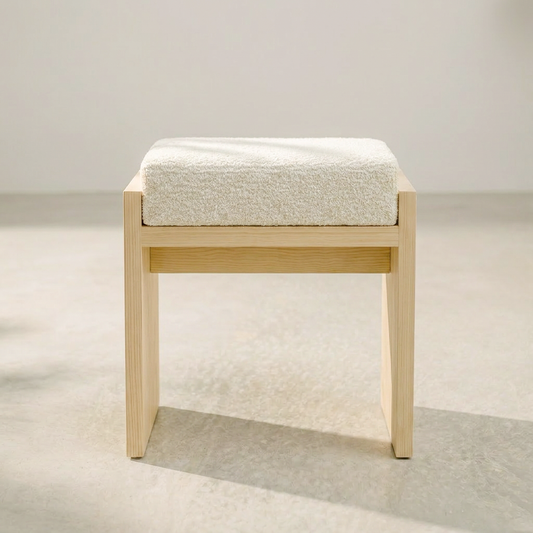
Living well at home is one of those phrases that has been so thoroughly colonised by marketing that it has almost lost its meaning. It has come to suggest a particular aesthetic — linen cushions, artisanal ceramics, a carefully curated bookshelf — rather than a genuine quality of daily experience. But living well at home is not an aesthetic. It is a feeling. And the feeling is produced not by the number of beautiful objects in a room but by the quality of the objects that matter most.
The Accumulation Trap
Most homes are furnished through accumulation rather than intention. A piece is bought because it is needed. Another because it is on sale. Another because it looked good in a photograph. Over time, the home fills with objects that each made sense individually but do not make sense together. The result is a home that is full but not resolved — one that has everything and feels like nothing in particular.
The accumulation trap is not a taste problem. It is a framework problem. Without a clear material language and a clear standard for what belongs, every purchase is made in isolation and the home never coheres. The solution is not to buy more carefully chosen objects. It is to buy fewer objects and choose them against a clear standard.
The Standard: Does It Last, Does It Belong, Does It Work?
A useful framework for home furnishing has three questions. Does it last — is it made from materials and with construction methods that will hold up over years of use in the conditions of your home? Does it belong — does it share the material language and aesthetic register of the other objects in the room? Does it work — does it serve a clear function that justifies its presence?
Most decorative objects fail the third question. Most cheap furniture fails the first. Most impulse purchases fail all three. The objects that pass all three questions are the ones worth buying. They are also, almost always, the ones that cost more upfront and significantly less over time.
The Bed: The Object That Passes Every Test
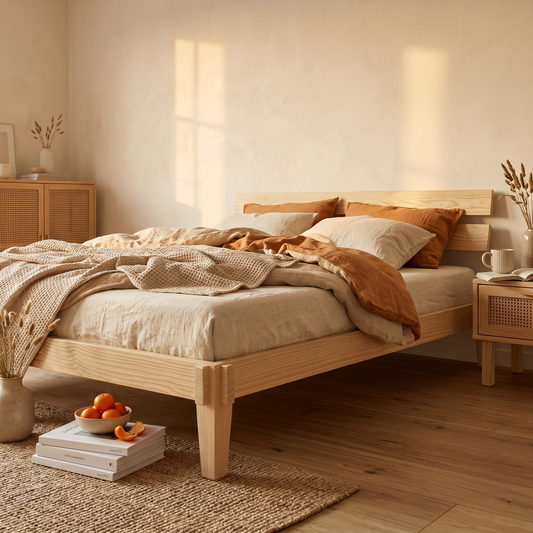
A solid wooden bed passes all three questions definitively. It lasts — a solid hardwood bed with screwless joinery in a breathable matte finish will outlast any engineered wood alternative by a decade or more. It belongs — solid pinewood is the natural material of choice for a bedroom built around warmth, calm and honest craft. And it works — the bed is the most functionally essential object in the bedroom, the one around which everything else is organised.
The Poka Bed by A Good Life is the solid wooden bed that passes every test. Solid pinewood, screwless joinery, a low Japandi silhouette and a matte finish that ages rather than degrades. It is not the cheapest bed available. It is the last one you should need to buy.
The Mirror: The Object That Earns Its Place Every Day
A full length floor mirror in solid pinewood passes all three questions with equal clarity. It lasts — a solid pinewood frame with a breathable finish handles Indian humidity without degrading. It belongs — the same material family as the solid wooden bed, the same matte finish, the same natural aesthetic register. And it works — a full length mirror for bedroom use serves a clear daily function that no other object can replicate.
The Akari Pinewood Mirror is the full length mirror that passes every test. Solid pinewood, leaning format, matte finish. It shows you yourself completely every morning. It makes the room feel larger. It contributes to the natural material language of the space. Three functions, one object, one decision.
The Home That Feels Like Enough
Living well at home is not about having more. It is about having the right things and nothing that is not right. A bedroom with a solid wooden bed, a full length floor mirror, natural textiles and warm light is a bedroom that feels like enough — not because it is sparse but because it is sufficient. Every object earns its place. Nothing is there by accident.
This is what it actually means to live well at home. Not a curated aesthetic. Not an accumulation of beautiful things. A home where the objects that matter most are the best versions of themselves and everything else has been edited out. The feeling this produces is not luxury. It is sufficiency. And sufficiency, experienced daily in the home you actually live in, is one of the most underrated qualities of a good life.