If you have been paying attention to home design in India over the last two years, you will have noticed a particular texture appearing everywhere. On cabinet doors, on kitchen shutters, on room dividers and on furniture fronts. It is ribbed, it is translucent and it catches light in a way that flat glass does not. It is fluted glass, and its rise from architectural niche to mainstream home design is one of the most interesting material stories in Indian interiors right now.
What Fluted Glass Actually Is
Fluted glass is glass that has been textured with parallel vertical ridges — called flutes — during the manufacturing process. The ridges are pressed into the glass while it is still molten, creating a surface that is simultaneously transparent and obscuring. You can see light and colour through fluted glass but not clear detail, which makes it ideal for applications where you want visual presence without full visibility.
The texture also does something optically interesting: it refracts light rather than simply transmitting it. When light hits the ridges of fluted glass, it bends and scatters in multiple directions, creating a soft, diffused glow rather than the flat transmission of clear glass. In a cabinet with a light source behind it, fluted glass produces a warm, luminous effect that flat glass cannot replicate.
Why Fluted Glass Works So Well on Cabinet Doors
Fluted glass cabinet doors solve a problem that has always existed in kitchen and living room design: the tension between displaying what is inside a cabinet and concealing it. Clear glass cabinet doors show everything — which is beautiful when the contents are perfectly organised and unflattering when they are not. Solid doors conceal everything, which removes the visual interest of the cabinet entirely.
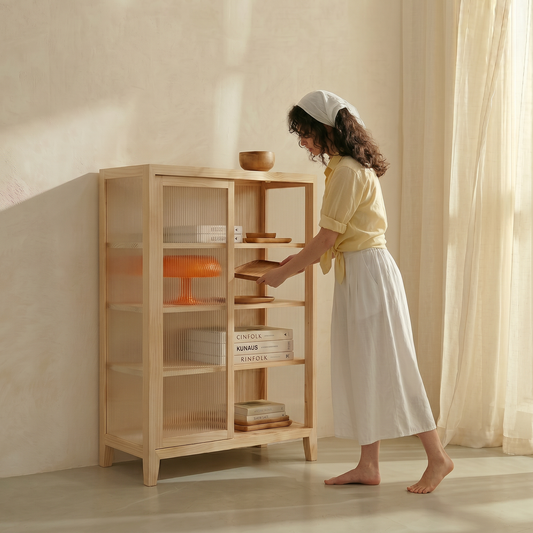
Fluted glass cabinet doors occupy the ideal middle ground. They suggest the contents without revealing them. The shapes and colours inside the cabinet are visible as soft impressions through the textured glass, which creates visual interest without requiring the contents to be display-ready at all times. A fluted glass kitchen cabinet can hold everyday crockery and still look considered from across the room.
The Japandi Connection
The rise of fluted glass in Indian homes is closely connected to the rise of the Japandi aesthetic — the blend of Japanese wabi-sabi and Scandinavian hygge that has become the dominant design direction for urban Indian homes in the last five years. Fluted glass belongs to this aesthetic because it is textured rather than smooth, warm rather than clinical and honest about its material nature rather than pretending to be something it is not.
In a Japandi home, fluted glass cabinet doors sit alongside solid wooden furniture, natural textiles and warm neutral palettes. The texture of the glass echoes the grain of the wood. The diffused light it produces is consistent with the warm, indirect lighting that Japandi design favours. The visual obscuring it provides is consistent with the Japandi preference for suggestion over display.
The Kanso Fluted Cabinet: Where This Comes Together
The Kanso Fluted Cabinet by A Good Life brings fluted glass cabinet doors together with a solid pinewood frame in a piece that is designed for the Indian home. The fluted glass front panels provide the visual interest and light diffusion that make fluted glass kitchen cabinets so compelling. The solid pinewood frame provides the structural integrity and material honesty that engineered wood alternatives cannot match.
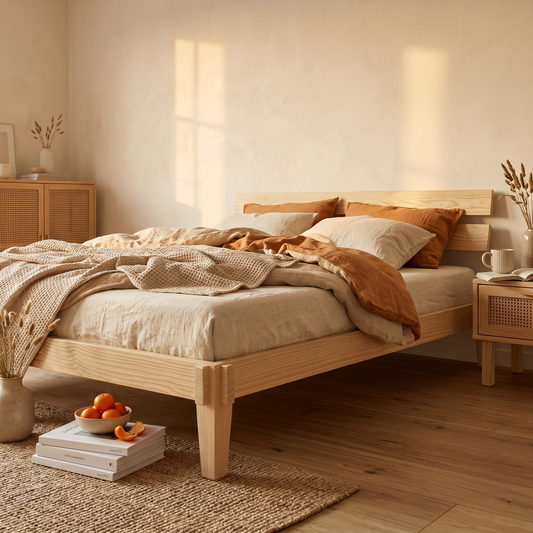
In a kitchen, the Kanso Cabinet holds everyday items behind fluted glass cabinet doors that make the kitchen look considered regardless of what is inside. In a living room, it provides storage with a visual presence that a solid-door cabinet cannot achieve. In a bedroom, it sits alongside the Poka Bed and the Akari Mirror as part of a material language that is consistent from the front door to the bedroom wall.
Why Fluted Glass Is Not a Trend
Trends come and go. Fluted glass has been used in architecture and furniture since the Art Deco period of the 1920s. Its current popularity in Indian homes is not a trend cycle. It is a rediscovery of a material that has always worked well and has been waiting for the right aesthetic moment to return to mainstream use. The Japandi moment is that moment. Fluted glass belongs to it naturally, and it will still belong to it when the next trend has come and gone.