
The intersection of Japandi design and sustainable living represents more than just an aesthetic choice; it embodies a philosophy of conscious consumption and environmental responsibility. Both Japanese and Scandinavian design traditions have long emphasised the importance of natural materials, quality craftsmanship and longevity over disposability.
The Philosophy of Sustainable Japandi Design
Both Japanese and Scandinavian cultures have deep connections to nature and understand the importance of living in harmony with the environment. Japanese concepts like mottainai (regret over waste) and Scandinavian lagom (just the right amount) provide philosophical foundations for sustainable design practices.
Sustainable Material Selection
Responsibly Sourced Wood
Certified Forests: Timber from sustainably managed forest operations. Reclaimed Materials: Salvaged wood that reduces demand for new harvesting. Fast-Growing Species: Woods like pine that regenerate responsibly. Local Timber: Regional wood sources that reduce transportation emissions.
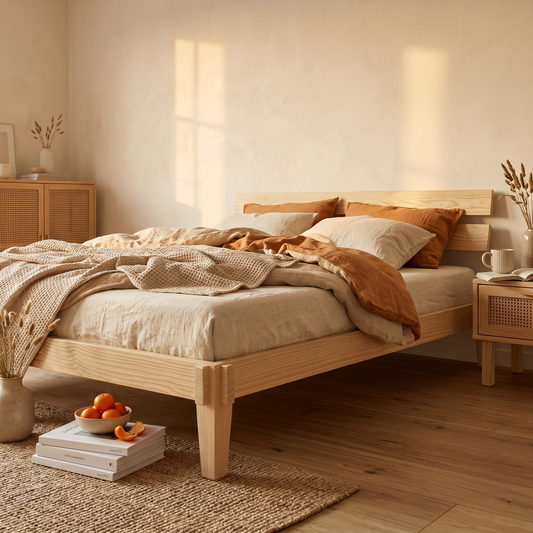
The Nami Nightstand exemplifies sustainable Japandi design through its solid pine construction — a renewable wood crafted to last for decades while developing beautiful character over time.
Furniture Selection for Sustainability
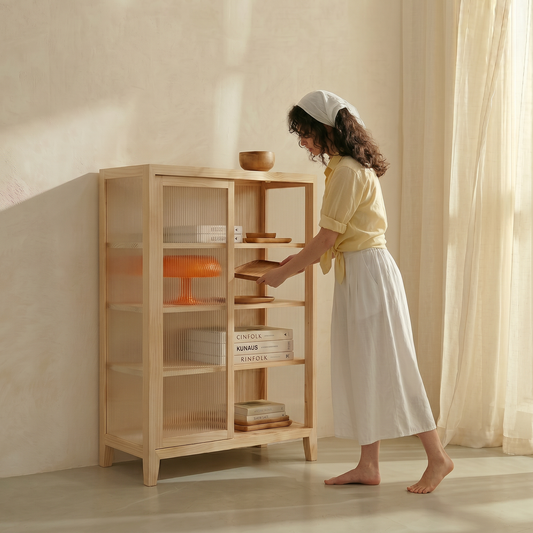
The Kanso Fluted Cabinet demonstrates sustainable design through its combination of locally sourced pine wood and traditional craftsmanship techniques, creating storage that will serve families for generations.
Water Conservation in Japandi Spaces
The Hand Towel Rail supports water conservation by encouraging the use of natural fiber towels that dry quickly and require less frequent washing — a small but considered choice for a more sustainable bathroom.
Creating Your Sustainable Japandi Home
Sustainable design in Japandi style represents more than just environmental responsibility; it embodies a way of living that honours both cultural wisdom and planetary stewardship. By choosing materials, furniture and practices that support both aesthetic beauty and environmental health, you create homes that reflect values of consciousness and care.