
Decorating a small space sustainably is one of the most rewarding design challenges — it forces you to be intentional, creative and conscious about every choice you make. In India's urban homes, where space is often at a premium, sustainable small-space design is both a necessity and an opportunity.
1. Choose Multi-functional Furniture
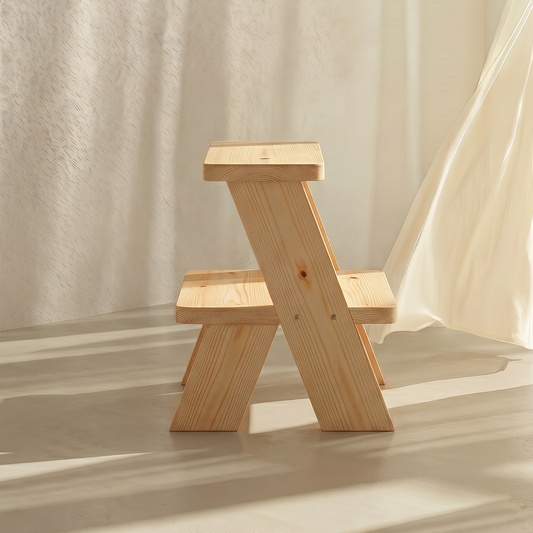
Every piece in a small space should earn its place. Look for furniture that serves more than one purpose — a step stool that doubles as a side table, a bench with storage, a console that works as a desk. This reduces the number of pieces you need and keeps the space feeling open.
2. Invest in Quality Over Quantity
In a small space, every piece is visible. Invest in fewer, better-quality handcrafted pieces that will last for years rather than filling the room with cheap, disposable furniture.
3. Use Light, Natural Materials
Light-coloured natural materials — like Canadian pinewood — make small spaces feel larger and more airy. Avoid dark, heavy furniture that can make a compact room feel cramped.
4. Go Vertical
Use wall-mounted shelves, hooks and hangers to keep the floor clear. Vertical storage maximizes space without adding visual weight to the room.
5. Declutter Regularly
The most sustainable small space is a curated one. Regularly reassess what you own and donate or recycle what you no longer need. Less stuff means more space and more calm.
6. Choose Natural Finishes
Opt for furniture with natural oil or matte lacquer finishes rather than synthetic coatings. These are safer for indoor air quality and more sustainable to produce.
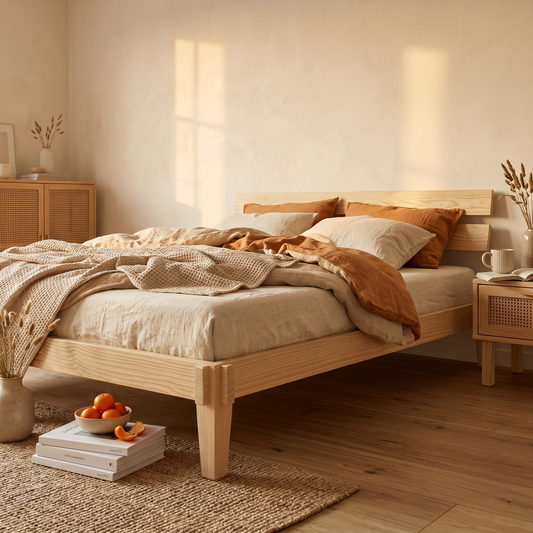
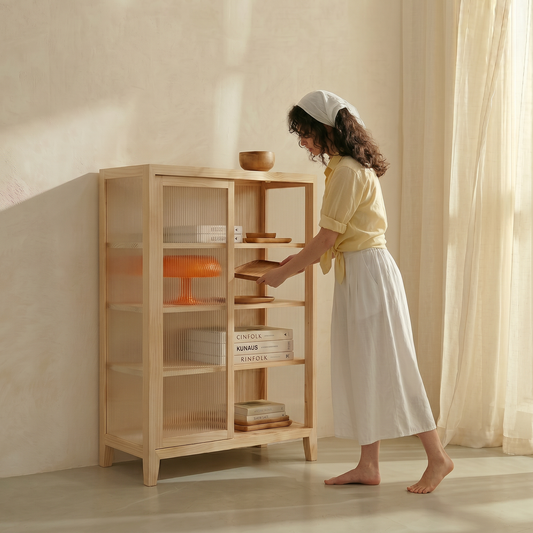
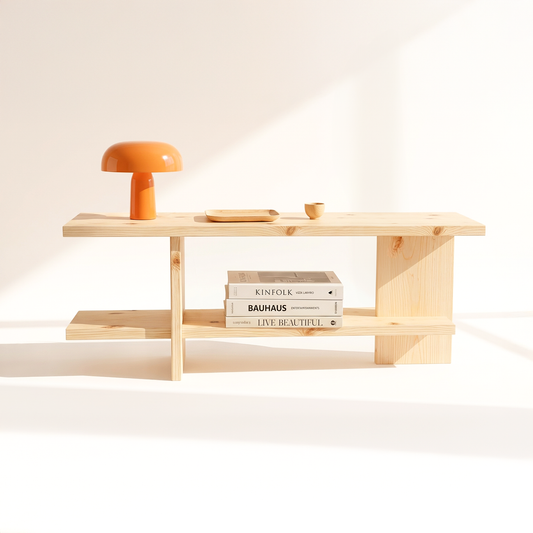
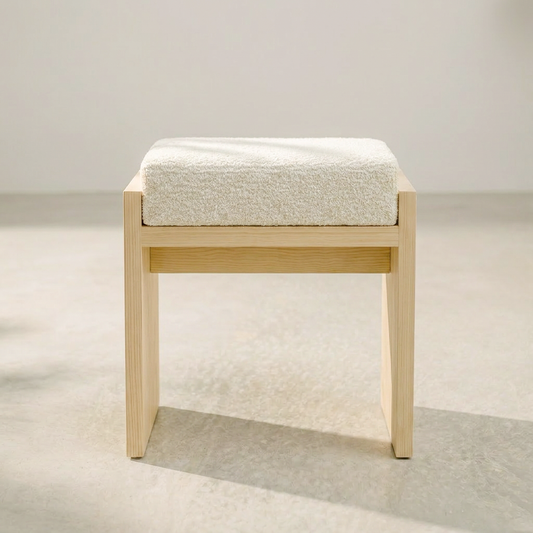
Compact Japandi pinewood furniture for small Indian homes.
The Chibi Step Stool and Chibi Bouclé Stool from A Good Life are handcrafted from solid Canadian pinewood — compact, multi-functional and sustainably made. Shop all pinewood furniture →