
Unlike most furniture, a step stool's job is literally to hold your full body weight, sometimes suddenly, which makes verifying its capacity worth more scrutiny than most small furniture purchases get.
Check for a Stated Weight Rating
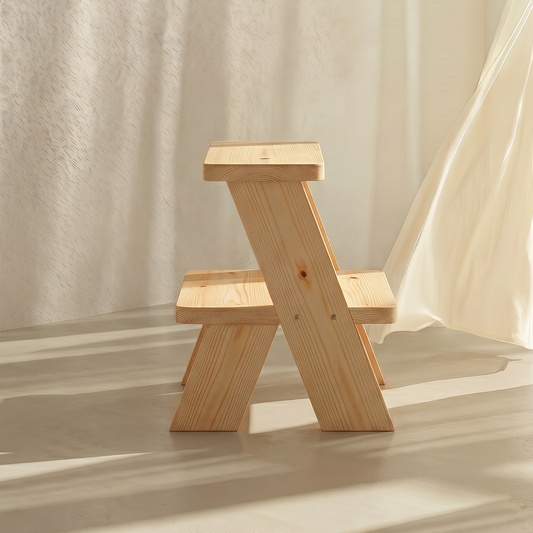
A stool built with genuine confidence in its construction, like the Chibi Step Stool, should have a clear stated weight capacity. The absence of any rating at all is itself a signal worth questioning before you step on it.
Test the Wobble, Not Just the Weight
Press down firmly on one corner rather than the center, this is closer to how actual stepping weight gets distributed unevenly. A stool that flexes or shifts noticeably under an off-center push is more likely to feel unstable in real use than one that stays rigid.
Look at the Base Width Relative to the Top
A stool with a wider base than top surface is inherently more stable when stepped on, since the center of gravity stays within the support footprint even as you shift weight while standing. A narrow base under a wide top is a genuine stability risk regardless of wood quality.
The Honest Verdict
Check for a published weight rating, test with an off-center push, and look at the base-to-top proportion. Together these tell you more about real standing safety than assuming any solid wood stool is automatically sturdy enough.