
The storage bed — a bed frame with drawers or a hydraulic lift mechanism beneath the mattress — is one of the most popular furniture categories in Indian apartments. The logic is straightforward: urban apartments have limited storage, and the space beneath the bed is otherwise wasted. But the storage bed involves trade-offs that most buyers do not fully consider before purchasing. Here is the honest comparison.
What a Storage Bed Actually Gives You
A storage bed gives you the space beneath the mattress as usable storage. In a hydraulic lift bed, the entire mattress platform lifts to reveal a large storage area. In a drawer bed, two or four drawers slide out from the sides of the frame. Both configurations convert dead space into usable space, which is genuinely valuable in a small apartment.
The storage capacity is real. A hydraulic lift bed can hold seasonal clothing, extra bedding, luggage and other bulky items that would otherwise require a separate wardrobe or storage unit. For an apartment where every square metre of storage matters, this is a meaningful benefit.
What a Storage Bed Costs You
The trade-offs of a storage bed are less often discussed. The hydraulic mechanism adds mechanical complexity that can fail over time. The lift mechanism requires the mattress to be moved to access the storage, which means the storage is not convenient for daily-use items. The mechanism also adds weight to the bed frame, which makes it significantly harder to move or reassemble.
More significantly, a storage bed raises the sleeping surface higher than a non-storage bed. The storage compartment or drawer mechanism adds height beneath the mattress platform, which means the sleeping surface is typically 55 to 65 cm from the floor rather than the 35 to 45 cm of a low-profile bed. This height difference has real implications for room proportions and for the psychological quality of the sleeping environment.
A high sleeping surface raises the visual centre of gravity of the room, which makes the ceiling feel lower. It also reduces the parasympathetic activation that proximity to the ground produces — the neurological quality that makes a low bed feel more restful than a high one. The storage bed trades sleep environment quality for storage capacity.
The Joinery Problem in Storage Beds
Storage beds are almost always bolt-together constructions. The hydraulic mechanism or drawer slides require a frame that can be assembled and disassembled for installation, which means traditional screwless joinery is not compatible with most storage bed designs. Bolt-together joinery in a storage bed that is heavier than a standard bed frame and subject to the additional stress of the lift mechanism or drawer operation will loosen faster than in a standard bed frame.
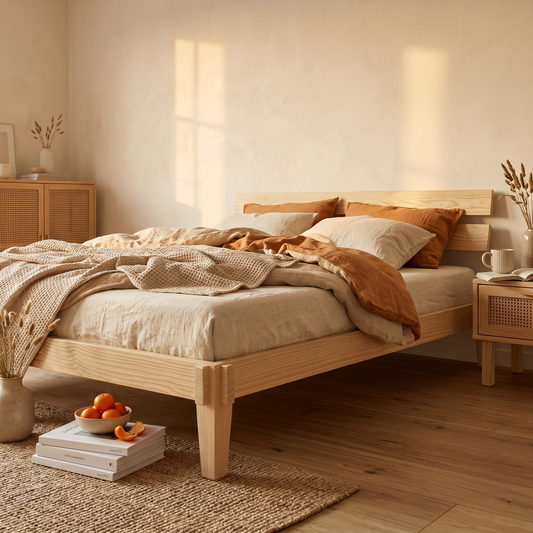
A solid wooden bed without storage can use screwless joinery, which means the joints get tighter with use rather than looser. A storage bed almost always uses bolt-together joinery, which means the joints loosen over time regardless of the material quality.
The Alternative: Separate Storage Solutions
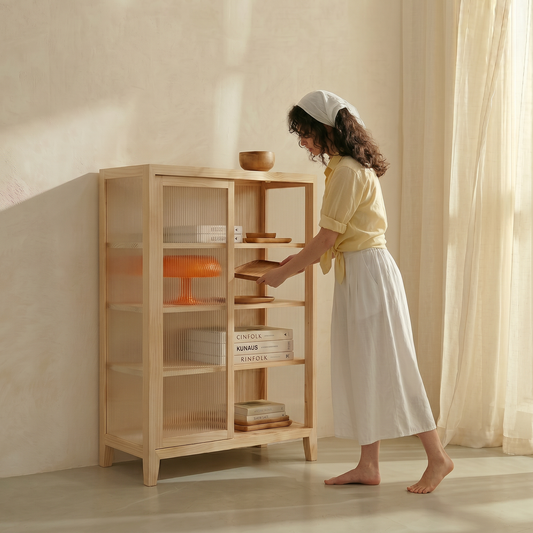
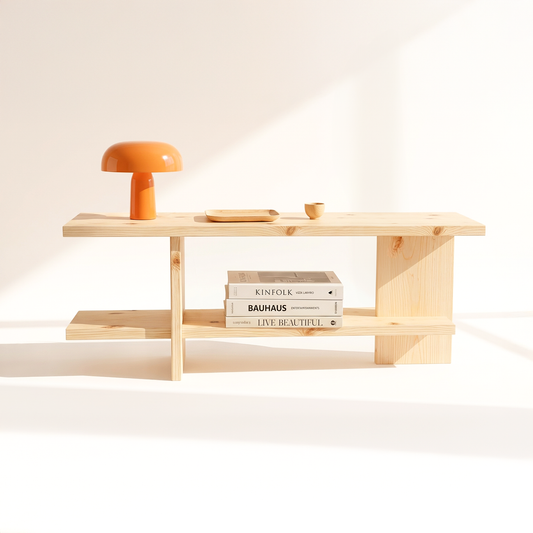
The storage problem that a storage bed solves can often be solved more effectively with separate storage solutions. A wooden console in the bedroom holds daily-use items. A fluted glass cabinet holds clothing or accessories. Under-bed storage boxes on a low-profile bed hold seasonal items without the mechanical complexity of a hydraulic mechanism.
The Kanso Fluted Cabinet and the Nagomi Pinewood Console provide storage solutions that do not compromise the sleep environment. The Poka Bed without storage uses screwless joinery and a low profile that maximises the sleep environment quality. The storage problem is solved separately, without the trade-offs of a storage bed.
The Verdict
A storage bed is worth it if storage is genuinely critical and no alternative solution is available. It is not worth it if the trade-offs — higher sleeping surface, bolt-together joinery, mechanical complexity — are not fully understood before purchase. For most Indian apartments, separate storage solutions combined with a low-profile solid wooden bed produce a better sleep environment and comparable storage capacity without the trade-offs.