The metal bed has been marketed as the modern, minimal alternative to solid wood for the last decade. It is lighter, cheaper and available in finishes that photograph well. The solid wooden bed is marketed as the traditional, durable choice. Both claims are partially true. But after a year of living with both in Indian conditions, the differences are more specific and more interesting than either marketing story suggests.
Month One: First Impressions
Out of the box, the metal bed has an advantage. It assembles faster, the finish is consistent and the visual lines are clean. The solid wooden bed takes longer to assemble — particularly one with screwless joinery — but the result feels more substantial. The wood has weight and warmth that the metal frame does not. When you sit on the edge of the solid wooden bed, it does not flex. When you sit on the edge of the metal bed, there is a slight give that is not alarming but is noticeable.
Month Three: The First Monsoon
By month three, the first monsoon had arrived. Humidity in the room climbed above 80 percent for weeks at a time. The metal bed showed the first signs of surface oxidation at the joints — small rust spots where the protective coating had been compromised during assembly. The solid wooden bed showed nothing. The matte oil finish had allowed the wood to absorb and release moisture without stress. The joints were as tight as they were on day one.
The metal bed was wiped down and the rust spots treated. They returned within a month.
Month Six: The Creak Test
By month six, the metal bed had developed a creak. Not a dramatic one — a subtle metallic sound when weight shifted on the mattress. The source was the joints where the side rails connected to the headboard. The bolts had loosened slightly as the metal had expanded and contracted through temperature and humidity cycling. Re-tightening resolved it for three weeks before the creak returned.
The solid wooden bed with screwless joinery produced no creak at month six. The joints had, if anything, tightened slightly as the wood had settled into its position.
Month Nine: The Touch Test
In an air-conditioned room at 22 degrees, the metal bed frame felt cold to the touch. Not uncomfortably so, but noticeably so — the kind of cold that registers when you brush against the frame in the night. The solid wooden bed frame felt neutral. Wood does not conduct temperature the way metal does, which means it feels the same at 22 degrees as it does at 30. In a bedroom where you are likely to make contact with the frame during the night, this difference is felt rather than seen.
Month Twelve: The Verdict
After twelve months, the metal bed had surface oxidation at multiple joints, a recurring creak that required periodic re-tightening and a finish that had dulled slightly from cleaning. The solid wooden bed had none of these issues. The finish had deepened slightly — the wood had developed the beginning of a patina — and the joints were as tight as they were on day one.
The metal bed is not a bad product. It is a product designed for a different set of conditions than an Indian bedroom. The solid wooden bed is designed for exactly these conditions.
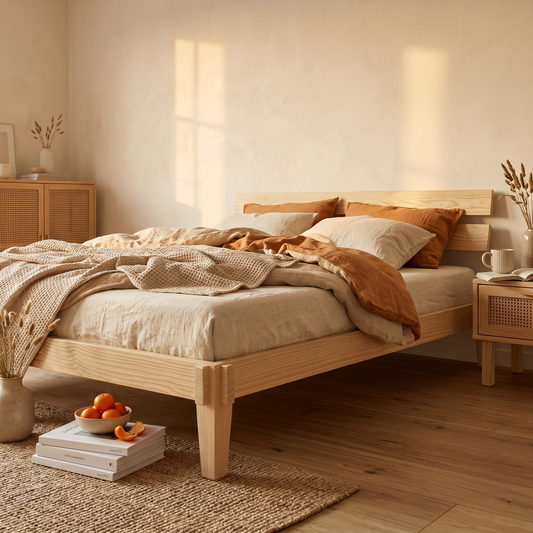
The Poka Bed by A Good Life is the solid wooden bed in this comparison. Solid pinewood, screwless joinery, matte oil finish. After twelve months in Indian conditions, it performs exactly as the material science predicts: no creak, no rust, no temperature conductivity and a finish that is getting better rather than worse. Pair it with the Akari Pinewood Mirror for a bedroom where every surface is natural, warm and built for the long term.