Furniture brands do not show you what their products look like after five years. They show you what they look like on day one, in a controlled studio, with professional lighting. The five-year photograph is the one that would actually help you make a better decision, and it is the one you never see. Here is what that photograph would show for a solid wooden bed versus an engineered wood bed in an Indian home.
Day One: They Look Similar
On day one, a well-made engineered wood bed and a solid wooden bed can look remarkably similar. Both have clean lines. Both have smooth surfaces. Both can be finished in warm tones that read as natural. The difference in price is real but the difference in appearance is not always obvious to the untrained eye. This is the moment at which most purchase decisions are made, and it is the least informative moment in the life of the furniture.
Year One: The First Signals
By the end of year one, the first differences begin to appear. On the engineered wood bed, the laminate surface near the highest-stress points — the corners of the headboard, the edges of the side rails, the area around the bolt holes — begins to show micro-separations. These are not visible from across the room but they are visible on close inspection. The bolt-together joints have loosened slightly as the material around the bolt holes has compressed under the stress of daily use.
On the solid wooden bed with screwless joinery, none of these signals appear. The wood has settled into its position. The joints are as tight as they were on day one. The matte finish has begun to develop the very early stages of a patina — a slight deepening of the wood's natural colour that is the beginning of character rather than the beginning of degradation.
Year Three: The Divergence
By year three, the difference between the two beds is visible without close inspection. The engineered wood bed has laminate lifting at multiple stress points. The bolt-together joints require periodic re-tightening to prevent wobble. The finish near the floor has been compromised by cleaning products and the substrate beneath is beginning to show. The bed is functional but it looks like it has been used.
The solid wooden bed at year three looks like it has been lived with rather than used. The patina has deepened. The wood has a warmth that was not there on day one. The joints are tight. The finish is intact and can be refreshed with a light re-oiling if needed. The bed is not just functional. It is better than it was.
Year Five: The Photograph Nobody Takes
At year five, the engineered wood bed is approaching the end of its practical life. The laminate has lifted at multiple points. The joints wobble despite re-tightening. The finish is compromised in several areas. The bed is not broken but it is not good. Most households replace it at this point, beginning the cycle again.
The solid wooden bed at year five is in its prime. The patina is established. The joints are tight. The finish is honest and repairable. The bed has another fifteen years of useful life ahead of it. The cost per year of use, calculated at year five, already favours the solid wooden bed. By year ten, the comparison is not close.
The Poka Bed at Year Five and Beyond
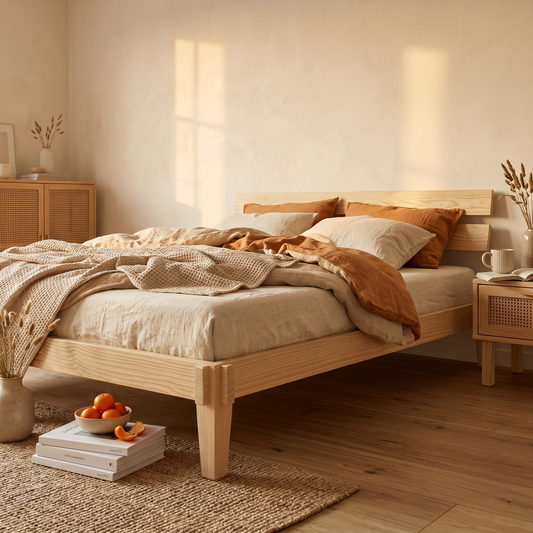
The Poka Bed by A Good Life is the solid wooden bed in this comparison. Solid pinewood, screwless joinery, matte oil finish. At year five, it will look better than it did on day one. At year ten, it will look more characterful than it did at year five. It is not designed for a five-year replacement cycle. It is designed for the bedroom you will still be sleeping in in twenty years.
The five-year photograph nobody takes is the one that would make this decision obvious. Until brands start taking it, this comparison is the next best thing.