There is a version of the morning that most people have experienced at least once. The alarm goes off and instead of reaching for the phone, you lie still for a moment. The room is quiet. The light is soft. You move slowly, deliberately, without urgency. You leave the house feeling like yourself rather than like someone who has been launched into the day before they were ready. This is not a luxury. It is a design problem. And it is more solvable than most people think.
Why the Morning Feels Rushed
The rushed morning is almost always an environment problem before it is a time problem. A bedroom that is visually chaotic, materially synthetic or poorly lit for the transition from sleep to wakefulness creates a neurological starting point that makes calm impossible regardless of how much time you have. The brain wakes into the environment it is in. If that environment is stimulating, cluttered or harsh, the brain responds accordingly.
The slow morning begins the night before, with the bedroom you wake up in. Not the alarm time. Not the schedule. The room.
The Bedroom That Makes Slowness Possible
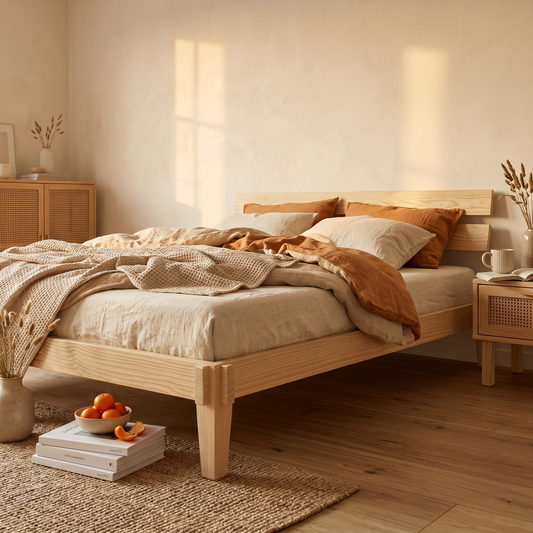
A bedroom designed for a slow morning has specific properties. It is visually quiet — few objects, each one chosen, nothing accumulated. It is materially honest — natural wood, natural textiles, surfaces that feel as good as they look. It is lit for the transition — warm natural light that arrives gradually rather than overhead artificial light that arrives all at once.
The bed is the most important element. A solid wooden bed with a low profile and clean lines reads as settled even when unmade. It does not demand attention or create visual noise. It is simply present, grounded and calm. The Poka Bed by A Good Life is built for exactly this quality. Solid pinewood, screwless joinery, a low Japandi silhouette and a matte finish that absorbs light rather than reflecting it. In the first moments of waking, it reads as calm rather than demanding.
The Mirror and the Morning Ritual
The full length mirror is the second element of a slow morning bedroom. Not because it is decorative but because it is the object that marks the transition from the private self to the public one. Standing in front of a full length floor mirror in good morning light, seeing yourself completely before you leave the room, is a moment of self-possession that a rushed morning never allows.
Position the mirror adjacent to the window. The morning light falls from the side, which is the most flattering and most accurate light for a full-body reflection. The Akari Pinewood Mirror is a full length floor mirror in solid pinewood that leans without wall fixings. In morning light, the solid pinewood frame glows warm and the reflection is clear and honest. The moment of standing in front of it is not vanity. It is the slow morning's equivalent of a full stop — a moment of completion before the day begins.
The Ritual Objects of a Slow Morning
A slow morning is built from small rituals, each one a deliberate act rather than a reactive one. The kettle before the phone. The window before the screen. The mirror before the door. These are not productivity hacks. They are the architecture of a morning that belongs to you rather than to the demands of the day.
The bedroom that supports these rituals is not complicated. It is a solid wooden bed that you wake up in without urgency. A full length mirror in morning light that you stand in front of with intention. Natural textiles that feel good against skin that is still warm from sleep. Warm light that arrives gradually. A room that is quiet enough to hear yourself think before the day begins to speak.
The Investment That Pays Every Morning
The slow morning is not a weekend luxury. It is a daily practice that requires a daily environment. A bedroom built around natural materials, visual calm and considered light is the infrastructure of a slow morning. The Poka Bed and the Akari Mirror are the two pieces that anchor it. Everything else follows from the quality of those two decisions.
The morning you want is not a matter of discipline or schedule. It is a matter of environment. Build the environment. The morning takes care of itself.