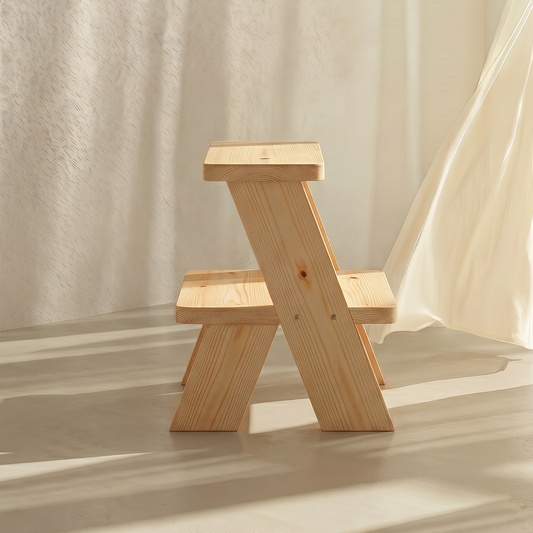

Pet furniture has to satisfy a safety bar that human decorative furniture usually doesn't face directly, a cat interacts with it by scratching, chewing at edges, and jumping on and off it repeatedly.
Why Finish Matters More Here
Cats make direct, repeated mouth and claw contact with their furniture, which makes finish choice a genuine health consideration, not just an aesthetic one. The Hana Cat Scratcher's pinewood frame uses a low-VOC finish specifically because of this closer contact.
Structural Safety Under Repeated Impact
A cat jumping on and off furniture repeatedly puts sudden, sharp stress on joints, similar to the demands of a step stool but at a smaller scale and higher frequency. Solid wood, properly joined, absorbs this repeated impact better than lightweight composite alternatives that can crack under sustained sharp stress.
Why Natural Materials Suit This Use Case
Natural jute scratching surfaces satisfy a cat's instinctive scratching behaviour without shedding the kind of synthetic fibres or dust that carpet-style scratchers sometimes do, a genuine consideration for indoor air quality in a home with pets.
The Honest Verdict
Pinewood suits cat furniture because of finish safety and structural resilience under repeated jumping impact, not just because it looks better than plastic. Both factors matter more for pet furniture than they do for most human decorative pieces.