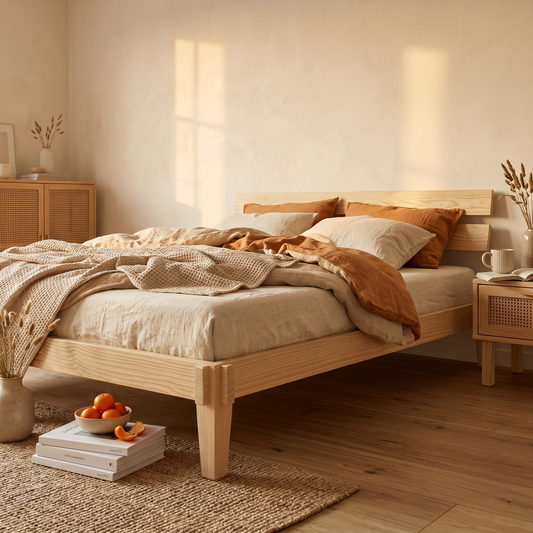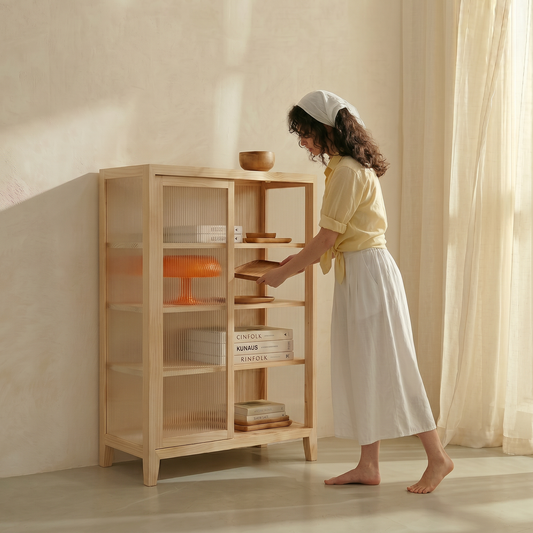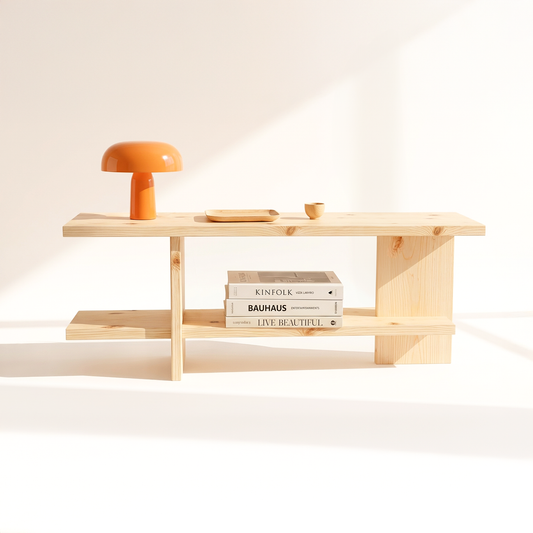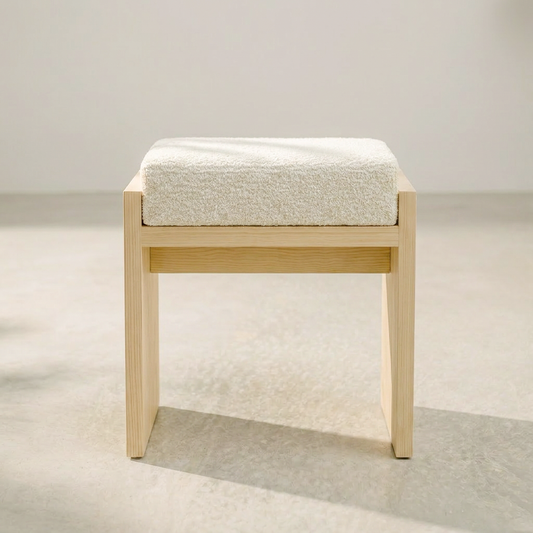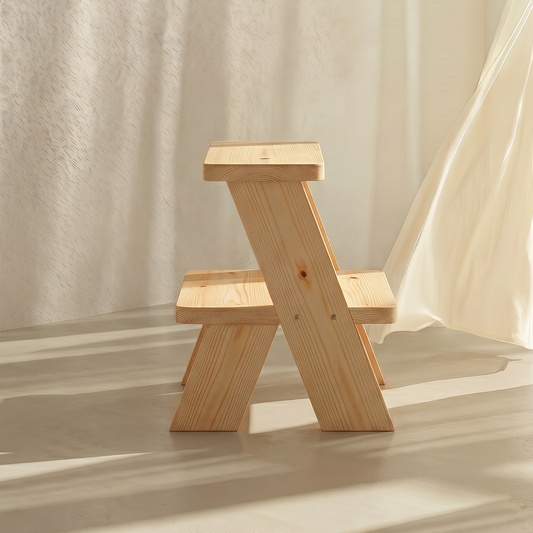

Ask most people to name a premium wood for furniture and they will say teak, sheesham or walnut. Pine rarely makes the list. It is considered a utility wood — the kind used for packing crates and construction scaffolding, not bedroom furniture. This reputation is both understandable and almost entirely wrong.
Here is the case for pinewood as the most intelligent material choice for a solid wooden bed or wooden frame mirror in an Indian home.
Why Pine Has a Reputation Problem
Pine's reputation as a cheap wood comes from its use in low-cost furniture manufacturing, where it is often used in its most basic form: unseasoned, unfinished and assembled with the minimum of care. When pine furniture fails, it is almost never the wood that is the problem. It is the grade of the wood, the seasoning process and the finish applied to it.
Properly seasoned, kiln-dried pinewood is a different material entirely. It is dimensionally stable, meaning it does not warp or crack with seasonal humidity changes the way unseasoned wood does. It is light enough to be moved without a team of people. And it takes a matte oil or wax finish in a way that brings out the grain without obscuring it.
The Properties That Make Pine Ideal for Bedrooms
Pinewood has a set of properties that happen to align almost perfectly with what a bedroom requires.
It is hygroscopic, meaning it absorbs and releases moisture from the air. In a sleeping environment, this acts as a passive humidity buffer, keeping the air more stable than synthetic materials can. This is the same property that makes solid hardwood beds more comfortable to sleep near than metal or engineered wood frames.
Pine is also relatively soft for a hardwood, which means it absorbs sound rather than reflecting it. A solid pinewood bed frame in a bedroom contributes to acoustic softness — the quality that makes a room feel quiet rather than echoey. This is not a small thing in an urban Indian home where external noise is a constant.
The colour of pine — warm, light and neutral — works with almost any palette. It does not compete with textiles, wall colours or other furniture the way darker woods can. In a Japandi bedroom or any room built around natural materials, pine reads as calm rather than dominant.
Solid Pinewood vs Sheesham vs Teak: An Honest Comparison
Sheesham is denser and more moisture-resistant than pine, which makes it a good choice for furniture in very high-humidity environments or for pieces that will be used outdoors or in bathrooms. For a bedroom in a climate-controlled home, this advantage is largely irrelevant.
Teak is the most durable of the three and the most expensive. It is also the heaviest, which makes a king size bed frame in teak genuinely difficult to move or reassemble. For a bedroom piece that will stay in one place for decades, this may not matter. For most households, it is an unnecessary constraint.
Pine sits between the two in density and cost, and it has one advantage neither sheesham nor teak can match: it is light enough to be practical. A solid wooden bed in pine can be disassembled and moved by two people. The same bed in teak requires four.
The Poka Bed: Pinewood Done Properly
The Poka Bed by A Good Life is built from kiln-dried solid pinewood with screwless joinery and a matte finish. The screwless joinery eliminates the bolt-hole compression that causes wobble in lesser frames. The matte finish allows the wood to breathe rather than sealing it under lacquer, which means it regulates humidity rather than blocking it.
The result is a solid wood bed frame that performs better in an Indian bedroom than most more expensive alternatives. It is lighter than sheesham, more breathable than teak and more honest in its material than anything made from engineered wood.
The Akari Mirror: The Same Logic Applied to Glass
The same reasoning that makes pinewood the right choice for a solid wooden bed makes it the right choice for a wooden frame mirror. A heavy sheesham or teak frame on a full length floor mirror is unnecessarily dominant. A light pinewood frame lets the mirror do its job — reflecting the room and the person in it — without the frame competing for attention.
The Akari Pinewood Mirror is a full length mirror with a solid pinewood frame designed to lean against a wall. The frame is proportioned to be present without being heavy, and the matte finish matches the material language of the Poka Bed. In a bedroom where both pieces are present, the room feels coherent in a way that is difficult to achieve when materials are mixed without intention.
How to Care for Solid Pinewood Furniture
Pinewood furniture is easier to maintain than most people expect. A matte oil finish can be refreshed with a light application of furniture oil once or twice a year. Scratches and dents, which are more visible on pine than on harder woods, can be raised with a damp cloth and light sanding followed by re-oiling. This is not a flaw. It is the wabi-sabi principle in practice — a material that shows its life honestly and can be renewed rather than replaced.
Avoid placing solid pinewood furniture in direct sunlight for extended periods, as UV exposure will lighten the wood unevenly over time. In a bedroom with curtains or blinds, this is rarely an issue.
The Underrated Choice Is Often the Right One
The furniture categories that attract the most attention — teak, walnut, marble — are not always the most intelligent choices for the spaces they end up in. Pinewood, properly seasoned and finished, is one of the most practical and beautiful materials available for bedroom furniture. The fact that it is underrated is not a reason to avoid it. It is a reason to look more carefully.