
Storage furniture makes a promise most people don't examine closely: that it will keep clutter out of sight. But how it keeps things out of sight changes the entire feel of a room, and that's the real decision hiding inside "console or cabinet."
What an Open Console Actually Does
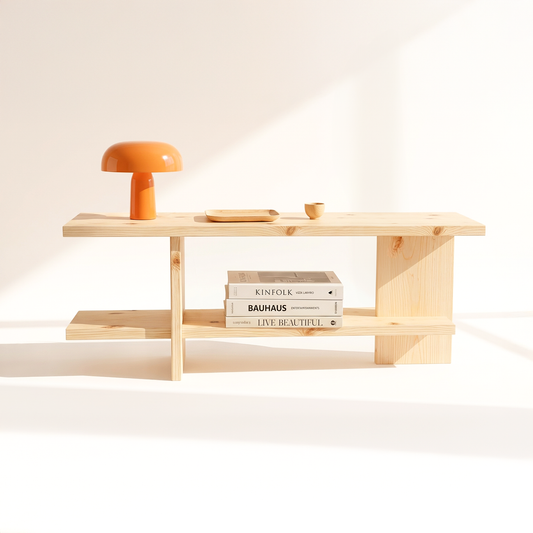
An open console, like the Nagomi Pinewood Console, doesn't hide anything, it disciplines what you own. Because everything on it is visible, an open console forces a kind of curation: only the objects worth looking at earn a place. This is why open consoles work so well in Japandi rooms, where the aesthetic depends on restraint rather than concealment.
What a Closed Cabinet Actually Does
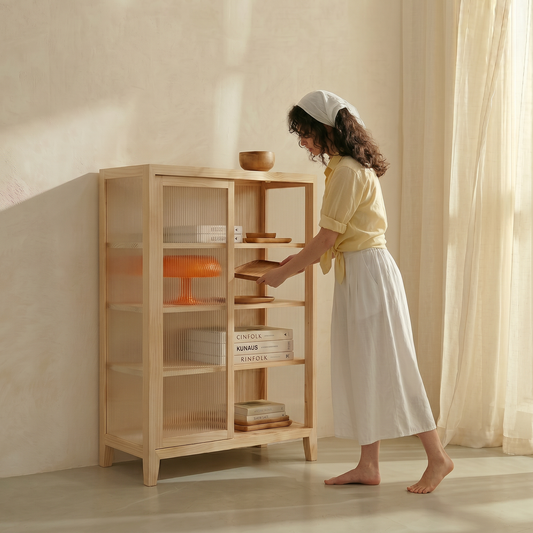
A closed cabinet, like the Kanso Fluted Cabinet, does the opposite job. It gives you permission to own more than you display, remotes, chargers, board games, the everyday mess of a lived-in home, while presenting a single calm surface to the room. The fluted glass doors add texture without asking you to keep the interior photogenic.
The Real Question: What Are You Storing?
This isn't really a style decision, it's a contents decision. Books, a record player, a single sculptural object, these want to be seen, so an open console earns its keep. Cables, remotes, kids' toys, anything you'd rather not think about, these want a door between them and the room, so a cabinet wins.
Maintenance Is Not Equal
An open console needs more upkeep than people expect, dust settles on every visible surface, and a cluttered console reads as chaos in a way a cluttered cabinet never will, because the cabinet's door absorbs the mess. If your household doesn't tidy daily, a closed cabinet is the more forgiving choice.
The Honest Verdict
Choose an open console if you want the furniture itself to be part of the room's visual story. Choose a closed cabinet if you want the room to look calm regardless of what's actually going on inside your storage. Many Japandi living rooms end up using both, an open console for the pieces worth showing, a closed cabinet for everything else.