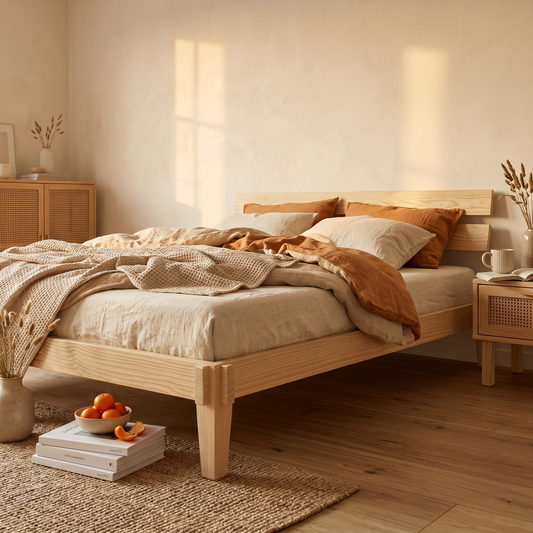

A nightstand's small size makes it an easy place for veneer-over-composite construction to hide, less material used means less opportunity to spot the giveaways that show up on larger furniture.
Check the Top Surface Edge
Run a finger along the edge of the top surface on a piece like the Nami Nightstand. Solid wood feels seamless, the same material continuing around the edge. Veneer often has a slightly different texture or a faint seam line where the thin wood layer meets the edge banding.
Open Any Drawer and Check the Sides
Drawer interiors are rarely finished for display, which makes them one of the most honest places to check construction. Solid wood drawer sides show consistent grain throughout, composite sides often reveal a compressed, uniform texture with no visible natural grain at all.
Compare Weight to Size
A genuinely solid nightstand feels substantial for its compact size. If it feels unusually light when you go to move it, that's a reasonable signal the core material is composite rather than solid timber.
The Honest Verdict
Check the top edge, look inside a drawer, and note the weight, small furniture hides construction shortcuts more easily than large pieces, so these close-up checks matter even more on a nightstand than on bigger furniture.