When people shop for a full length mirror, they look at the glass. They check the size, the clarity and the price. The frame is an afterthought — a border around the thing that actually matters. This is a mistake. The frame determines how long the mirror lasts, how it reads in the room and whether it is still worth owning in five years. Here is why the frame deserves more attention than it gets, and why solid wood is the material that wins the comparison.
What the Frame Actually Does
A mirror frame has three functions that are easy to overlook when you are focused on the glass. It protects the edges of the mirror from impact and moisture. It provides the structural rigidity that keeps the mirror flat and stable. And it determines the visual character of the mirror in the room.
A frame that fails at any of these functions creates problems that the quality of the glass cannot compensate for. A frame that allows moisture to reach the mirror edges causes desilvering — the black spotting that appears at the corners and edges of mirrors that have been exposed to humidity over time. A frame that lacks structural rigidity allows the mirror to flex, which distorts the reflection. A frame that is visually dominant turns the mirror into a decorative object rather than a functional one.
The Common Frame Materials and Their Honest Assessment
Plastic frames are the most common in budget mirrors. They are lightweight, inexpensive and available in any colour. They are also the least durable. Plastic yellows under UV exposure, becomes brittle with age and provides minimal structural rigidity for a large mirror. A full length floor mirror in a plastic frame will look noticeably worse in three years than it did when new.
MDF frames are common in mid-range mirrors. They are heavier than plastic and can be finished to look like wood. The limitation is moisture sensitivity. MDF absorbs humidity and swells, particularly at the corners where the frame pieces join. In Indian monsoon conditions, an MDF-framed mirror will show corner separation and surface degradation within a few seasons.
Metal frames are durable and structurally rigid but conduct temperature, which means they feel cold in air-conditioned rooms and hot in summer. They also read as industrial in a bedroom designed around natural materials, which limits their aesthetic compatibility.
Solid wood frames are the most durable, the most moisture-stable when properly finished and the most visually compatible with a bedroom built around natural materials. A solid pinewood frame with a matte oil finish handles Indian humidity by absorbing and releasing moisture as a single piece rather than swelling unevenly. It does not yellow, corrode or become brittle. It ages by developing a patina rather than by degrading.
Why Pinewood Is the Right Wood for a Mirror Frame
Heavier hardwoods like sheesham or teak make excellent furniture but are unnecessarily heavy for a mirror frame. A full length floor mirror in a teak frame is significantly harder to move and reposition than the same mirror in a pinewood frame. For a leaning mirror that you may want to adjust periodically, this weight difference is a practical consideration.
Pinewood is light enough to be manageable, structurally rigid enough to keep a large mirror flat and stable and warm enough in colour to work with almost any bedroom palette. The fine grain of pinewood also takes a matte oil finish particularly well, producing a surface that is warm and tactile rather than shiny and synthetic.
The Akari Pinewood Mirror: Frame as Foundation
The Akari Pinewood Mirror is built around the frame rather than despite it. The solid pinewood frame is proportioned to provide structural rigidity without visual dominance — wide enough to keep the large glass flat and stable, slim enough to allow the reflection to be the primary element. The matte finish is breathable, which means the wood manages seasonal humidity changes without stress. The corner joinery is solid rather than stapled, which means the frame holds its geometry over years of use rather than developing the corner gaps that affect lesser frames.
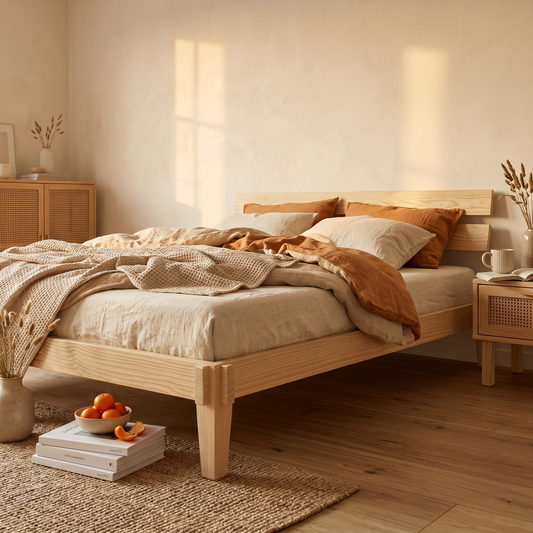
In a bedroom with the Poka Bed, the Akari Mirror's solid pinewood frame creates a material conversation between the two largest pieces in the room. The same wood species, the same matte finish, the same design philosophy. The room feels resolved because the materials are consistent, not because everything matches.
The Frame You Will Still Respect in Ten Years
A mirror frame is a long-term relationship. You will look at it every morning for years. A plastic frame that yellows, an MDF frame that separates at the corners or a metal frame that feels cold and industrial will become a source of low-level dissatisfaction that accumulates over time. A solid pinewood frame that ages gracefully, holds its geometry and reads as warm and natural in the room will become something you stop noticing — which is exactly what a good frame should do.
The frame is not the afterthought. It is the foundation. Choose it accordingly.