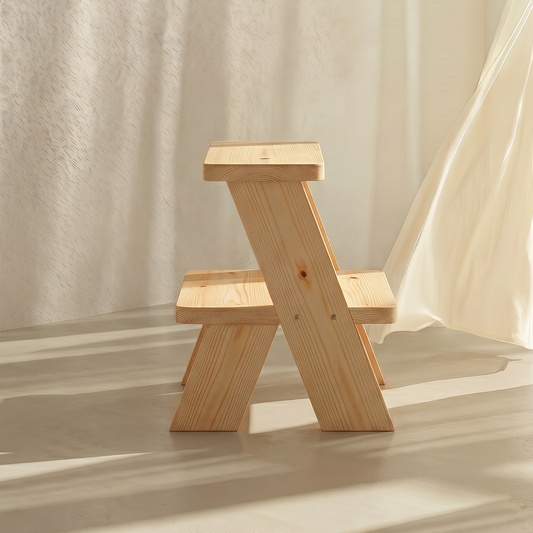

Minimalism is often misunderstood as a style of absence. People imagine empty rooms, cold surfaces, and homes that look beautiful in photographs but feel difficult to live in. But real minimalism is not about removing life from a space. It is about removing what distracts from it.
A minimalist home can feel deeply warm and welcoming when it is built with the right materials, the right proportions, and the right attention to daily life. In fact, warmth often becomes more visible in a minimal space because there is less noise around it.
The goal is not to make the home look bare. The goal is to let each object have more meaning and more room to breathe.
Why some minimalist homes feel cold
Minimalism begins to feel cold when it is treated only as a visual formula. If the focus is only on reducing objects, using pale colors, and keeping surfaces empty, the result can feel distant. A home needs more than simplicity. It needs texture, rhythm, and signs of life.
Warmth usually disappears when:
- Materials feel too synthetic
- The palette lacks depth
- Furniture is chosen only for appearance
- Personal objects are removed completely
- The room has clarity but no softness
Minimalism works best when it is guided by feeling as much as by form.
Start with natural materials
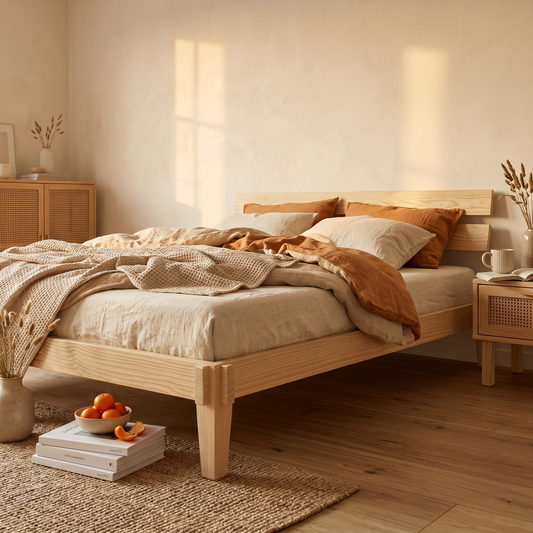
One of the easiest ways to make minimalist decor feel warm is through material choice. Natural materials bring depth without needing excess decoration.
Wood is especially important here. It adds grain, softness, and a grounded presence that helps a room feel human. Linen, cotton, ceramic, woven textures, and stone can also support this effect.
A wooden furniture piece often becomes the emotional anchor of the room because it offers both utility and warmth. This is one reason minimal homes often benefit from fewer but better wooden pieces rather than many decorative layers.
Let furniture carry the room
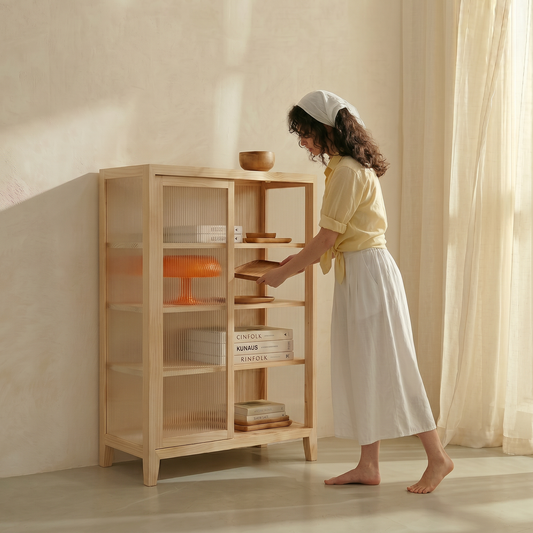
In a warm minimalist home, furniture should do more than fill space. It should shape the atmosphere quietly.
Look for furniture that feels:
- Simple but not flat
- Useful without being bulky
- Balanced in proportion
- Warm in tone
- Timeless in design
If you are building this kind of language at home, the furniture collection offers pieces that support calm and utility in a natural way.
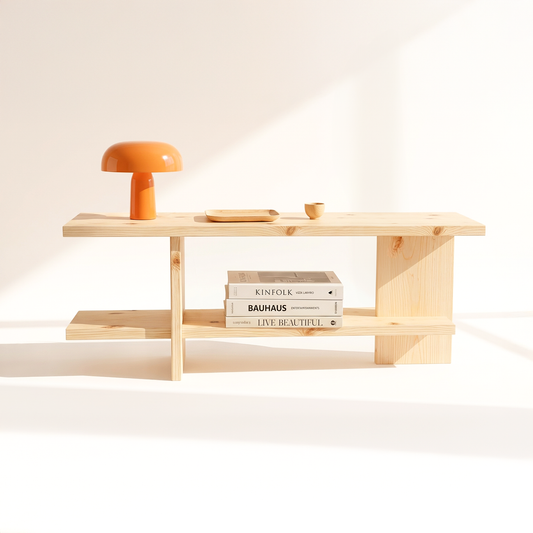
A piece like the Quiet Console Table works well in this context because it adds structure and warmth without creating visual noise.
Keep the palette soft and grounded
A warm minimalist home usually avoids harsh contrast. Instead of relying only on bright white and sharp black, it often uses softer neutrals and earthy tones.
Think of:
- Warm whites
- Soft beige
- Sand
- Natural wood tones
- Muted greys
- Gentle clay or stone shades
These tones help the room feel restful and lived in. They also allow natural materials to stand out more beautifully.
Use fewer objects but choose them with care
Minimalism does not ask you to remove all decor. It asks you to become more selective. A few meaningful objects often create more warmth than many decorative items placed without intention.
You might include:
- One ceramic vase
- A stack of books
- A woven basket
- A small lamp
- One framed piece of art
- A bowl or tray used daily
The key is that these objects should feel connected to the life of the home, not just added for display.
Make room for signs of living
A home feels lived in when it reflects routine, memory, and use. Minimalism should not erase that. It should support it more clearly.
This can mean:
- A chair with a folded throw
- A bedside table with a book and lamp
- A console with keys in a tray
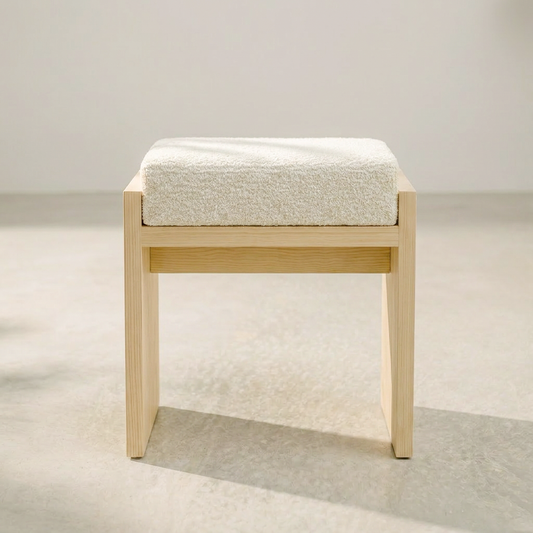
- A bench that is actually used every day
These small signs of life make the home feel real. They bring warmth without clutter.
Avoid overstyling
One of the easiest ways to lose warmth in a minimalist home is to make everything feel too arranged. If every object looks staged, the room can start to feel less personal.
Leave some surfaces open. Let some corners stay quiet. Allow the home to feel settled rather than performed.
Warm minimalism is not about perfection. It is about ease.
Final thoughts
Minimalist home decor feels warm and lived in when it is shaped by natural materials, thoughtful furniture, soft tones, and real daily use. It is not about emptiness. It is about clarity with feeling.
When a home holds only what matters and those things are chosen with care, the result is often more welcoming than a space filled with decoration. That is the quiet beauty of minimalism done well.
FAQ
How do I make minimalist decor feel warm?
Use natural materials, soft neutral tones, warm wood, and a few meaningful objects that support daily life.
Use natural materials, soft neutral tones, warm wood, and a few meaningful objects that support daily life.
Can a minimalist home still feel cozy?
Yes. Minimalism can feel very cozy when it includes texture, warmth, and signs of real living.
Yes. Minimalism can feel very cozy when it includes texture, warmth, and signs of real living.
What furniture works best in warm minimalist homes?
Simple wooden furniture with balanced proportions and useful function often works best.
Simple wooden furniture with balanced proportions and useful function often works best.
Should minimalist homes have decor?
Yes, but in a more selective way. A few thoughtful objects often create more warmth than many decorative pieces.
Yes, but in a more selective way. A few thoughtful objects often create more warmth than many decorative pieces.