
The height of a bed frame is one of those decisions that most people make based on habit or aesthetics rather than evidence. High beds feel grand. Low beds feel modern. But the choice has real implications for sleep quality, back health, room proportions and the daily experience of getting in and out of bed. Here is the honest comparison.
The High Bed: What It Does Well
A high bed frame — typically one where the sleeping surface is 60 cm or more from the floor — has genuine advantages. It is easier to get in and out of for people with limited mobility, particularly those with knee or hip issues. The space beneath a high bed provides useful storage. And the visual presence of a high bed with a tall headboard creates a sense of grandeur that some rooms and some aesthetics call for.
In a large room with high ceilings, a high bed can be proportionally correct. The vertical presence of the frame and headboard fills the room's vertical dimension in a way that a low bed cannot.
The High Bed: What It Does Poorly
A high bed raises the visual centre of gravity of the room. In a room with a standard 9 or 10-foot ceiling, a high bed with a tall headboard makes the ceiling feel lower rather than higher. The furniture competes with the ceiling rather than complementing it.
A high bed also creates a psychological effect that is the opposite of what a bedroom should produce. Height is associated with alertness and exposure. Proximity to the ground is associated with safety and rest. A bed that sits high off the floor activates a mild alertness response that a low bed does not. This is not a dramatic effect, but it is consistent, and consistency over months produces a meaningful difference in how quickly you fall asleep and how deeply you sleep in the early stages of the night.
The Low Bed: What It Does Well
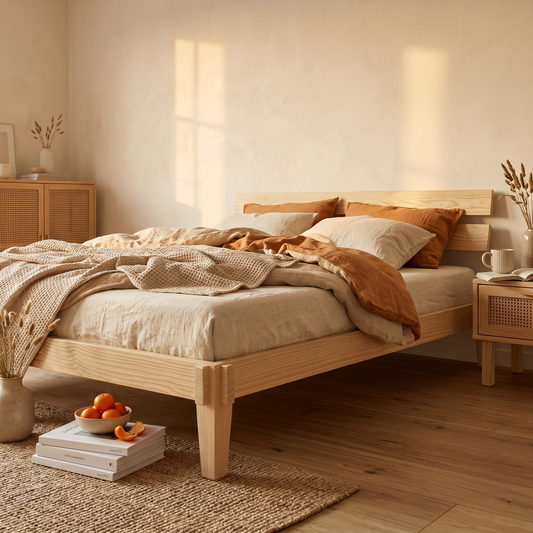
A low bed frame — typically one where the sleeping surface is 35 to 45 cm from the floor — lowers the visual centre of gravity of the room, which makes the ceiling feel higher. In a room with a standard ceiling height, this effect can make the room feel genuinely lofty rather than just adequate.
The low bed also produces the psychological effect that a bedroom should produce. Proximity to the ground activates the parasympathetic nervous system — the rest-and-digest state that is the opposite of the fight-or-flight response. Traditional Japanese sleeping arrangements, which are the lowest possible — a futon on a tatami mat — are built on this principle. A low solid wooden bed brings the same quality to a Western bedroom format.
The low bed also works better with the full length mirror. A leaning floor mirror beside a low bed creates a vertical counterpoint that makes the room feel both grounded and spacious simultaneously. The same mirror beside a high bed competes with the headboard rather than complementing it.
The Low Bed: What It Does Poorly
A low bed is harder to get in and out of for people with limited mobility. If you have knee or hip issues, a bed that requires you to lower yourself close to the floor and raise yourself from it is a genuine daily challenge. For most healthy adults, this is not a significant issue, but it is worth considering.
A low bed also provides less under-bed storage than a high bed. If under-bed storage is a significant need in your bedroom, a low bed requires a different storage solution.
The Verdict
For most healthy adults in a room with a standard ceiling height, the low bed wins on sleep quality, room proportions and the psychological quality of the sleeping environment. The high bed wins on accessibility and under-bed storage.
The Poka Bed by A Good Life is a low-profile solid pinewood bed designed around the advantages of the low bed. The sleeping surface sits at the height that maximises the ceiling-height effect and the parasympathetic activation that supports deep sleep. The solid pinewood frame and screwless joinery mean the low profile is structurally sound rather than a compromise. In a bedroom with the Akari Pinewood Mirror, the low bed and the tall mirror create the proportional balance that makes the room feel both grounded and spacious. This is the combination that wins.