Proportion is the most powerful and least understood element of interior design. A room can be perfectly furnished and still feel wrong if the proportions are off. And a room with modest furniture and a limited budget can feel genuinely impressive if the proportions are right. A long mirror is one of the most effective tools available for correcting proportion, and it works through a mechanism that most people have never considered.
The Vertical Principle
Human perception of room size is determined by two primary dimensions: floor area and ceiling height. Floor area is fixed by the walls. Ceiling height is fixed by the structure. But perceived ceiling height — how tall the room feels — is not fixed. It is determined by the vertical elements in the room and where they draw the eye.
A room full of low, horizontal furniture — a low bed, a low sideboard, a low coffee table — draws the eye along the horizontal plane and leaves the upper portion of the room visually empty. The ceiling feels distant and the room feels wide but not tall. A room with strong vertical elements draws the eye upward, which makes the ceiling feel closer and the room feel taller.
A long mirror or full length mirror is one of the most effective vertical elements available in a bedroom. A mirror between 150 and 180 cm tall creates a strong vertical line that draws the eye from floor to near-ceiling. In a room with a 9-foot ceiling, this vertical line makes the ceiling feel higher than it is. In a room with a 10-foot ceiling, it makes the room feel genuinely lofty.
The Reflection Multiplier
The vertical effect of a long mirror is amplified by its reflective surface. A tall wardrobe creates a vertical line but reflects nothing. A full length floor mirror creates the same vertical line and additionally reflects the room, which doubles the perceived depth of the space. The combination of vertical emphasis and spatial reflection makes a long mirror significantly more effective at improving room proportions than any non-reflective vertical element of the same size.
The reflection also amplifies the ceiling height effect. A full length mirror that reflects the ceiling makes the ceiling appear to continue beyond the mirror, which extends the perceived vertical dimension of the room. In a small bedroom with a standard ceiling height, this effect can make the room feel meaningfully more spacious without any structural change.
Where to Place a Long Mirror for Maximum Proportional Effect
The placement that maximises the proportional effect of a long mirror is on the wall that the eye travels to first when entering the room. In most bedrooms, this is the wall opposite the door. A full length mirror on this wall is the first thing you see when you enter, which means its vertical line and spatial reflection set the proportional tone of the room before you have consciously assessed it.
The second most effective placement is on a side wall, positioned so that it is visible from the bed. In this position, the mirror's vertical line is visible from the room's primary resting position, which means it contributes to the perceived proportions of the room during the hours you spend in it.
The placement to avoid for proportional effect is in a corner where the mirror is not visible from the main sightlines of the room. A mirror that cannot be seen from the primary positions in the room contributes nothing to the perceived proportions of the space.
The Frame and the Vertical Line
The frame of a long mirror affects how strongly the vertical line reads. A slim frame in a colour close to the wall colour allows the mirror to read as a window into space rather than as an object on the wall. A heavy frame in a contrasting colour reads as an object first and a mirror second, which reduces the proportional effect.
A wooden frame mirror in solid pinewood with a matte finish sits in the ideal middle ground. The frame is present enough to give the mirror warmth and structure but not so dominant that it competes with the reflection. The natural wood colour is close enough to most wall palettes to allow the mirror to read as spatial rather than decorative.
The Akari Pinewood Mirror is a full length floor mirror in solid pinewood proportioned exactly for this purpose. The frame is slim enough to be visually recessive and the matte finish absorbs light rather than reflecting it, which keeps the frame from competing with the glass. Leaned against the wall opposite the bedroom door, it sets the proportional tone of the room from the moment you enter.
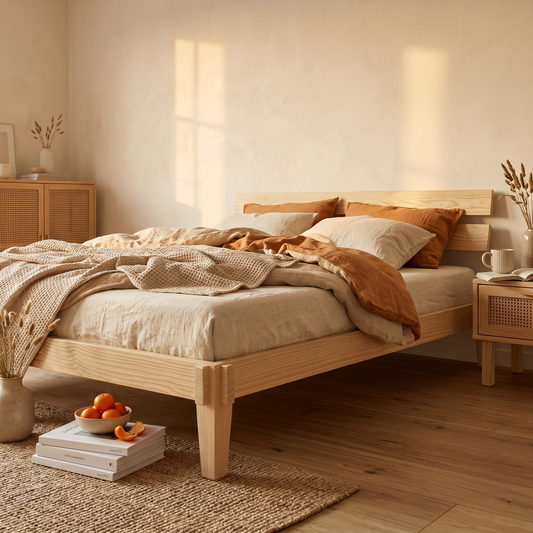
Paired with the Poka Bed — a low solid pinewood bed frame that emphasises the horizontal — the Akari Mirror provides the vertical counterpoint that balances the room's proportions. Low bed, tall mirror, natural materials throughout. The room feels grounded and spacious simultaneously, which is the proportional ideal for a bedroom.
The Full Height Mirror: When to Go Taller
A full height mirror that reaches from floor to ceiling is the most dramatic proportional intervention available. In a room with a 9-foot ceiling, a floor-to-ceiling mirror makes the room feel like it has a 12-foot ceiling. The effect is powerful but requires careful placement — a floor-to-ceiling mirror in the wrong position can feel overwhelming rather than expansive.
For most bedrooms, a full length mirror between 150 and 180 cm provides the proportional benefits without the visual intensity of a floor-to-ceiling installation. The sweet spot is a mirror tall enough to show a complete reflection and create a strong vertical line, but not so tall that it dominates the room rather than improving it.
One Object, Significant Impact
The long mirror is one of the few single objects that can meaningfully change the perceived proportions of a room. It does not require renovation, repainting or new furniture. It requires a well-chosen mirror in the right position. The vertical line it creates, the space it reflects and the light it amplifies work together to produce a room that feels better than its dimensions suggest. Few objects offer this return on a single decision.