The Japandi kitchen is one of the most searched and least understood kitchen aesthetics in India right now. Most interpretations of it focus on the visual — the warm neutrals, the clean lines, the absence of clutter. But the Japandi kitchen is not primarily a visual aesthetic. It is a material one. The materials determine the feeling of the space, and in a Japandi kitchen, two materials do almost all of the work: solid wood and fluted glass.
What the Japandi Kitchen Is Actually About
Japandi design is the synthesis of Japanese wabi-sabi and Scandinavian hygge. In a kitchen context, wabi-sabi means honest materials that show their nature and age gracefully. Hygge means warmth, comfort and the sense that the kitchen is a place worth being in rather than just a place to prepare food. Together, these principles produce a kitchen that is materially honest, visually warm and genuinely comfortable to spend time in.
The materials that embody these principles most completely are solid wood and fluted glass. Solid wood is honest — it shows its grain, its knots and its age. It is warm to the touch and warm in colour. It ages by developing a patina rather than by degrading. Fluted glass is textured rather than smooth, warm in its light diffusion and honest about its material nature. Together, they produce a kitchen that feels like it was designed for the person who uses it rather than for the person who photographs it.
Solid Wood in the Japandi Kitchen
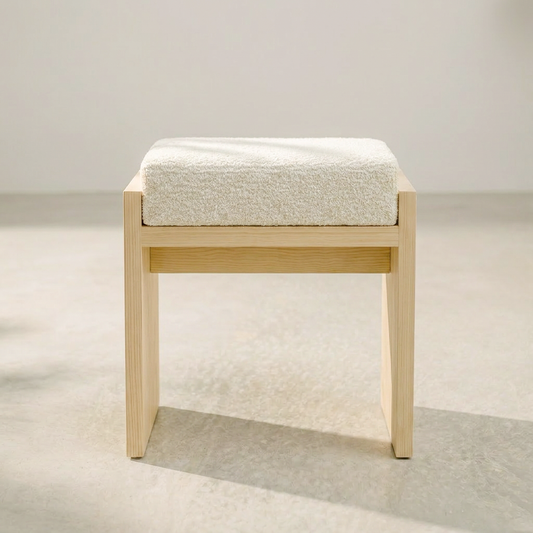
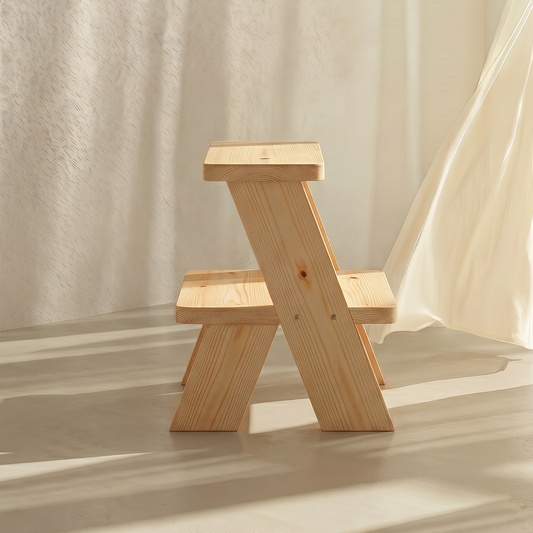
Solid wood in a Japandi kitchen appears in the cabinet frames, the open shelving and the furniture pieces that give the kitchen its material anchor. The wood should be light in colour — pine, oak or ash rather than dark walnut or mahogany — and finished with a breathable matte oil rather than a sealed lacquer. The grain should be visible. The knots, if present, should be embraced rather than filled.
In an Indian kitchen, solid pinewood is the most practical choice. It is light enough to keep the kitchen feeling airy rather than heavy. It handles Indian humidity better than many people expect when properly seasoned and finished. And it belongs to the same material family as the other solid pinewood pieces in the home — the bed, the mirror, the console — which means the kitchen speaks the same language as the rest of the house.
Fluted Glass in the Japandi Kitchen
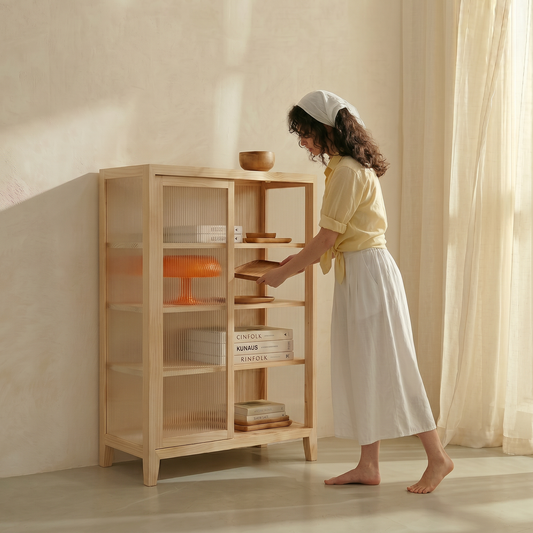
Fluted glass in a Japandi kitchen appears on the cabinet doors, where it provides the textural contrast that solid wood alone cannot offer. The ribbed surface of fluted glass catches light in a way that is consistent with the Japandi preference for warm, indirect illumination. The partial obscuring of the contents is consistent with the wabi-sabi principle of suggestion over display. The texture is consistent with the Japandi preference for surfaces that have character rather than surfaces that are merely smooth.
Fluted glass kitchen cabinet doors in a Japandi kitchen are not a decorative choice. They are a material one. The glass belongs to the same aesthetic register as the solid wood frame it sits in. Together, they produce a cabinet that is honest, warm and visually interesting — the three qualities that define a Japandi kitchen.
The Kanso Fluted Cabinet in a Japandi Kitchen
The Kanso Fluted Cabinet by A Good Life is the Japandi kitchen cabinet. Solid pinewood frame, fluted glass cabinet doors, matte finish. It embodies the material principles of Japandi design in a single piece: honest wood, textured glass, warm light diffusion and a design that ages rather than degrades.
In a Japandi kitchen, the Kanso Cabinet is the piece that establishes the material language. The solid pinewood frame sets the wood tone. The fluted glass doors set the texture and light quality. Every other element in the kitchen — the countertop material, the backsplash, the hardware — is evaluated against the material language established by this piece.
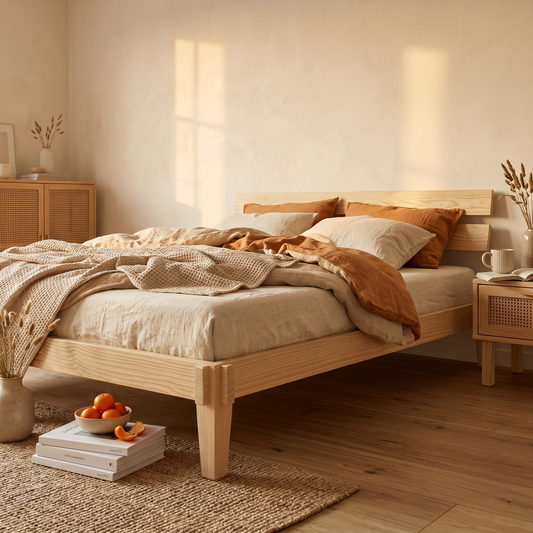
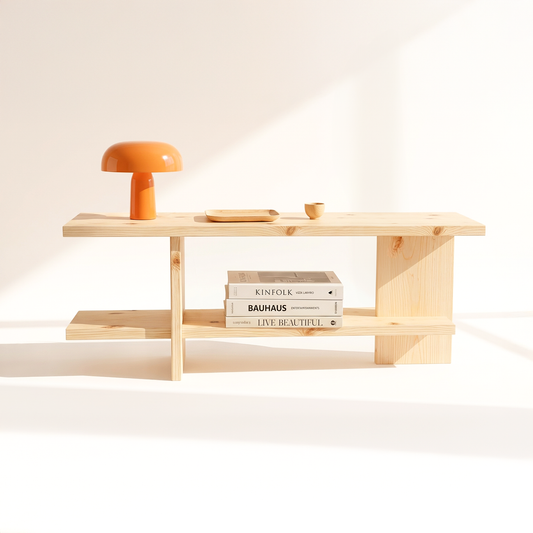
Carry the language through the home with the Nagomi Pinewood Console in the entryway, the Akari Pinewood Mirror in the bedroom and the Poka Bed as the bedroom anchor. The Japandi kitchen becomes the starting point of a home that speaks one material language from the first room to the last.
The Kitchen That Feels Like a Room
The Japandi kitchen is not a kitchen that looks good in photographs. It is a kitchen that feels good to be in. The solid wood is warm to the touch. The fluted glass catches the morning light. The matte surfaces absorb rather than reflect. The room is quiet, honest and genuinely comfortable. This is what two materials — solid wood and fluted glass — can do to a kitchen when they are chosen with intention and used with consistency.