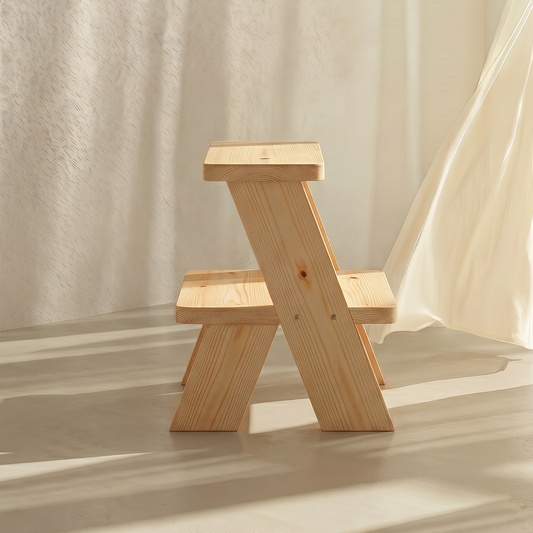

The construction method behind a bench is often more predictive of how long it'll last than the wood species itself, and it's genuinely easy to check before buying.
What Screwed Construction Looks Like
Flip a bench over or check underneath, visible screw heads, metal brackets, or cam locks at the joints indicate screwed or hardware-assisted construction. This isn't automatically bad, but it's the type of joint most likely to loosen over years of seasonal wood movement.
What Interlocking Joinery Looks Like
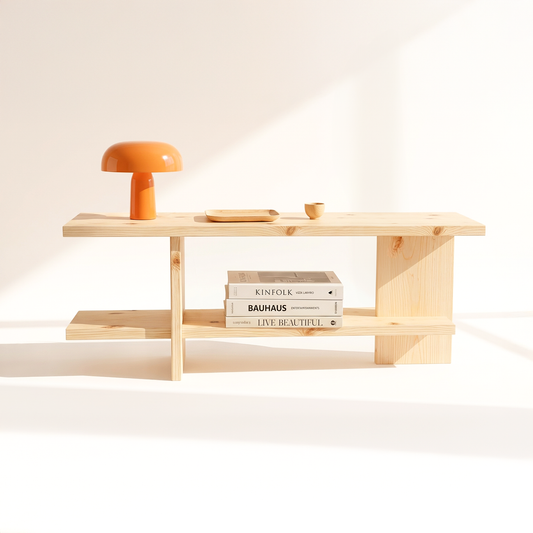
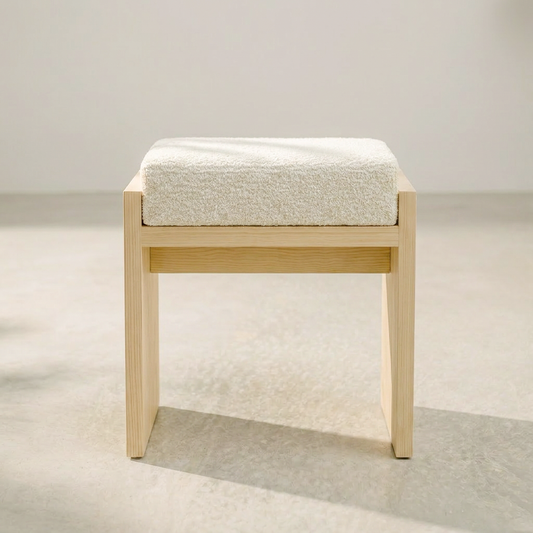
A bench like the Kosho Bench shows no visible metal fasteners at all, the legs and seat connect through shaped wood parts that lock into each other, sometimes visible as a slightly different grain direction where two pieces meet, rather than a screw head or bracket.
Why the Difference Matters Over Time
Screwed joints resist the wood's natural seasonal expansion and contraction, which is exactly why they loosen and eventually squeak. Interlocking joints move with the wood rather than against it, which is why well-made screwless furniture tends to stay quiet and tight for far longer.
The Honest Verdict
Turn any bench over before buying. No visible metal hardware at the joints is a strong, simple signal of interlocking construction, and a genuine predictor of how well the piece will hold up over years of daily use.