There is a quality that the most considered rooms share. It is not a specific colour or a specific style. It is a sense that every object in the room was chosen rather than placed — that the room has been thought about rather than assembled. A fluted glass cabinet is one of the most reliable ways to introduce this quality into a room, because it does something that most storage furniture does not: it contributes to the visual character of the room rather than merely occupying space in it.
The Problem With Most Storage Furniture
Most storage furniture is designed to be invisible. The goal is to hold things without drawing attention to itself. Solid-door cabinets achieve this by being visually neutral — they are present but not interesting. The problem is that a room full of visually neutral objects is a room that feels unresolved. The eye has nowhere to rest, nothing to engage with and no sense that the room has been designed rather than furnished.
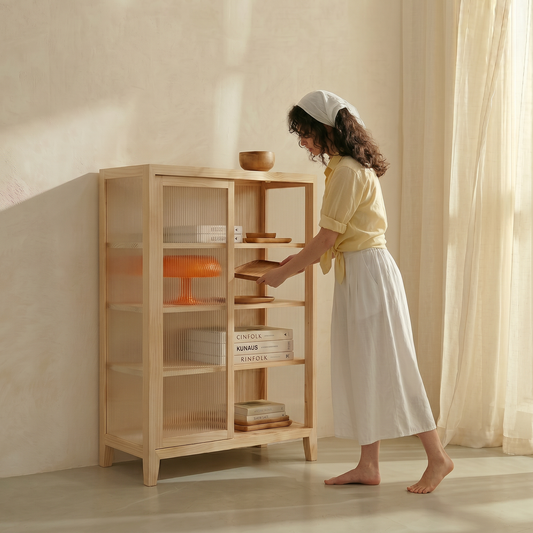
A fluted glass cabinet breaks this pattern. It is storage that is also a visual element — a surface that catches light, adds texture and creates the sense that the room has been thought about. It holds things and it contributes to the room simultaneously. This is the quality that makes it so effective at making a room feel more considered.
In the Kitchen: The Focal Point That Works
A fluted glass kitchen cabinet positioned as a focal point — on the wall opposite the entrance, or flanking the window — gives the kitchen a visual anchor that solid-door cabinets cannot provide. The textured glass surface catches the light from the window or the kitchen lighting and creates a warm, luminous presence that draws the eye without demanding attention.
The practical benefit is that the fluted glass cupboard holds everyday items without requiring them to be display-ready. The contents are visible as soft impressions through the ribbed glass — shapes and colours rather than specific objects. The kitchen looks considered from across the room regardless of what is inside the cabinet.
In the Living Room: Storage With Presence
A fluted glass cabinet in a living room does something that a bookshelf or a solid-door sideboard cannot: it creates a surface that is interesting to look at without being decorative. The ribbed glass texture adds visual depth to the wall it occupies. The light refraction creates warmth and movement. The partial obscuring of the contents removes the pressure to curate the interior as a display.
In a living room with a warm neutral palette and natural materials, a fluted glass cabinet in solid pinewood belongs to the same material family as the other pieces in the room. It is not a statement piece. It is a considered piece — one that contributes to the room's visual quality without competing with the other elements.
In the Bedroom: The Unexpected Application
A fluted glass cabinet in a bedroom is less common than in a kitchen or living room, but it is one of the most effective applications. In a bedroom, a fluted glass cupboard provides storage for clothing or accessories behind doors that make the room look considered rather than utilitarian. The soft obscuring of the contents means the bedroom does not look like a storage room even when the cabinet is full.
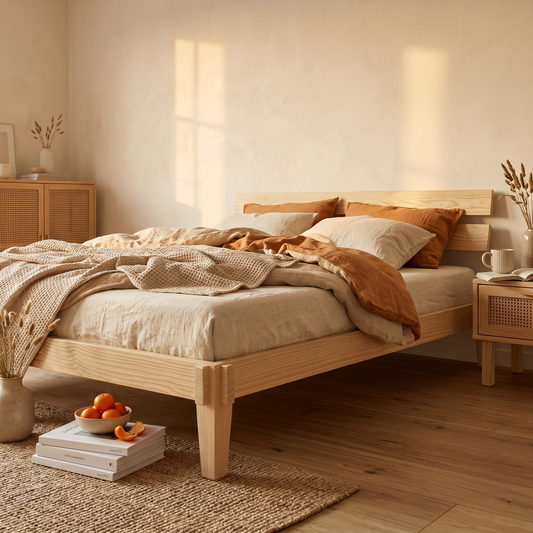
Alongside the Poka Bed in solid pinewood and the Akari Pinewood Mirror, the Kanso Fluted Cabinet completes a bedroom where every piece belongs to the same material family. The solid pinewood frame of the cabinet matches the bed and the mirror. The fluted glass doors add a textural element that the other pieces do not have. The room is materially consistent and visually interesting simultaneously.
The Placement Principles
A fluted glass cabinet works best when it is positioned to catch light rather than to sit in shadow. Adjacent to a window, where natural light can interact with the ribbed glass surface throughout the day, is the most effective position. In a kitchen, this means positioning the fluted glass kitchen cabinet on the wall that receives the most natural light. In a living room, it means placing the cabinet where the afternoon light will catch it.
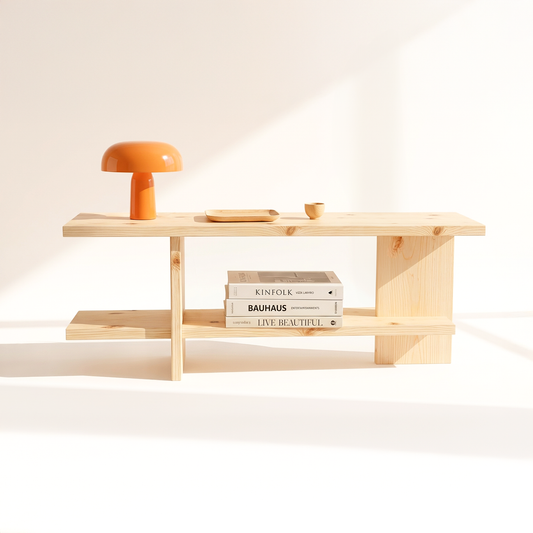
The objects on or near the cabinet also matter. A warm lamp positioned to illuminate the cabinet from the side amplifies the light-refraction effect of the fluted glass. A plant beside the cabinet adds organic warmth that complements the natural material of the solid pinewood frame. The Nagomi Pinewood Console in the same room extends the material language and gives the space a surface that complements the cabinet's storage function.
The Room That Feels Thought About
A fluted glass cabinet does not transform a room by itself. But it introduces a quality — a surface that catches light, adds texture and contributes to the visual character of the space — that makes the room feel more considered than it did before. In a home where every other piece is chosen with the same intention, the fluted glass cabinet is the element that makes the room feel genuinely designed. That is a significant contribution from a single piece of furniture.