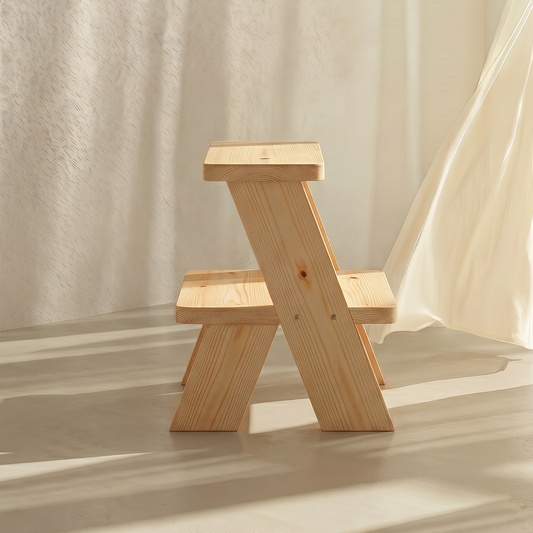

Minimalism and Indian craftsmanship might seem like opposites — one values restraint, the other celebrates richness. But when brought together thoughtfully, they create something extraordinary: a home that is calm, considered and deeply personal.
Start with a Neutral Foundation
Begin with white or warm off-white walls, light wood floors or neutral stone tiles. This creates the quiet backdrop that allows handcrafted pieces to shine without competing with each other.
Choose Fewer, Better Pieces
Minimalism is not about empty rooms — it's about intentional curation. Choose one or two statement handcrafted pieces per room rather than filling every surface. A hand-carved wooden console, a handwoven dhurrie or a single piece of block-printed art can anchor an entire room.
Let Craftsmanship Be the Decor
In a minimalist home, the craftsmanship of each piece becomes the decoration. Visible wood grain, hand-stitched upholstery, natural knots and subtle imperfections are features, not flaws. Choose pieces where the making is visible.
Mix Indian Warmth with Nordic Calm
Pair clean-lined Japandi furniture with Indian accents — brass diyas, terracotta planters, block-printed cushions or a handwoven jute rug. The contrast creates warmth without clutter.
Keep Surfaces Clear
A minimalist home breathes through its empty surfaces. Keep countertops, shelves and tables clear except for one or two meaningful objects. Let the furniture do the talking.
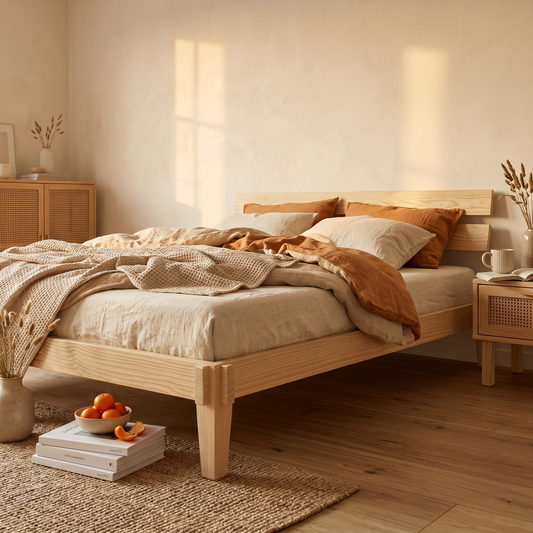
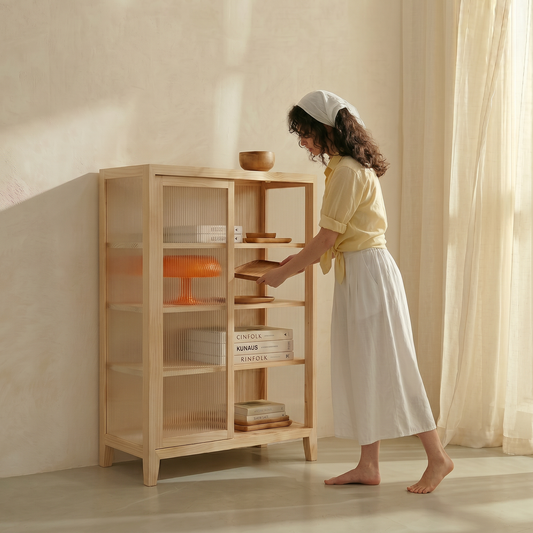
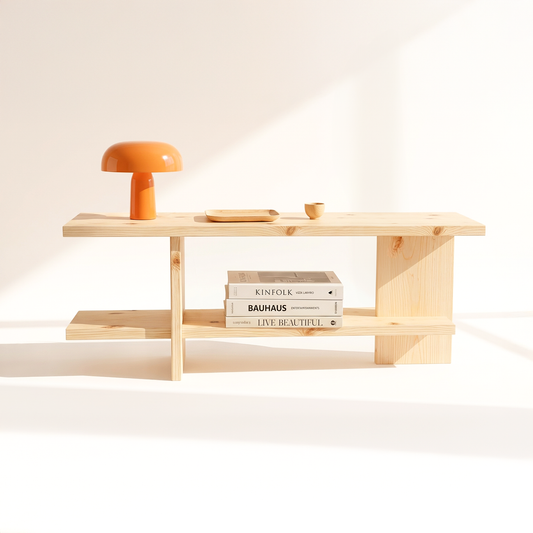
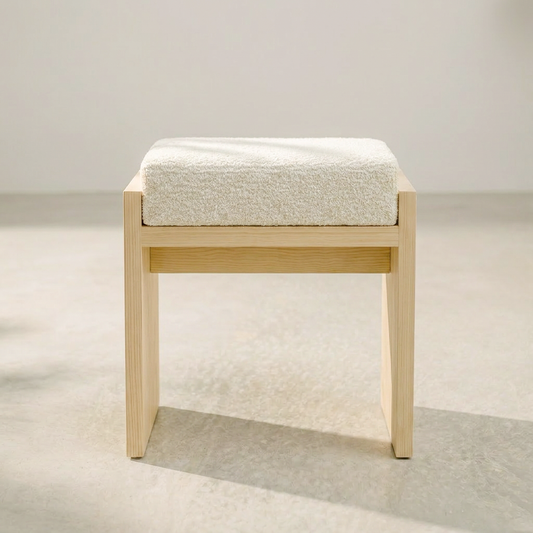
Handcrafted Japandi pinewood furniture from A Good Life.
Every piece at A Good Life is handcrafted from solid Canadian pinewood — where the craftsmanship is visible and the design is intentionally minimal. Shop all pinewood furniture →