The homes that feel most complete are not the ones with the most furniture. They are the ones where the furniture tells a coherent story — where the material language is consistent, the design philosophy is clear and every piece belongs to the same family. Most homes tell several stories simultaneously, none of them complete. Here is how four pieces of solid pinewood can tell one story, completely, from the front door to the bedroom wall.
The Story a Home Tells
Every home tells a story about the values of the person who lives in it. Not in a decorative sense — the art on the walls, the books on the shelves — but in a material sense. The materials chosen, the finishes applied and the construction methods used all communicate something about what the person values: durability or disposability, natural materials or synthetic ones, honest craft or surface appearance.
A home furnished with solid pinewood throughout tells a specific story. It values natural materials over synthetic ones. It values longevity over disposability. It values honest craft over surface appearance. It values the kind of beauty that improves with age rather than the kind that degrades with use. This is not a story about wealth. It is a story about intention.
The First Chapter: The Entryway
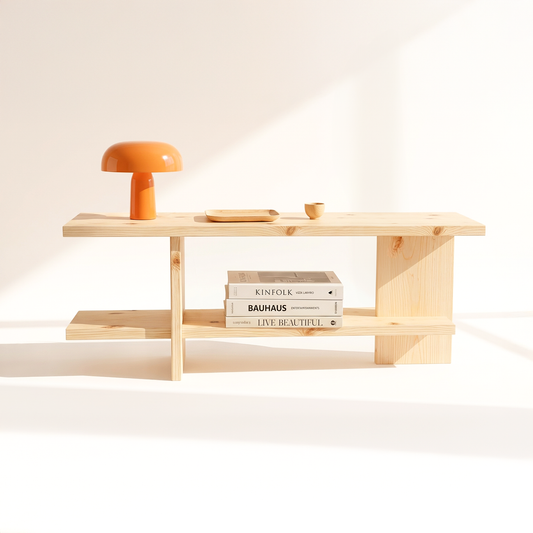
The story begins at the front door. The entryway is the first room a visitor sees and the first room you return to at the end of the day. A wooden console in solid pinewood gives the entryway a surface, a presence and a reason to exist beyond mere passage.
The Nagomi Pinewood Console by A Good Life is the first chapter. Solid pinewood, matte finish, narrow profile. It holds the objects of daily transition — keys, a bag, a plant — and anchors the mirror above it. The entryway becomes a room rather than a corridor. The story begins with material honesty and visual calm.
The Second Chapter: The Kitchen
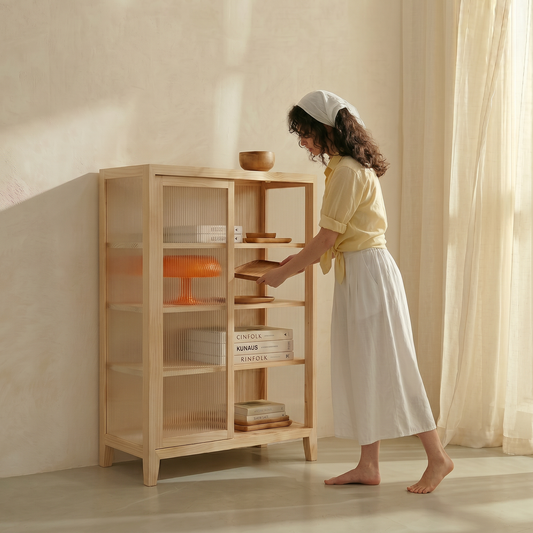
The kitchen is where the story develops. It is the most-used room in the home and the one where the quality of the materials is most directly felt in daily life. A fluted glass cabinet in solid pinewood gives the kitchen a surface that catches light, adds texture and makes the room feel considered rather than merely functional.
The Kanso Fluted Cabinet by A Good Life is the second chapter. Solid pinewood frame, fluted glass cabinet doors, matte finish. The same material family as the Nagomi Console. The same design philosophy. The kitchen speaks the same language as the entryway. The story is consistent.
The Third Chapter: The Bedroom Mirror
The bedroom is where the story becomes personal. It is the most private room in the home and the one where the quality of the environment has the most direct effect on the quality of daily life. A full length floor mirror in solid pinewood gives the bedroom a vertical anchor, a daily reflection and a material presence that belongs to the same family as the pieces in the other rooms.
The Akari Pinewood Mirror by A Good Life is the third chapter. Solid pinewood, leaning format, matte finish. The same material family as the console and the cabinet. The bedroom speaks the same language as the kitchen and the entryway. The story continues without interruption.
The Fourth Chapter: The Bed
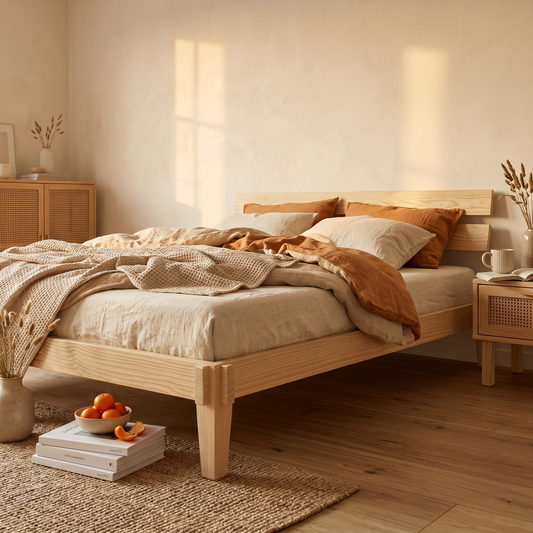
The bed is the final chapter and the most important one. It is the object you spend the most time with, the one that most directly affects the quality of your rest and the one that anchors the bedroom's material and proportional character.
The Poka Bed by A Good Life is the fourth chapter. Solid pinewood, screwless joinery, low Japandi silhouette, matte finish. The same material family as the console, the cabinet and the mirror. The bedroom is complete. The story is told.
What Four Pieces Do That Forty Cannot
Forty pieces of furniture from forty different sources produce a home that is full. Four pieces from the same material family produce a home that has a story. The difference is not the number of objects. It is the coherence of the narrative.
When the console, the cabinet, the mirror and the bed share the same solid pinewood construction and the same matte finish, the home has a material identity that is immediately felt. Every other object in the home — the textiles, the lighting, the rug, the smaller pieces — is evaluated against this identity. The decisions become easier. The home becomes more coherent. The story becomes clearer.
The Home Worth Living In
A home that tells a coherent story is a home that feels genuinely lived in rather than merely furnished. The Nagomi Console, the Kanso Cabinet, the Akari Mirror and the Poka Bed are four pieces of solid pinewood that can give any home this quality. Not because they are expensive or rare but because they are honest, well-made and designed to belong together. Four pieces. One story. One home.