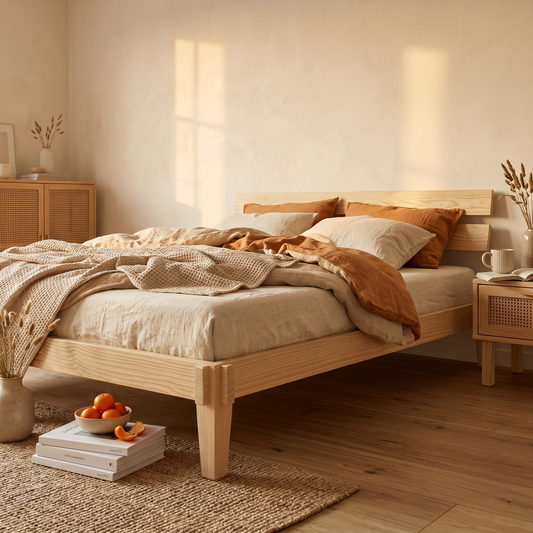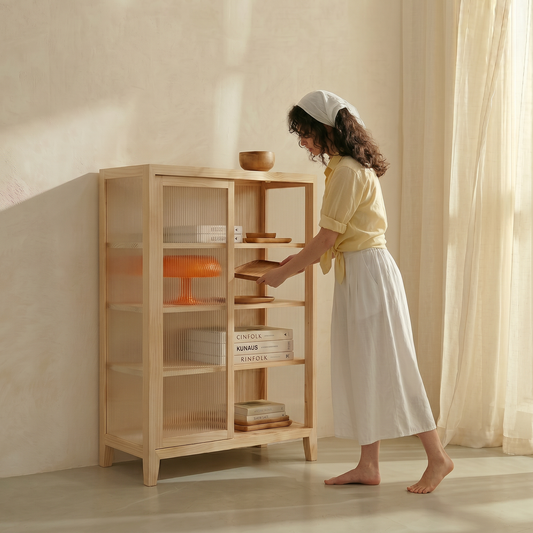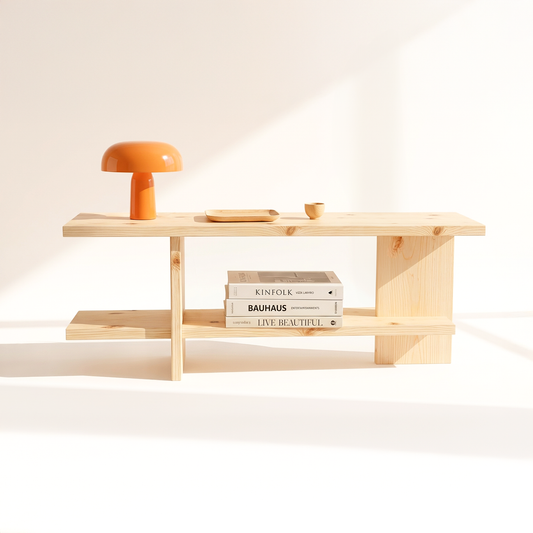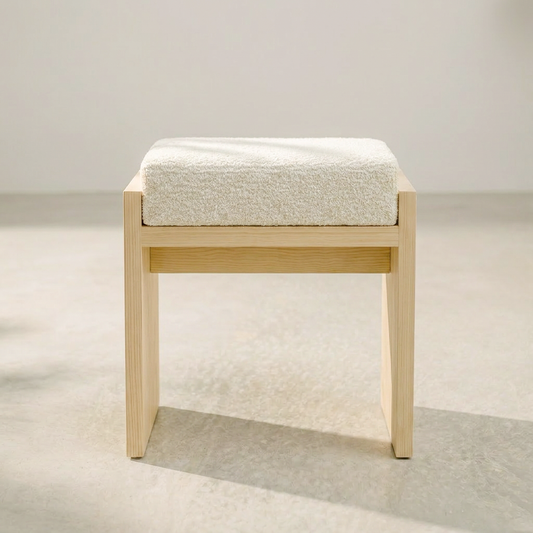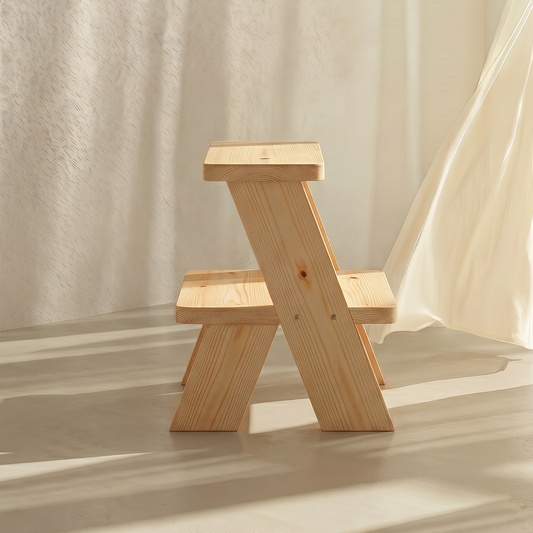

There is a moment when you look closely at a piece of solid wood furniture and notice something that a photograph never captures: the grain is not uniform. There is a knot where a branch once grew. The colour shifts slightly from one plank to the next. The surface, under raking light, has a texture that is not perfectly smooth. In a world of engineered surfaces designed to eliminate variation, this is the quality that makes solid wood genuinely beautiful rather than merely attractive.
What Wabi-Sabi Actually Means
Wabi-sabi is the Japanese aesthetic philosophy that finds beauty in imperfection, impermanence and incompleteness. It is not a style. It is a way of seeing. A cracked tea bowl repaired with gold lacquer. A moss-covered stone. A piece of wood with a visible knot. These are not flawed objects. They are honest ones — objects that show their nature, their history and their material truth without apology.
Applied to furniture, wabi-sabi means choosing materials that are honest about what they are. Solid wood is honest. It shows its grain, its knots and its age. It does not pretend to be something it is not. Engineered wood with a wood-effect laminate is not honest. It is a synthetic surface designed to look like something it is not. In a bedroom designed around wabi-sabi principles, the choice between these two materials is not a design decision. It is a philosophical one.
The Grain as Design
The grain of solid pinewood is one of its most underappreciated qualities. The fine, consistent grain of kiln-dried pine takes a matte oil finish in a way that makes the wood glow rather than shine. Under natural light, the grain creates a subtle texture that changes as the light moves through the day. The same surface looks different at 8am than it does at 4pm. It is alive in a way that a laminate surface is not.
In a bedroom, this quality is felt rather than seen. The solid wooden bed frame that catches the morning light differently from the afternoon light is a surface that rewards attention without demanding it. It is the low-key fascination that environmental psychologists identify as one of the qualities of a restorative environment — a surface that holds attention gently without activating it.
The Knot as Character
A knot in solid wood is the mark of where a branch once grew. It is a record of the tree's life — a moment of growth preserved in the material. In furniture made from solid wood, a knot is not a defect. It is a signature. It makes the piece unique in a way that no engineered surface can replicate.
The wabi-sabi response to a knot is not to fill it, hide it or reject the piece because of it. It is to recognise it as the quality that makes the piece honest. A solid wooden bed frame with a visible knot in the headboard is not a flawed piece. It is a piece that shows its material truth. This is the quality that makes solid wood furniture more interesting to live with over time rather than less.
The Patina as Progress
Solid wood with a matte oil finish develops a patina over time. The oil deepens into the wood. The colour warms. The surface develops a quality that was not there when the piece was new — a depth and warmth that is the accumulated result of years of use and care. This is the opposite of degradation. It is improvement.
The wabi-sabi principle of impermanence is present in this process. The solid wooden bed you buy today will not look the same in ten years. It will look better. The patina is not a sign of age. It is a sign of life. A piece of furniture that improves with use is a piece that is worth living with.
The Poka Bed: Wabi-Sabi in Solid Pinewood
The Poka Bed by A Good Life is made from solid pinewood with a matte oil finish. The grain is visible. The knots, where present, are honest. The finish allows the wood to breathe and develop a patina over time. It is a bed designed around the wabi-sabi principle that honest materials, honestly finished, are more beautiful than perfect surfaces that hide what they are made of.
Alongside the Akari Pinewood Mirror — the same solid pinewood, the same matte finish, the same honest material — the bedroom becomes a space where every surface tells the truth about what it is made of. This is the quality that makes a room feel genuinely beautiful rather than merely attractive. The grain, the knot and the imperfection are not flaws. They are the design.