Fluted glass cabinets have moved from architectural niche to mainstream Indian home design in the last two years. The search volume for fluted glass kitchen cabinets, fluted glass cupboards and fluted glass cabinet doors has grown significantly as more Indian homeowners discover the material and want to understand it before they buy. This is the guide that answers the questions most product listings do not.
What to Look For in a Fluted Glass Cabinet
A fluted glass cabinet is only as good as the combination of its glass and its frame. Most buyers focus on the glass and ignore the frame. This is a mistake. Here is what to evaluate in both.
For the glass: the quality of the fluting matters. Deep, well-defined ridges produce a stronger light-refraction effect than shallow, poorly defined ones. The glass thickness should be 4mm or more for a cabinet door that will be opened and closed daily. Low-iron glass produces a warmer, more accurate colour rendition than standard glass, which is worth asking about for a piece that will be a visual focal point in the room.
For the frame: solid wood throughout is the standard worth buying to. A solid wooden cabinet frame handles Indian humidity by moving as a single piece rather than swelling unevenly. The finish should be breathable — a matte oil or wax rather than a sealed lacquer — which allows the wood to manage seasonal moisture changes without stress. The joinery should be traditional rather than bolt-together, which means the joints get tighter with use rather than looser.
Where to Use a Fluted Glass Cabinet in an Indian Home
The kitchen is the most common application for fluted glass kitchen cabinets in Indian homes, and for good reason. The kitchen is the room where the tension between display and concealment is most acute, and fluted glass resolves this tension better than any other door material. The textured glass suggests the contents without revealing them, which means the kitchen looks considered regardless of how the interior is organised.
The living room is the second most effective application. A fluted glass cabinet in a living room provides storage with a visual presence that a solid-door sideboard cannot achieve. The light-catching quality of the fluted glass makes the cabinet a focal point that contributes to the room's visual character rather than merely occupying space in it.
The bedroom is the least common but most surprising application. A fluted glass cupboard in a bedroom provides storage for clothing or accessories behind doors that make the room look considered rather than utilitarian. In a bedroom built around natural materials, a fluted glass cabinet in solid pinewood belongs to the same material family as the bed and the mirror.
The Fluted Glass Cabinet and the Indian Climate
Indian humidity is one of the most demanding conditions for cabinet materials in the world. Monsoon humidity in coastal cities regularly exceeds 85 percent, which causes engineered wood to swell, laminate to lift and bolt-together joints to loosen. A solid wooden cabinet with a breathable finish handles these conditions significantly better than any engineered wood alternative.
The glass itself is not affected by humidity in the way that wood is, but the seal between the glass and the frame is. A well-made fluted glass cabinet uses a proper glazing method that keeps the glass secure in the frame through seasonal humidity cycling. A poorly made one uses adhesive or clips that can fail as the frame moves with humidity changes.
The Kanso Fluted Cabinet: The Right Answer for Indian Homes
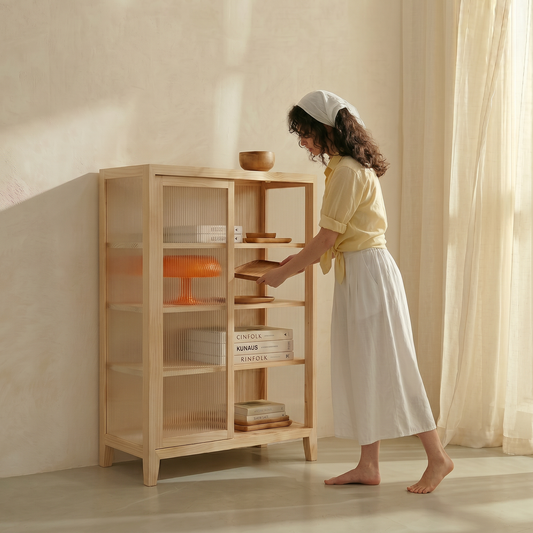
The Kanso Fluted Cabinet by A Good Life is designed for the Indian home. Solid pinewood frame, fluted glass cabinet doors, matte oil finish. It handles Indian humidity without swelling or warping. The fluted glass front panels provide the visual interest and light diffusion that make fluted glass kitchen cabinets so compelling. The solid pinewood frame provides the structural integrity that engineered wood alternatives cannot match.
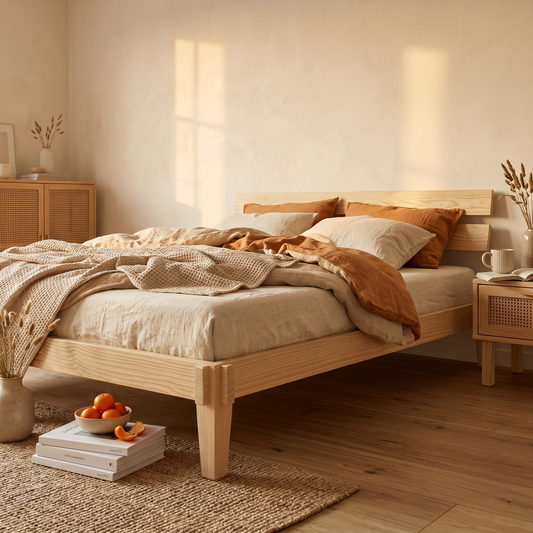
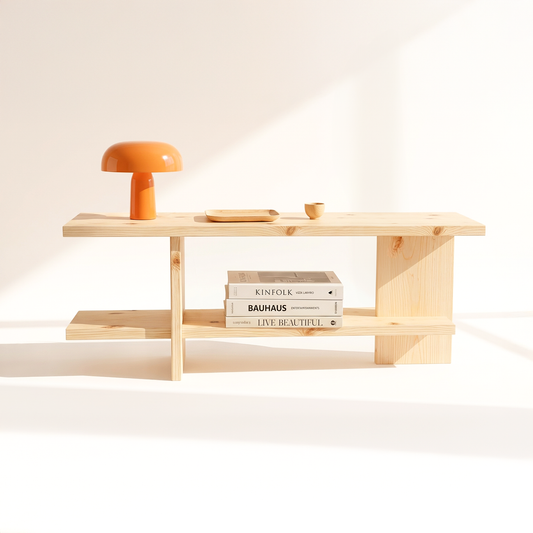
The Kanso Cabinet belongs to the same material family as the other A Good Life pieces: the Nagomi Pinewood Console for the entryway, the Akari Pinewood Mirror for the bedroom and the Poka Bed as the bedroom anchor. The same solid pinewood, the same matte finish, the same design philosophy. A home where every piece passes the questions that actually matter.
The Price Question
A solid wooden cabinet with fluted glass doors costs more than a flat-pack alternative. The relevant comparison is not the upfront price but the cost over time. A flat-pack cabinet replaced every five years in Indian conditions costs more over fifteen years than a solid wooden cabinet that lasts the same period without replacement. The maths consistently favour solid wood. The fluted glass cabinet is not a luxury purchase. It is the more economical one over any meaningful time horizon.
The Buying Checklist
- Frame material — Solid wood throughout, not veneered MDF. Confirm explicitly.
- Glass thickness — 4mm or more for a cabinet door used daily.
- Glass quality — Low-iron glass for a warmer, more accurate colour rendition.
- Finish type — Breathable matte oil or wax, not sealed lacquer.
- Joinery method — Traditional joinery rather than bolt-together.
- Glazing method — Proper glazing that holds the glass through humidity cycling.
A brand that answers all of these questions directly is a brand that stands behind what they make. A brand that cannot answer them is asking you to trust the photograph. The photograph is not the cabinet.