The entryway is the most neglected room in most Indian homes. It is treated as a corridor — a space to pass through rather than a space to inhabit. Shoes are piled near the door. Bags are dropped on the floor. The wall is bare or holds a coat hook that was installed without thought. The result is a home that begins badly, before you have even reached the rooms that were actually designed.
This matters more than most people realise. The entryway is the first thing you see when you come home and the last thing you see before you leave. It sets the psychological tone for both transitions. A well-designed entryway makes coming home feel like arriving somewhere. A neglected one makes it feel like entering a storage area.
The Psychology of the Threshold
Environmental psychologists use the term threshold effect to describe the way crossing a boundary between spaces affects psychological state. The threshold between the outside world and the home is the most significant boundary in daily life. It is the moment of transition from the public self to the private one, from the demands of the day to the recovery of the evening.
A threshold that is marked by a considered space — a wooden console, a mirror, a plant, warm light — amplifies the psychological effect of the transition. The brain registers the change in environment and begins the shift from alert to calm. A threshold that is marked by a pile of shoes and a bare wall does not produce this effect. The transition happens physically but not psychologically.
What the Entryway Needs
A well-designed entryway needs four things: a surface, a reflection, a light source and a living element. The surface is for the objects of daily transition — keys, a bag, a phone. The reflection is for the final check before leaving and the first self-awareness on returning. The light source is for the warmth that signals home. The living element — a plant, a branch, a bowl of stones — is for the natural material presence that activates the biophilic response.
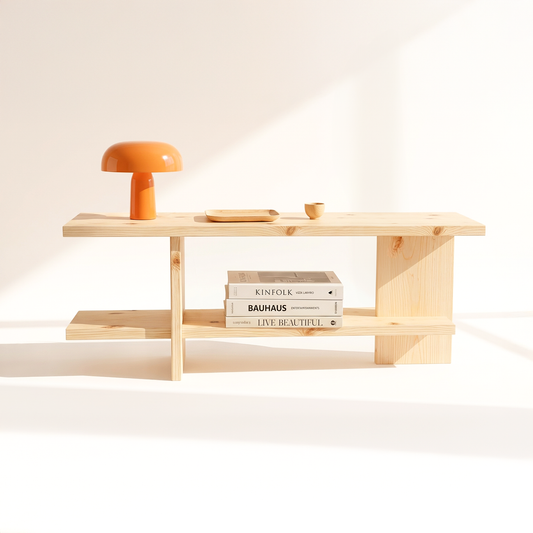
A wooden console table provides the surface and anchors the other three elements. A mirror above it provides the reflection. A lamp on the console provides the warm light. A small plant beside the lamp provides the living element. Four needs, one console, three additional objects. The entryway is complete.
The Nagomi Pinewood Console in the Entryway
The Nagomi Pinewood Console by A Good Life is a solid pinewood console table designed for exactly this purpose. The narrow profile fits in entryways that cannot accommodate full-depth furniture. The solid pinewood construction handles the humidity cycling of an entryway — the door opening and closing, the outside air mixing with the inside air — without swelling or warping. The matte finish is warm and natural, which sets the right material tone for the home beyond it.
Above the Nagomi Console, the Akari Pinewood Mirror provides the reflection. The same solid pinewood, the same matte finish, the same design philosophy. The entryway reads as a considered space rather than a transitional one. The first impression of the home is honest, warm and materially resolved.
The Bedroom Connection
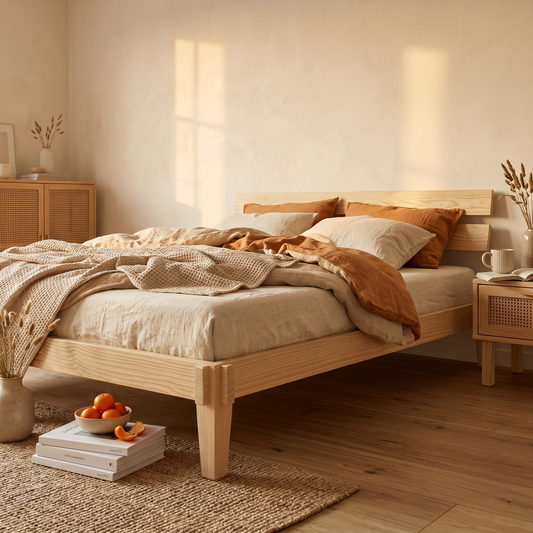
The material language established in the entryway should carry through the home. A solid pinewood console in the entryway and a solid pinewood bed in the bedroom create a material continuity that makes the home feel designed rather than assembled. The Poka Bed in solid pinewood with screwless joinery and a low Japandi silhouette belongs to the same material family as the Nagomi Console. The home speaks one language from the first room to the last.
The Last Thing You See Before You Leave
The entryway is also the last room you pass through before leaving the house. A wooden console with a mirror above it gives you a final moment of self-possession before the day begins. You see yourself completely. You check that everything is in order. You leave with intention rather than urgency.
This is what a well-designed entryway does. It does not just make the home look better. It makes the daily transitions of life feel more considered. Coming home feels like arriving. Leaving feels like departing. The threshold between the private self and the public one is marked by a space that takes both seriously. That is the entryway worth building.