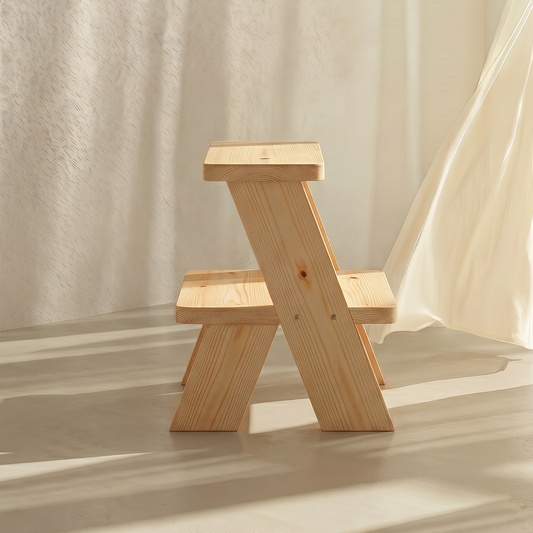

Entryways are the smallest rooms with the biggest opinions. There's rarely space for more than one seated or standing surface, so the choice between a bench and a step stool ends up mattering more than its size would suggest.
What a Bench Is Actually For
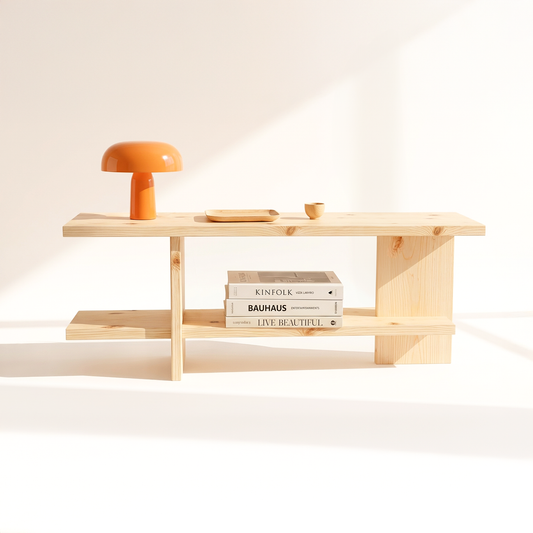
A bench, like the Kosho Pinewood Bench, is built for the two-minute ritual of arriving and leaving: sitting to put on shoes, setting down a bag while you find your keys, resting groceries for a moment. Its length also does visual work a smaller piece can't, anchoring a hallway the way a rug anchors a living room.
What a Step Stool Is Actually For
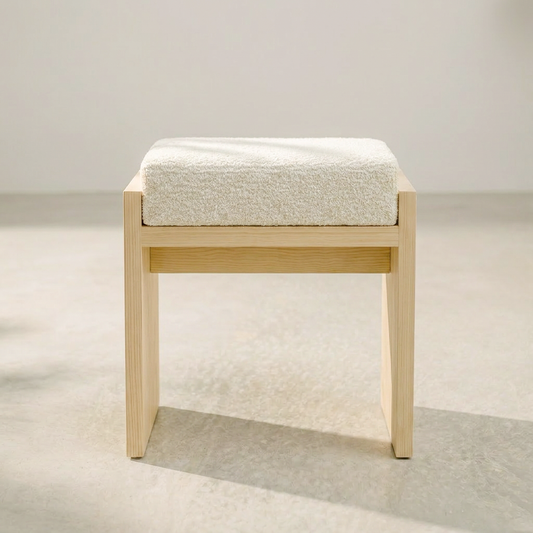
A step stool, like the Chibi Step Stool, solves a narrower problem well. It gives you a place to perch briefly, a surface to set something down, or literal extra height for a high shelf, without asking for the floor space a bench needs. In a compact Indian apartment entryway, that footprint difference is often the deciding factor.
The Space Test
If your entryway is under three feet wide, a bench will likely fight you for space every time the door opens. A step stool tucks against a wall and gets out of the way. If you have a proper hallway or landing, a bench earns its footprint by doing more, seating, surface, visual anchor, all at once.
The Household Test
A bench earns its keep fastest in households with kids, elderly family members, or anyone who genuinely needs to sit to change shoes. A step stool suits single occupants, minimal-footprint homes, or entryways that already have a shoe rack and just need one more flexible surface, for a bag, a stack of mail, a plant.
The Honest Verdict
Neither piece is the upgrade version of the other, they solve different-sized problems. A bench is a commitment to the entryway as a small room in its own right. A step stool is a quieter, more modest bet, useful without asking to be noticed. Measure your space before your taste, and the right answer usually becomes obvious.