
"Eco friendly" and "sustainable" are everywhere in furniture marketing. In Delhi and Gurugram, where people are upgrading homes quickly and buying online more often, the real question is simple: how do you verify if a wooden bed is actually sustainable, or just using the word.
This guide breaks down what sustainability can mean for a wooden bed, what claims are worth trusting, and the exact questions you can ask before you buy.
Quick summary
-
Sustainability is a combination of wood sourcing, manufacturing practices, finishes, packaging, and product longevity
-
Reclaimed or waste wood can be a strong signal, but you should still verify construction and finishing
-
Certifications help, but transparency and verifiable details matter even more
-
The most sustainable bed is often the one that lasts long, stays stable, and can be repaired
What "sustainable" can mean for a wooden bed
A truly eco friendly wooden bed usually performs well across multiple areas.
1. Responsible wood sourcing
Look for one of these:
-
Reclaimed wood or industrial waste wood used intentionally
-
Ethically sourced wood with clear origin information
-
Plantation grown wood with transparent sourcing
Red flags:
-
No mention of sourcing at all
-
Vague phrases like "premium wood" without details
2. Low waste manufacturing
Sustainable brands often talk about:
-
Efficient cutting plans to reduce waste
-
Reusing offcuts
-
Minimizing rejects through quality control
Red flags:
-
No information on how products are made
-
A focus only on aesthetics with zero process transparency
3. Safer finishes and adhesives
Finishes matter because your bed is a daily touch surface.
Look for:
-
Low VOC finishes
-
Water based finishes where possible
-
Clear care instructions that do not require harsh chemicals
Red flags:
-
Strong chemical smell that lingers
-
No finish details, only "polish" or "coating" mentioned
4. Packaging and shipping impact
Even a sustainable product can lose points if packaging is excessive.
Look for:
-
Right sized packaging
-
Recyclable materials like corrugated cartons
-
Minimal plastic use
Red flags:
-
Heavy plastic layers without explanation
-
No mention of packaging choices
5. Longevity and repairability
A bed that lasts 10 to 15 years is often more sustainable than a cheaper bed replaced every few years.
Look for:
-
Strong joinery
-
Good slat support and center support
-
Easy maintenance and repair options
Red flags:
-
Weak hardware, wobble, or creaking
-
Thin slats or poor support design
How to verify sustainability: a simple checklist you can use today
When buying a wooden bed in Delhi or Gurugram, ask these questions.
Wood and sourcing questions
-
What wood species is used (pine, sheesham, etc.)
-
What percentage is reclaimed or waste wood (if claimed)
-
Where is the wood sourced from
-
Is the wood kiln dried or seasoned
Build and longevity questions
-
What is the slat thickness and spacing
-
Is there a center support beam for queen and king sizes
-
What joinery is used at corners
-
What is the warranty period
Finish and health questions
-
What finish is used (water based, oil based, low VOC)
-
Is the finish safe for indoor use
-
How should the bed be cleaned in dusty homes
Packaging and delivery questions
-
What packaging materials are used
-
Is the packaging recyclable
-
How is the bed protected without excessive plastic
Proof questions (the most important)
-
Can you share close up photos of joints and slats
-
Can you share a dimension diagram with outer dimensions
-
Can you share a short video showing sturdiness and finish
If a brand answers clearly and consistently, it is usually a good sign.
Delhi and Gurugram specific reality: what matters most
In Delhi NCR, sustainability is not only about the planet. It is also about living better.
Prioritize:
-
Finishes that handle frequent wiping due to dust
-
Strong construction that stays quiet even with daily movement
-
Designs that are easy to clean under and around
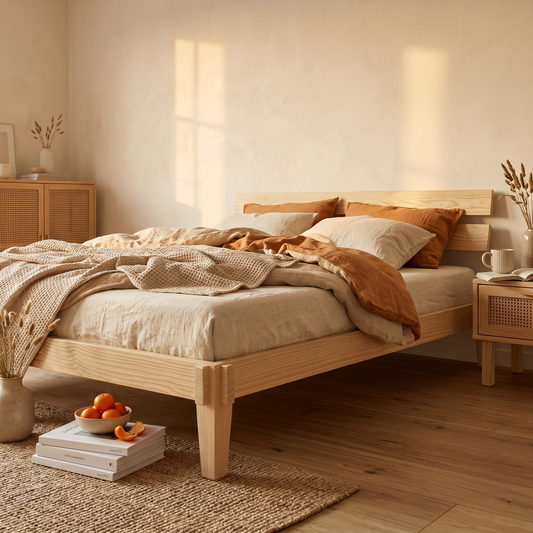
A minimalist bed with good support and a clean finish can be both sustainable and practical. The Poka Bed is built with responsible pine wood sourcing, low waste manufacturing, and a finish designed for easy daily care in dusty Indian homes.
Certifications: helpful but not the only proof
Certifications can be meaningful, but many small makers may not have them yet.
If there are no certifications, look for:
-
Transparent sourcing statements
-
Clear material breakdown
-
Process details and behind the scenes proof
-
A repair and care mindset
FAQ
Is reclaimed wood always better
It can be, especially when it reduces fresh timber use. But you still need good construction, seasoning, and finishing for long term durability.
How do I know if a bed is really solid wood
Ask which parts are solid wood, request photos of slats and joints, and confirm whether any panels are MDF or particle board.
Are engineered wood beds ever eco friendly
Some high quality plywood can be stable, but many engineered boards are hard to repair and can suffer with moisture. Verify adhesives and edge sealing.
What is the most sustainable choice overall
A well built bed that lasts long, can be repaired, and is made with transparent sourcing and responsible finishing.
If a brand is transparent, consistent, and proud to show how the bed is made, you are usually in safe hands.
Explore mindful, minimalist wooden beds crafted for modern Indian homes at The Poka Bed by A Good Life.
Shop This Look
- The Poka Bed — Responsibly made pinewood platform bed
- Minimalist Quiet Nightstand — Slim pinewood bedside table with shelf
- Nami Nightstand — Compact pinewood nightstand for minimal bedrooms