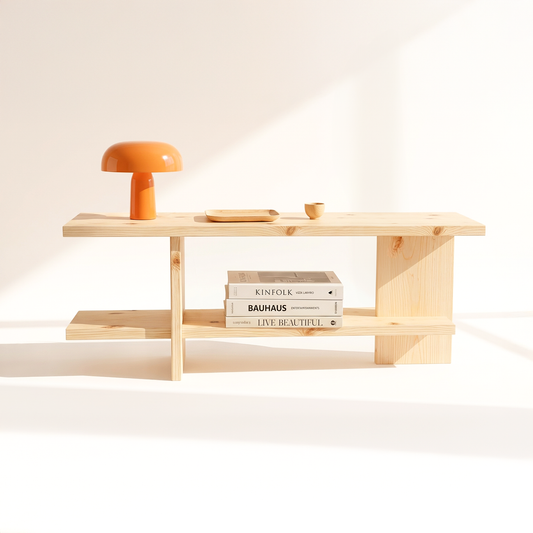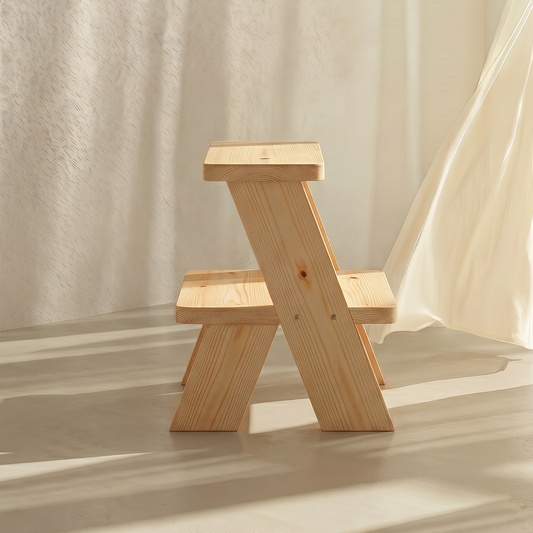

A screwless bench asks more of its wood than a screwed one does, without hardware to hold things together under stress, the timber itself has to carry the entire structural load through the joints alone.
Why the Wood Choice Matters More Here
Interlocking joinery, the kind used in the Kosho Bench, requires wood that can be cut into precise, tight-tolerance shapes without splitting. Canadian pinewood's straight, consistent grain makes it well suited to this kind of exact joinery work, unlike woods with more irregular grain patterns that are harder to cut cleanly.
Kiln-Drying Is Essential, Not Optional
For a screwless joint to stay tight over years, the wood has to be dried to a stable moisture content before construction, otherwise natural shrinkage after assembly loosens joints that have no screws to compensate. Properly kiln-dried Canadian pine holds its dimensions well enough for interlocking joints to remain snug through seasonal humidity changes.
What Happens With the Wrong Wood
Wetter, less carefully processed timber used in screwless construction shrinks unpredictably after assembly, leaving gaps in joints that were cut to fit tightly. This is a genuine risk with cheaper screwless furniture that skips proper drying to cut costs.
The Honest Verdict
Screwless construction only works as well as the wood behind it. Canadian pinewood, dried and processed correctly, is a genuinely good match for interlocking joinery, not because pine is uniquely strong, but because its grain and dimensional stability suit precise, hardware-free joints.