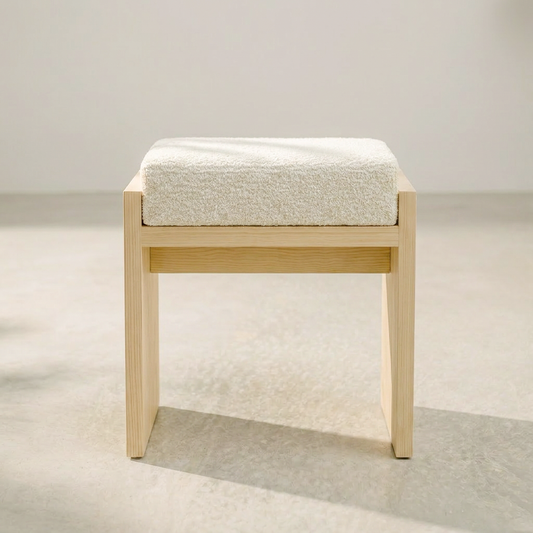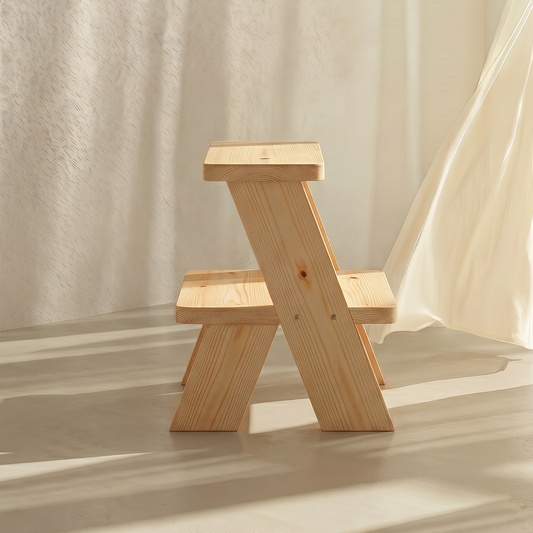

An H-frame stool puts concentrated weight through just a few contact points, the four legs and the cross-brace, which makes frame wood choice more consequential than it would be on a piece with a wider support base.
Why Pinewood Suits This Shape
The Chibi Bouclé Stool's H-frame relies on the cross-brace to keep the legs from splaying under weight. Canadian pinewood's straight grain machines cleanly into the precise angled cuts this kind of frame needs, without the grain deflecting or splitting during construction the way more irregular hardwoods sometimes do.
Light Enough to Move, Strong Enough to Sit On
A stool gets repositioned far more often than a bench or chair, pulled up to a dressing table, moved for extra seating, shifted around a room. Pine's lower density than sheesham or teak keeps the stool genuinely easy to move without compromising the structural strength a properly built H-frame provides.
Where Processing Quality Matters Most
Because the H-frame concentrates stress at the cross-brace joint, poorly dried wood is more likely to show its weakness here first, as a joint that loosens or a brace that develops a crack. Properly kiln-dried Canadian pine minimizes this risk significantly compared to less carefully processed timber.
The Honest Verdict
Canadian pinewood works well for an H-frame stool because its grain and weight suit the shape's specific stress points, not because it's automatically stronger than every alternative. The drying and construction quality around it matter just as much as the species itself.