
Biophilia is the innate human affinity for the natural world. It is not a preference or a taste. It is a biological drive, encoded over hundreds of thousands of years of evolution in environments where natural materials — wood, stone, water, plants — signalled safety and the synthetic materials of the modern world did not exist. When you place a person in an environment of natural materials, the body responds in measurable, predictable ways. Here is what the research says and what it means for the bedroom you sleep in.
The Cortisol Response
Cortisol is the primary stress hormone. It is elevated in threatening or demanding environments and reduced in safe, restorative ones. Research in environmental psychology consistently finds that natural materials — wood, stone, plants, natural textiles — reduce cortisol levels compared to synthetic materials in the same environment. The effect is not dramatic in any single measurement, but it is consistent across studies and across populations.
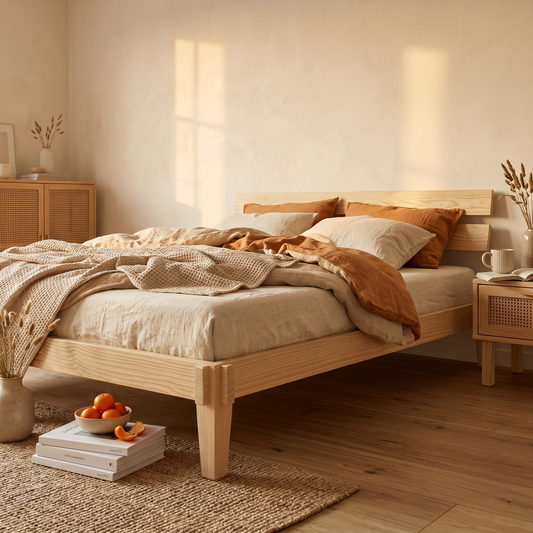
In a bedroom, where the goal is to transition from the elevated cortisol of the day to the reduced cortisol of sleep, the material environment is a direct input to this transition. A bedroom with natural materials — a solid wooden bed, linen textiles, a wooden mirror frame — supports the cortisol reduction that sleep requires. A bedroom with synthetic materials — a metal bed frame, polyester textiles, a plastic mirror frame — does not produce this effect.
The Heart Rate Response
Research on biophilic environments consistently finds that natural materials reduce heart rate and blood pressure compared to synthetic environments. The effect is most pronounced in high-stress individuals and in environments where the natural material is the dominant surface material rather than an accent.
In a bedroom, the dominant surface material is the bed frame. A solid wooden bed frame that occupies the largest visual surface in the room produces a more significant biophilic response than a small wooden accent in a room dominated by metal and synthetic materials. The material of the bed matters more than the material of any other object in the bedroom for the biophilic effect.
The Sleep Quality Response
The biophilic response — reduced cortisol, reduced heart rate, reduced blood pressure — is the physiological state that supports deep sleep. The parasympathetic nervous system, which governs rest and recovery, is activated by natural environments and suppressed by synthetic ones. A bedroom that activates the parasympathetic nervous system through natural materials is a bedroom that supports deeper, more restorative sleep.
This is not a claim that a solid wooden bed will cure insomnia. It is a claim that the material environment of the bedroom is a genuine input to sleep quality, and that natural materials produce a more sleep-supportive environment than synthetic ones. The research supports this claim consistently.
The Poka Bed as Biophilic Design
The Poka Bed by A Good Life is biophilic design in its most direct form. Solid pinewood — a natural material that the human nervous system recognises as safe and restorative — is the dominant surface material in the bedroom. The matte oil finish allows the wood to breathe and show its grain, which amplifies the biophilic response by making the natural material more visually present.
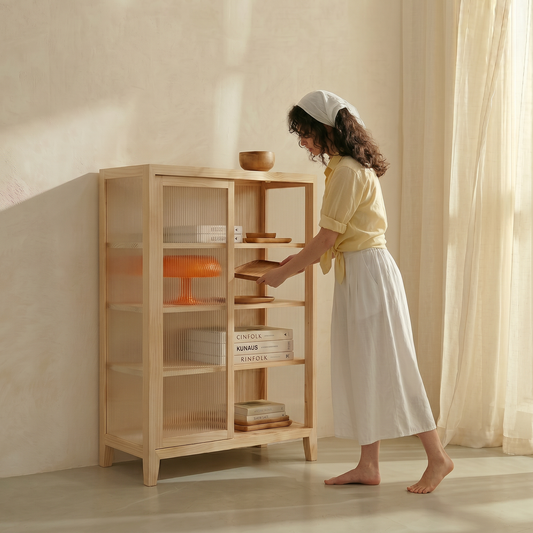
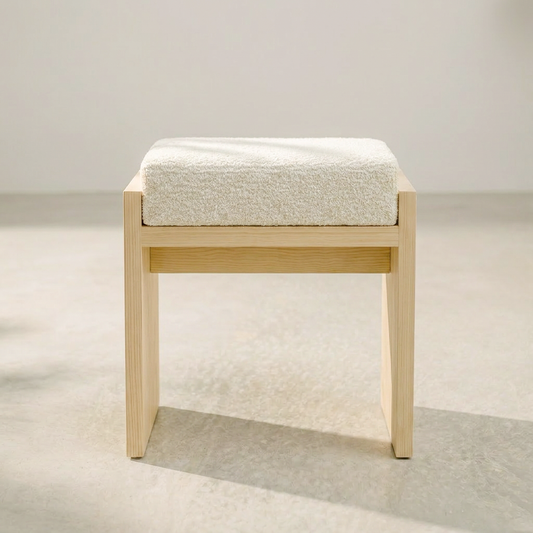
The Akari Pinewood Mirror adds a second natural material surface to the bedroom. The solid pinewood frame is warm, tactile and natural. The Nagomi Console adds a third. In a bedroom where the dominant surfaces are all natural pinewood, the biophilic response is maximised. The cortisol drops. The heart rate slows. The parasympathetic nervous system activates. Sleep comes more easily and goes deeper. This is what natural materials do to a body. This is why the bedroom you sleep in matters.