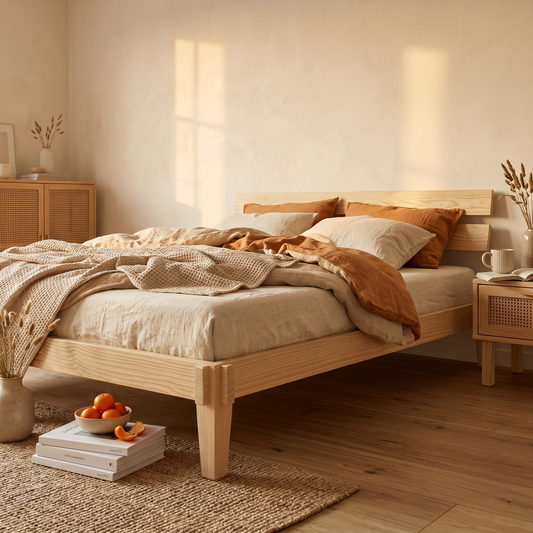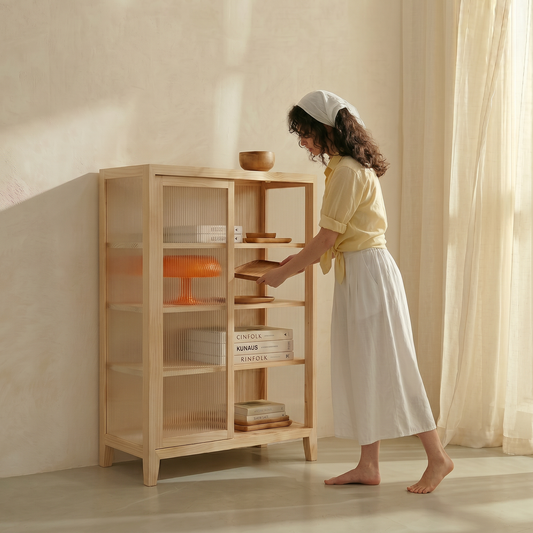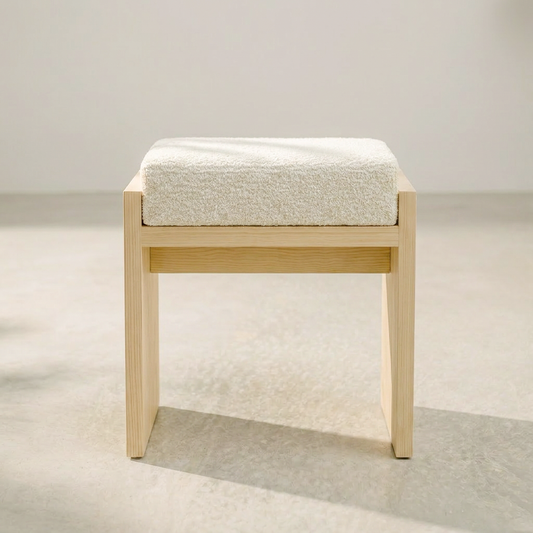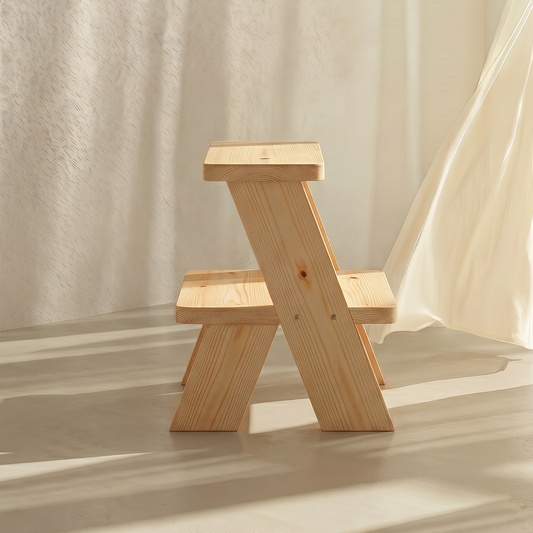

A bedside table is one of those pieces that often gets chosen at the end. The bed comes first, then the mattress, then the wardrobe, and only later does the bedside table enter the picture. But once it is in place, you notice how much it shapes the room. It holds the book you are reading, the lamp you switch off at night, the glass of water you reach for half asleep, and the small objects that support your daily rhythm.
In many Delhi and Gurugram homes, bedrooms need to do more with less space. That means every piece of furniture has to feel proportionate, useful, and visually calm. A bedside table that is too tall, too deep, or too bulky can make the room feel awkward. The right one, on the other hand, brings quiet balance.
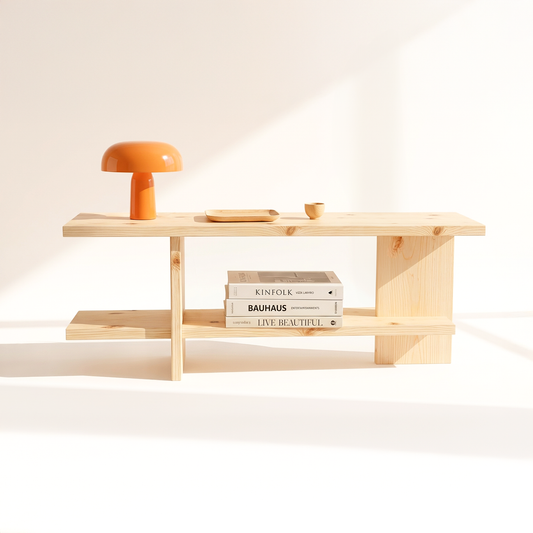
If you are building a bedroom that feels warm and intentional, it helps to look at furniture through both function and feeling. Pieces like the Quiet Console Table show how simple wooden forms can bring grounded beauty into a space. The same principle applies when choosing a bedside table.
Why bedside table size matters more than people think
A bedside table may be small, but proportion matters. When the dimensions are right, the room feels easier to use and more visually settled. When they are wrong, even a beautiful piece can feel inconvenient.
The most important measurement is height. Ideally, the top of the bedside table should sit close to the height of your mattress, or slightly lower. If it is much higher, reaching for things can feel awkward. If it is too low, it may look disconnected from the bed and become less practical for everyday use.
Width matters too. In compact bedrooms, a very wide bedside table can crowd the bed and reduce movement. In larger rooms, a table that is too narrow may feel lost. The goal is to choose a width that gives you enough surface area without making the room feel tight.
Depth is often overlooked, but it affects circulation. If the table projects too far out, it can interrupt movement around the bed. In smaller bedrooms especially, a slimmer profile usually works better.
How to choose the right height
The easiest rule is to match the bedside table height to the top of your mattress. This creates visual alignment and makes the table more comfortable to use.
A few practical tips:
- Measure from the floor to the top of your mattress
- Look for a bedside table within a few inches of that height
- If you use a thick mattress or mattress topper, include that in your measurement
- If you like a table lamp, make sure the combined height still feels comfortable when sitting up in bed
In modern bedrooms, lower beds often pair well with simpler and slightly lower bedside tables. In more traditional setups with taller beds, a slightly taller table may feel more balanced.
How to choose the right width and depth
The right width depends on how much space you have beside the bed and how you use the table.
If you only need space for a lamp, a book, and your phone, a compact table may be enough. If you want room for storage baskets, skincare, journals, or decor, you may need a wider top or a drawer.
For smaller bedrooms, these principles usually help:
- Keep the width modest so the room can breathe
- Choose a slim depth to protect walking space
- Prioritize one useful drawer or open shelf instead of a bulky body
- Avoid oversized handles or heavy visual detailing
In larger bedrooms, you have more freedom, but scale still matters. The bedside table should relate well to the bed frame, not overpower it.
Choosing a style that suits your bedroom
Style is not only about appearance. It is also about how the furniture supports the mood of the room.
For calm minimal bedrooms, wooden bedside tables with clean lines often work best. They bring warmth without clutter. Pine wood is especially effective because it feels light, natural, and easy to live with. It adds character while still keeping the room visually soft.
If your room already includes neutral bedding, natural fabrics, and simple forms, a minimal wooden bedside table can fit in beautifully. If the room is more layered, you can still use wood to ground the space and create a sense of continuity.
A good bedside table style often has these qualities:
- Clean proportions
- Useful surface area
- Simple storage if needed
- Warm material presence
- A shape that does not feel heavy in the room
If you are designing the full bedroom with a calm and intentional approach, it also helps to connect bedside furniture with the wider language of your home through related wooden decor and storage elements.
Common mistakes to avoid
Many people choose bedside tables based only on looks, and that is where problems begin.
Buying without measuring
This is the most common mistake. A table may look perfect online, but if the height or width is wrong, it will not feel right in the room.
Choosing something too bulky
Heavy furniture can make a small bedroom feel tighter than it is. A bedside table should support the bed, not compete with it.
Ignoring storage needs
Some people need only a surface. Others need a drawer for chargers, medicines, notebooks, or daily essentials. Think about what you actually keep beside your bed.
Matching too rigidly
Your bedside table does not need to be an exact set with the bed. It should feel harmonious, but not forced. A little variation can make the room feel more natural.
Overdecorating the top
A bedside table works best when it remains useful. If every inch is filled with decor, it loses its purpose.
Best bedside table choices for different bedroom types
Different homes call for different solutions.
For small bedrooms
Choose a slim bedside table with a light visual profile. Open shelf designs or compact drawer units often work well.
For guest bedrooms
A simple table with enough room for a lamp, water, and one or two essentials is usually enough. Keep it welcoming and easy to use.
For primary bedrooms
You may want a little more storage and a stronger material presence. A well made wooden bedside table can add both function and quiet character.
For minimal interiors
Stick to clean lines, natural finishes, and restrained styling. Let the wood and proportion do the work.
Final thoughts
The best bedside table is not just the one that looks good in a photo. It is the one that feels right beside your bed every day. It supports your routine, respects your space, and adds to the calm of the room instead of disturbing it.
In Delhi and Gurugram homes where space and proportion matter, choosing the right height, width, and style can make a real difference. A thoughtful wooden bedside table brings together utility, warmth, and quiet design in a way that lasts.
FAQ
What height should a bedside table be?
A bedside table should usually be level with the top of your mattress or slightly lower. This makes it more comfortable and visually balanced.
Are bedside tables necessary in small bedrooms?
Yes. Even in small bedrooms, a compact bedside table adds daily convenience and helps organize essentials without taking much space.
What material is best for bedside tables?
Solid wood and well crafted pine wood are strong choices for warmth, durability, and timeless appeal.
Should bedside tables match the bed?
They do not need to match exactly. They should feel connected in tone, material, or overall style so the room feels cohesive.