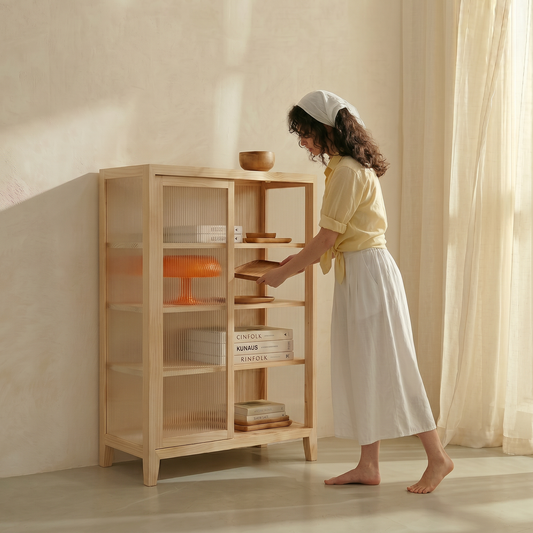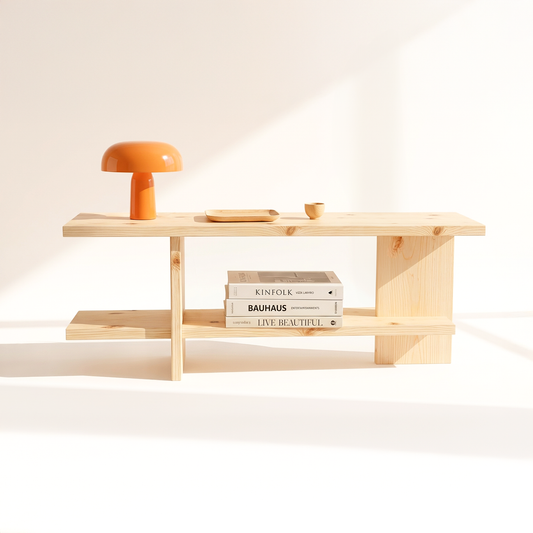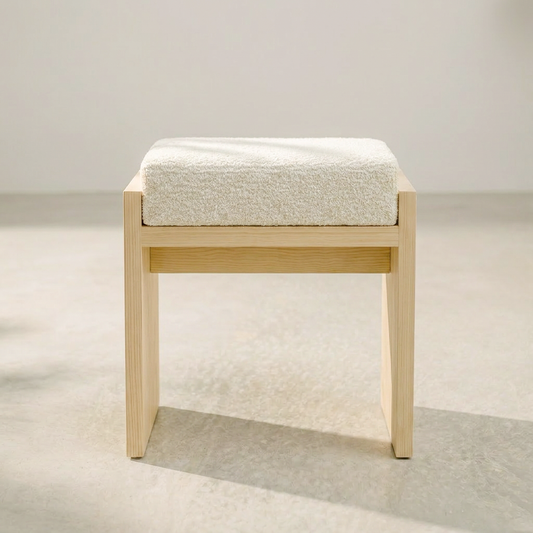
Restoration is not the same as rest. Rest is the absence of activity. Restoration is the active replenishment of something that has been depleted. A bedroom that merely allows rest is adequate. A bedroom that genuinely restores is rare, and it is rare because it requires intention rather than just furniture. Here is what a restorative bedroom actually contains and how to build one.
What Restoration Requires From a Room
A restorative environment has three qualities that are consistently identified in environmental psychology research. It is away — it feels separate from the demands and stimulation of the rest of life. It is fascinating in a low-key way — it holds attention gently without demanding it. And it is compatible with the person in it — it matches their needs and preferences rather than working against them.
A bedroom that is away feels like a different world from the rest of the home. Not physically separate but atmospherically separate. The materials are different — softer, warmer, more natural. The light is different — warmer, lower, more directional. The visual complexity is different — lower, quieter, more resolved. You cross the threshold and the nervous system registers the change.
A bedroom that is fascinating in a low-key way has objects worth looking at without being visually demanding. The grain of a solid wooden bed frame. The way morning light moves across a matte pinewood surface. The reflection of the room in a full length floor mirror positioned to catch the light. These are not dramatic visual experiences. They are gentle ones that hold attention without activating it.
A bedroom that is compatible with you is one that has been chosen for your specific needs rather than assembled from available options. The bed is the right size for the room and for the people sleeping in it. The mirror is in the right position for the light in your specific room. The palette is drawn from the colours that make you feel calm rather than the colours that are currently fashionable.
The Bed as the Centre of Restoration
The bed is the most important element of a restorative bedroom because it is the object you are most in contact with during the hours of restoration. The material of the frame, the quality of the slat support and the height of the profile all affect the quality of the rest that happens in it.
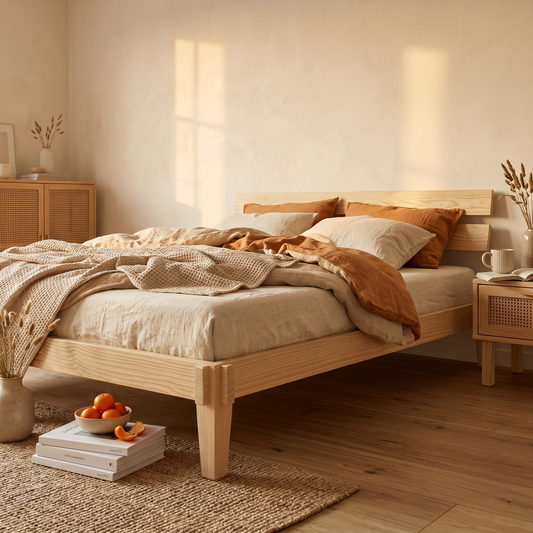
A solid wooden bed frame in natural pinewood contributes to the restorative quality of the room through the biophilic response — the neurological recognition of natural materials as safe and calming. A low profile keeps the visual centre of gravity close to the ground, which is associated with safety and rest. Screwless joinery means no creaking, no wobble and no structural anxiety in the night.
The Poka Bed by A Good Life is built for restoration. Solid pinewood, screwless joinery, a low Japandi silhouette and a matte finish that absorbs light rather than reflecting it. In a restorative bedroom, it is the object that anchors the space and makes everything else possible.
The Mirror as the Transition Object
A full length mirror in a restorative bedroom serves a specific function: it marks the transition between the private self and the public one. Standing in front of a full length floor mirror before leaving the bedroom is a moment of self-possession — a deliberate act of seeing yourself completely before the day begins. In a restorative bedroom, this moment is part of the restoration rather than separate from it.
The mirror also contributes to the restorative quality of the room through light and space. Positioned adjacent to a window, a full length mirror amplifies the natural light that is most conducive to the parasympathetic state. It reflects the room's depth, which makes the space feel more expansive and less confining. And the solid pinewood frame contributes to the natural material environment that the biophilic response recognises as safe.
The Akari Pinewood Mirror is a full length floor mirror in solid pinewood that leans without wall fixings. In a restorative bedroom, it is positioned to catch morning light and reflect the room's depth. The matte finish keeps the frame visually quiet. The solid pinewood belongs to the same material family as the bed. The room is coherent, calm and genuinely restorative.
The Sensory Layers of a Restorative Bedroom
A restorative bedroom works on multiple sensory levels simultaneously. Visually, it is calm — natural materials, warm neutrals, low visual complexity. Tactilely, it is honest — solid wood that feels like wood, linen that feels like linen, nothing synthetic pretending to be something it is not. Acoustically, it is soft — natural materials absorb sound rather than reflecting it, which makes the room feel quieter than its physical isolation would suggest. And thermally, it is neutral — solid wood does not conduct temperature the way metal does, which means the room feels comfortable across a range of conditions.
Each of these sensory layers is a contribution to the restorative quality of the space. None of them is dramatic. All of them are consistent. And consistency, experienced every night for months and years, produces a bedroom that genuinely restores rather than merely rests.
The Bedroom Worth Coming Home To
A restorative bedroom is not a luxury. It is the room where you recover from everything the day takes from you. The quality of that recovery determines the quality of the next day, and the next, and the one after that. A bedroom built around a solid wooden bed, a full length floor mirror in natural pinewood, natural textiles and warm light is not an indulgence. It is an investment in the daily quality of a life. Build it with intention. Use it with gratitude. Let it restore you.