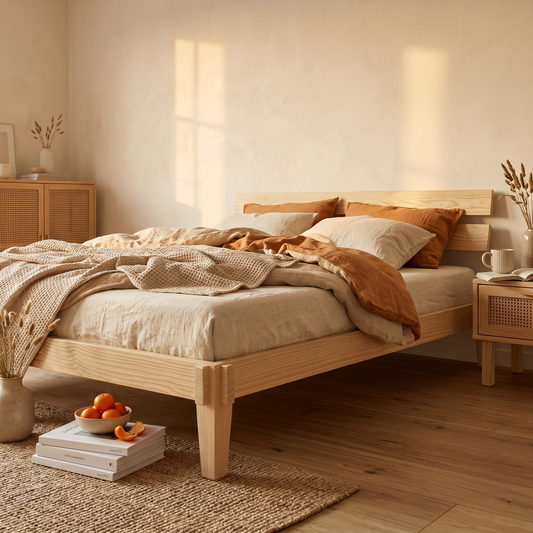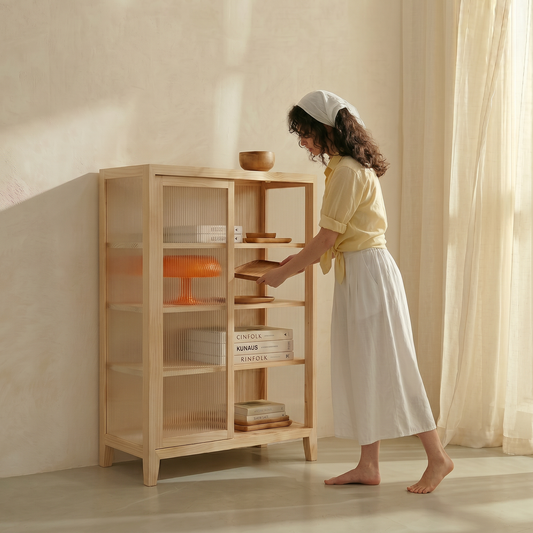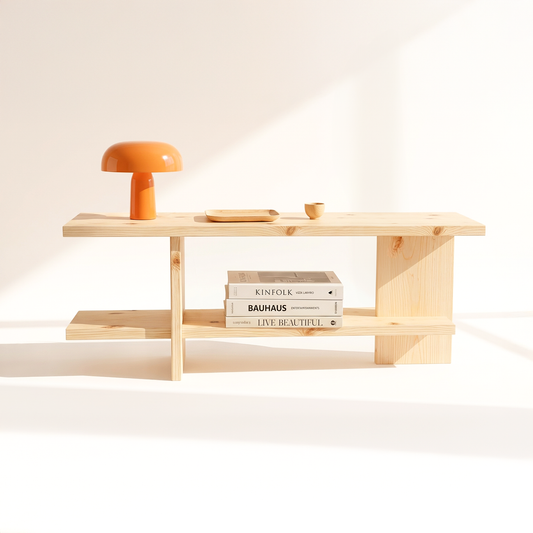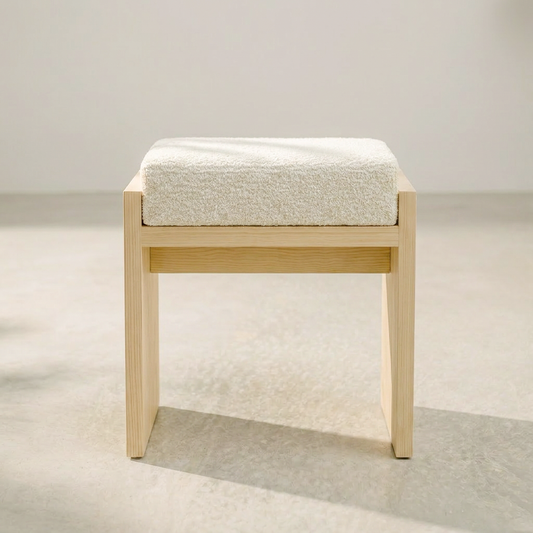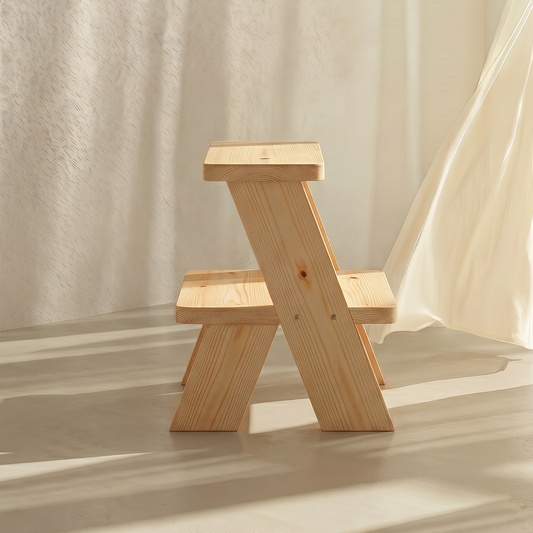

There is a moment in every kitchen renovation when you stand in front of a material sample and feel something. Not just see it — feel it. That moment, more often than not, happens with solid wood. And among all the woods available to the discerning homeowner, pinewood has a quiet, persistent case to make.
This is not a trend piece. Pinewood has been used in homes for centuries — in Scandinavian farmhouses, Japanese countryside dwellings, and Indian craftsmen's workshops alike. What is new is the growing recognition that in a world of laminates, veneers and engineered boards, solid pinewood offers something genuinely different: honesty of material.
The Character of Pinewood
Pinewood is a softwood, which surprises people who associate softness with fragility. In practice, well-seasoned solid pine is remarkably resilient. Its grain is open and expressive — no two boards are identical. The knots, the subtle variation in tone from heartwood to sapwood, the way it catches light differently at different times of day — these are not imperfections. They are the material speaking.
In a kitchen, where surfaces are touched daily and the room is lived in more than any other, this character matters. A laminate kitchen looks the same on day one as it does on day one thousand. A solid pinewood kitchen looks better.
Warmth That No Finish Can Fake
Kitchen design has long chased warmth — through warm-toned tiles, brass hardware, terracotta accents. But warmth in a material cannot be applied. It has to be inherent. Pinewood carries a natural warmth in its colour — a pale honey tone that deepens gently with age and light exposure — and in its texture, which is never cold to the touch the way stone or metal is.
This is particularly relevant in the Indian home, where the kitchen is not a utility room but a gathering space. The warmth of pinewood makes the kitchen feel like it belongs to the house, not like a fitted module installed inside it.
Utility in a Demanding Environment
The kitchen is the hardest-working room in any home. Heat, moisture, cooking oils, daily cleaning — it tests every material. The honest answer is that any wood in a kitchen requires proper finishing and reasonable care. The equally honest answer is that solid pinewood, when finished correctly with a food-safe oil or a quality lacquer, handles the kitchen environment well.
Unlike MDF or plywood-core cabinets, solid pine does not delaminate. It does not swell irreversibly when moisture gets into a cut edge. It can be sanded and refinished if a surface is damaged. This repairability is one of the most underrated qualities of solid wood — it means your kitchen can be restored rather than replaced.
Sustainability Worth Talking About
Pine is one of the fastest-growing commercial timber species. Responsibly sourced pine — from managed forests with replanting programmes — is among the more sustainable choices in wood. Compare this to tropical hardwoods with long growth cycles, or to engineered boards that bind wood fibres with formaldehyde-based resins, and the case for pine becomes clearer.
A kitchen built from solid pinewood is also a kitchen that can be disassembled, repurposed or composted at end of life. It does not end up as landfill the way a laminate-wrapped MDF cabinet does.
The Bespoke Difference
The final argument for pinewood in the kitchen is not about the material alone — it is about what the material makes possible. Solid wood can be cut, shaped, joined and finished in ways that engineered boards cannot. Screwless joinery. Flush-fit drawers. Panels that are planed to exact thickness. Details that are only possible when a craftsman is working with a material that responds to skill.
A bespoke pinewood kitchen is not a catalogue choice. It is a considered one — made with an understanding of how the material behaves, how it ages and how it fits into the specific proportions of your home.
That is the case for pinewood. Not loudly made, but difficult to argue with.