
Walk into any kitchen showroom and you will be handed a brochure full of wood-look finishes. Foil-wrapped MDF. Veneer over plywood. Teak-effect laminate. The language of wood is everywhere in kitchen design. The material itself, less so.
This is a guide for those who want to understand what they are actually buying — and why the difference matters more than most showrooms will tell you.
MDF: The Default That Deserves Scrutiny
Medium-density fibreboard is the dominant material in mass-market kitchen cabinetry. It is cheap, consistent, easy to machine and takes paint well. These are real advantages, and they explain its ubiquity.
But MDF is not wood. It is wood fibre — sawdust and offcuts — bound together with urea-formaldehyde resin under heat and pressure. The result is a board with no grain, no character and no ability to be repaired once damaged. When MDF swells from moisture, it does not recover. When a corner chips, it cannot be filled and sanded back to invisibility. And at end of life, it cannot be composted or easily recycled.
MDF kitchens are designed to be replaced, not restored. That is a business model, not a design philosophy.
Plywood: Better, But Still a Compromise
Plywood is a significant step up from MDF. It is made from thin veneers of real wood glued in alternating grain directions, which gives it dimensional stability and genuine strength. A good quality plywood cabinet will outlast an MDF one by years.
The limitation is the surface. Plywood is almost always veneered or laminated — the face you see is not the structural material. Over time, veneers can lift, particularly at edges and around hardware. And like MDF, plywood is not a material you can refinish in the way you can solid wood.
Plywood is a sensible choice for carcasses and structural elements. As the primary visible material in a kitchen, it is a compromise.
Teak: Excellent Wood, Wrong Context
Teak is one of the finest furniture woods in the world. Its natural oil content makes it highly resistant to moisture and insects. It is dense, durable and ages beautifully. In outdoor furniture, boat decking and bathroom fittings, it is hard to beat.
In a kitchen, teak presents a different set of considerations. It is heavy, which adds load to wall-mounted cabinets. It is expensive — genuinely expensive, not showroom-expensive. And its dark, oily grain, while beautiful, can make a kitchen feel heavy and formal in a way that does not suit every home.
There is also the sourcing question. Teak from responsibly managed plantations exists, but the market is not transparent. Much of what is sold as teak in the Indian market is of uncertain provenance.
Solid Pinewood: The Honest Choice
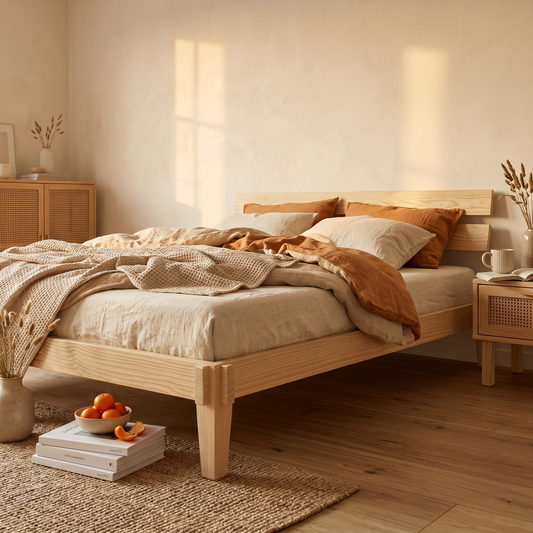
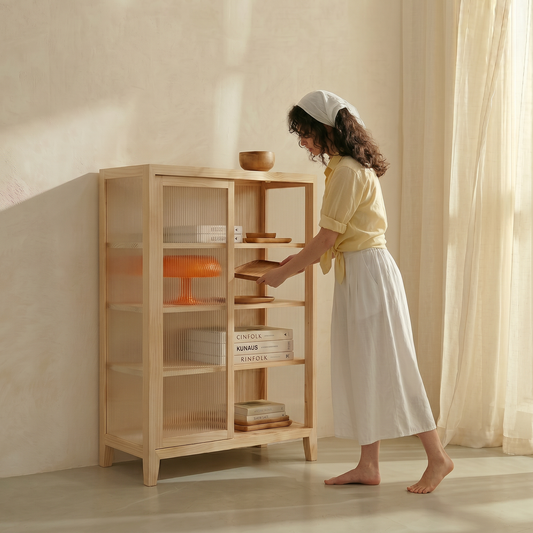
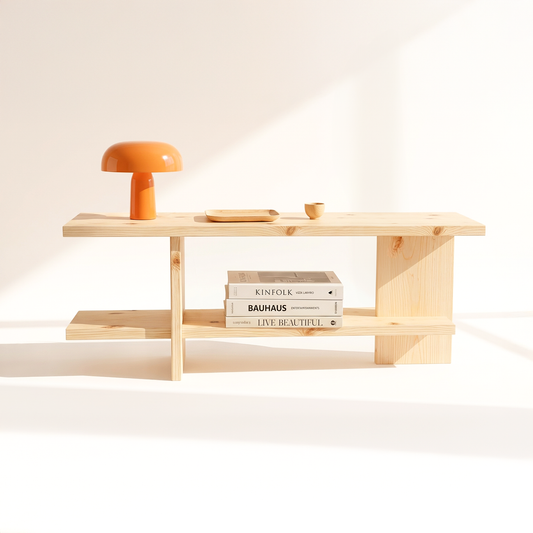
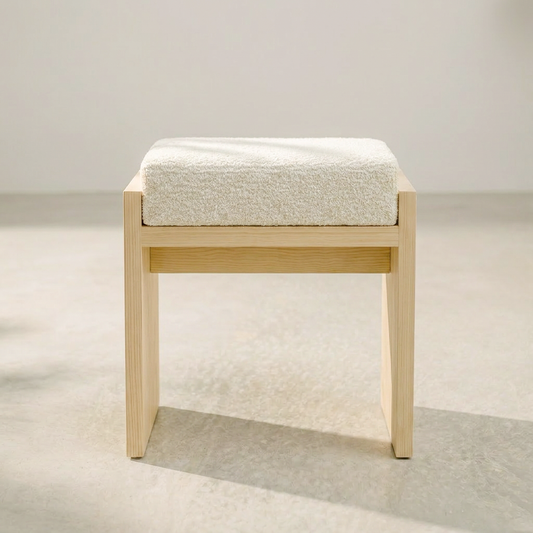
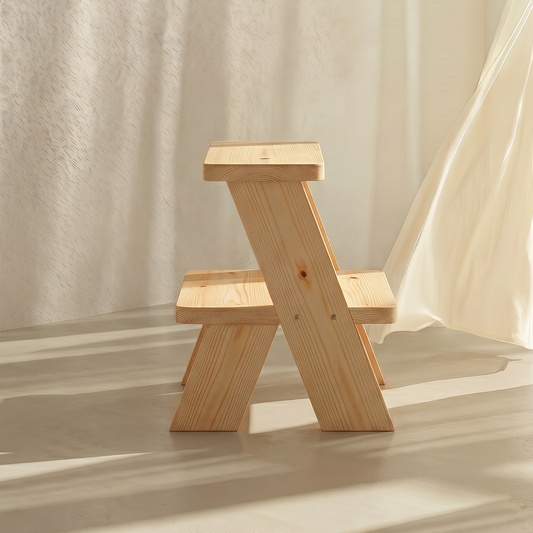
Pinewood sits in a different category from all of the above. It is a true solid wood — not engineered, not veneered, not composite. What you see is what the material is, all the way through.
Compared to MDF, it is repairable, breathable and genuinely sustainable. Compared to plywood, it offers a real surface that can be sanded, oiled and refinished over decades. Compared to teak, it is lighter, more affordable and better suited to the warm, minimal aesthetic that defines contemporary kitchen design in India.
Pine is a softwood, which means it will mark more readily than teak under heavy impact. This is worth knowing. But marks in solid wood are not damage in the way a chip in MDF is damage. They are patina. They are the kitchen recording its own history.
The Question to Ask
When choosing a kitchen material, the right question is not which one looks best on day one. It is which one you will still be glad you chose in fifteen years.
MDF will need replacing. Plywood veneer will need attention. Teak will cost more than most budgets allow for a full kitchen. Solid pinewood, properly finished and reasonably maintained, will still be there — looking better for the years it has lived through.
That is not a small thing in a room you use every day.