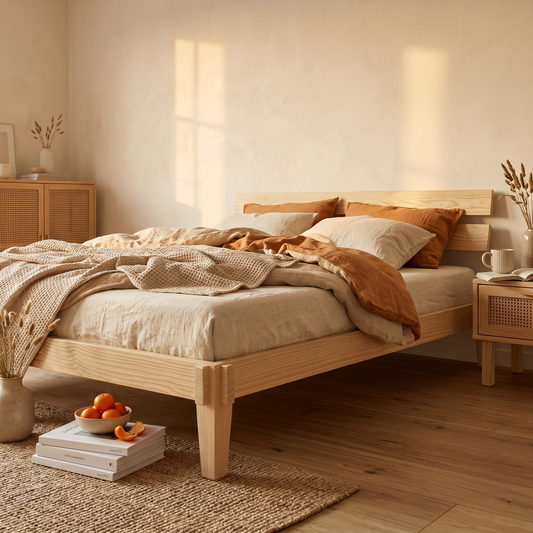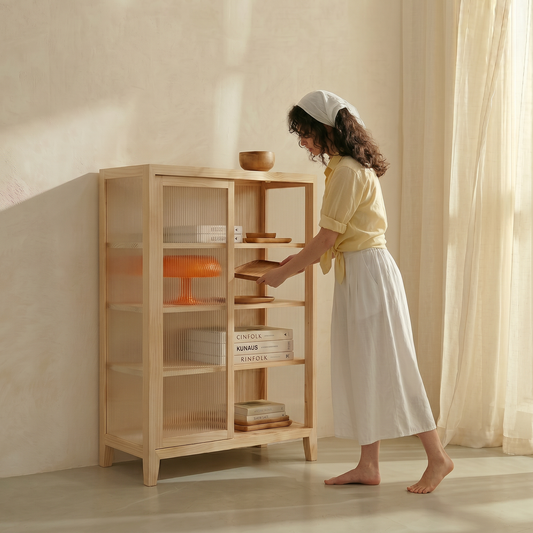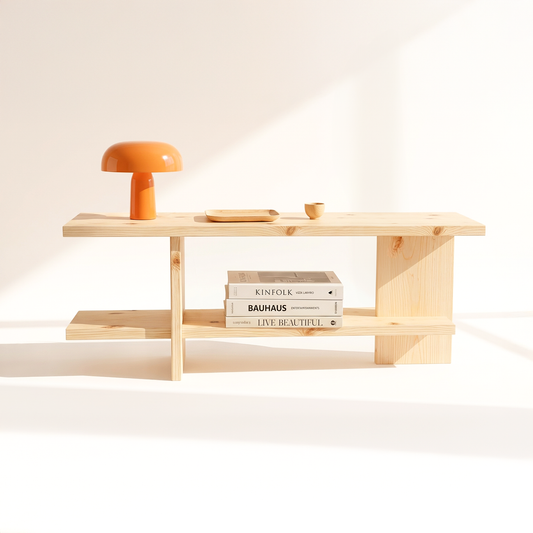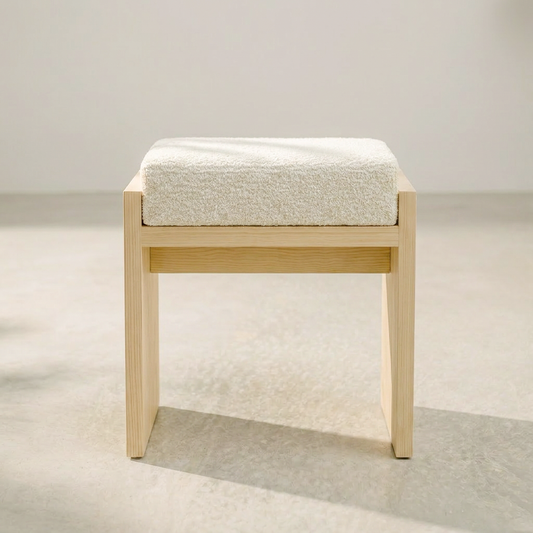

A handmade kitchen and a manufactured kitchen can look similar in a photograph. The difference becomes apparent when you use one.
It is in the way a drawer closes — smoothly, completely, without a push at the end. In the way a door sits flush with its neighbour, the gap between them consistent from top to bottom. In the way a corner is finished, the joint tight and clean rather than covered with a strip of edging tape. These are not decorative details. They are the evidence of craft.
What Craft Actually Means in a Kitchen
Craftsmanship in kitchen-making is the application of skill, knowledge and judgment to the process of turning raw material into a finished object. It is not the same as hand-finishing, which is a process. It is not the same as bespoke, which is a brief. It is the quality of thinking and making that determines whether the finished kitchen is merely adequate or genuinely good.
A craftsman working in solid wood understands how the material moves with changes in humidity and temperature. They know which grain orientations are stable and which will cause problems over time. They know how to cut a joint that will hold for decades without mechanical fasteners. They know when a surface needs more work and when it is done.
This knowledge cannot be programmed into a CNC machine. It is accumulated through years of working with the material, making mistakes, understanding why they happened and not making them again.
The Joinery Question
The most revealing test of craftsmanship in a kitchen is the joinery — how pieces of wood are connected to each other. In a mass-produced kitchen, connections are made with screws, dowels and cam locks. These are fast, consistent and adequate. They are also the first things to fail.
In a handmade kitchen built by a skilled craftsman, connections are made with traditional joinery — mortise and tenon, dovetail, tongue and groove. These joints work by interlocking the wood itself, distributing stress across a larger surface area and creating a connection that becomes tighter, not looser, as the wood settles over time.
A kitchen built with proper joinery does not wobble after five years. It does not need to be re-tightened. It does not develop the small movements and sounds that signal a structure beginning to fail. It simply continues to work, as it was made to.
Surface and Finish
The finish on a handmade kitchen is applied by hand, in multiple coats, with sanding between each coat. The result is a surface that is smooth in a way that a sprayed factory finish is not — not because it is more uniform, but because it has been worked. The craftsman has felt the surface at each stage and responded to what they found.
An oiled finish on solid pine, applied correctly, penetrates the wood rather than sitting on top of it. It feeds the grain, brings out the natural colour variation and creates a surface that is both protected and alive. It looks different from a lacquered surface. It feels different. And it ages differently — developing depth and warmth rather than yellowing or peeling.
The Invisible Work
Much of what makes a handmade kitchen exceptional is invisible once it is installed. The time spent ensuring that a carcass is perfectly square before the doors are hung. The care taken in selecting boards so that grain direction and colour are consistent across a run of cabinets. The adjustment made to a drawer box so that it runs true rather than slightly off-centre.
None of this is visible in the finished kitchen. But all of it is felt. A kitchen that has been made with this level of care has a quality that is difficult to name but immediately apparent. It feels right. It works right. And it continues to do so for as long as it is in use.
That is what craftsmanship produces. Not a product. A kitchen.