
In Delhi and Gurugram, small homes often ask more from every corner. A wall may need to hold books, display ceramics, keep daily essentials within reach, and still feel visually light. That is why choosing the right wooden wall shelves is not only about style. It is about proportion, breathing room, and how a home feels when everything has a place.
The right shelf can make a room feel calmer and more useful at the same time. The wrong shelf can make even a beautiful space feel crowded, awkward, or unfinished. In compact homes, size matters more than most people expect. Width, depth, thickness, spacing, and installation height all shape whether a shelf feels effortless or overwhelming.
If you are looking for wooden wall shelves in Delhi and Gurugram, it helps to think beyond the product photo. A shelf may look elegant online, but what matters is how it fits your wall, your storage needs, and the rhythm of your everyday life. In a mindful home, furniture and decor should support ease rather than create visual noise.
This guide will help you choose the right shelf size for small homes with practical tips you can actually use. We will look at shelf dimensions, room-by-room decisions, common mistakes, and how to make wall storage feel warm, minimal, and intentional.
Why shelf size matters more in small homes
In larger homes, a slightly oversized shelf may still find balance because the room has enough visual breathing space. In a smaller apartment or compact room, even a few extra inches can change how the whole wall feels. A shelf that is too deep can interrupt movement. A shelf that is too long can make a wall feel heavy. A shelf that is too small may look disconnected and underwhelming.
Good shelf sizing creates three things at once: utility, visual balance, and comfort. You want enough surface area to hold what you need, but not so much that the shelf starts competing with the room itself.
This is especially relevant in Delhi NCR homes where bedrooms, living rooms, kitchens, and work corners often overlap in function. A shelf may need to support daily life in a practical way while still preserving a calm atmosphere. That is where solid wood shelves with clean lines work beautifully. They bring warmth without adding unnecessary bulk.
If you are exploring pieces for a softer and more grounded wall setup, the Wall Decor collection is a useful place to start because it helps you see how shelves can work as both storage and quiet visual structure.
Start with the wall before you start with the shelf
One of the most common mistakes people make is choosing a shelf first and measuring later. In small homes, the wall should lead the decision.
Before selecting a shelf, check these five things:
1. Wall width
Measure the total width of the wall and then identify the actual usable width. This means the area that remains after accounting for switches, windows, door frames, curtains, artwork, or furniture below.
As a simple rule, a shelf usually looks more balanced when it covers only part of the wall rather than stretching edge to edge. Leaving negative space on both sides helps the room feel lighter.
2. Wall height
A tall wall gives you more flexibility for vertical arrangements. A shorter wall may need a single shelf or a tighter stacked composition. In small homes, vertical thinking is often better than horizontal excess.
3. Furniture below the shelf
If the shelf sits above a console, desk, bed, or bench, the width should relate to that furniture. A shelf that is much wider than the piece below can look disconnected. A shelf that is slightly narrower or visually aligned usually feels more intentional.
4. Walking clearance
In narrow spaces such as hallways, kitchens, and compact bedrooms, shelf depth matters a lot. You do not want the shelf to project so much that it interrupts movement or makes the room feel tighter.
5. Purpose
Ask one simple question: what exactly will live on this shelf? Books need different depth than framed art. Bathroom essentials need different spacing than decorative objects. A shelf should be sized around real use, not only appearance.
How to choose the right shelf width
Shelf width shapes the visual weight of the wall. In small homes, this is often the first dimension to get right.
Narrow shelves
Narrow shelves work well for:
- entryways
- bathroom corners
- beside a bed
- compact kitchen walls
- small study nooks
They are ideal when you want a light touch rather than a dominant feature. A narrow shelf can hold a candle, a small stack of books, a ceramic object, or a daily-use item without crowding the wall.
Medium-width shelves
These are often the most versatile for small homes. They can sit above a desk, console, or low cabinet and create enough presence to feel useful without becoming visually heavy.
Long shelves
A long shelf can work beautifully in a living room or above a bed, but only if the wall has enough breathing room. In compact spaces, very long shelves can flatten the wall and make the room feel more compressed. If you want the effect of a longer arrangement, two smaller shelves with thoughtful spacing often feel lighter than one oversized piece.
A good visual principle is this: the shelf should support the wall, not dominate it.
How to choose the right shelf depth
Depth is one of the most overlooked decisions, especially when buying wooden wall shelves online.
Shallow depth
Shallow shelves are best for:
- framed prints
- candles
- small ceramics
- lightweight decor
- spice jars or small utility items
They work well in tight spaces because they keep the room visually open.
Medium depth
This is usually the sweet spot for small homes. It gives enough room for books, planters, folded hand towels, small baskets, or everyday objects while still feeling neat.
Deep shelves
Deep shelves should be used carefully in compact homes. They can be useful in kitchens, workspaces, or storage-heavy corners, but if used in a small bedroom or hallway they may feel bulky. Depth should always match both the object and the circulation space around it.
Thickness and visual weight
Not all shelves with the same width and depth feel the same. Thickness changes the visual mood of the piece.
A thick shelf can feel grounded, architectural, and substantial. A slimmer shelf can feel cleaner, lighter, and more minimal. In small homes, a shelf with balanced thickness often works best because it gives enough presence without making the wall feel dense.
This is where material matters too. Solid pine wood has a warmth that softens the visual effect of a shelf. Even when the piece is functional, the grain and tone can help it feel calm rather than harsh. That is one reason wooden wall shelves work especially well in homes that want storage without losing softness.
Single shelf or multiple shelves
People often assume more shelves mean more storage. In reality, more shelves can also mean more visual clutter if they are not sized and spaced well.
Choose a single shelf when:
- the wall is small
- the room already has enough furniture
- you only need light storage or display
- you want the wall to feel open
Choose two shelves when:
- you want vertical organization
- the wall is taller than it is wide
- you need a little more storage without adding a cabinet
- you want to separate functional and decorative items
Choose three or more shelves when:
- the wall is large enough
- the arrangement is disciplined and balanced
- the objects placed on them are edited carefully
In small homes, restraint usually looks better than abundance. One well-sized shelf with a few meaningful objects often feels more beautiful than a crowded arrangement.
Room by room shelf sizing guide
Living room
In a small living room, shelves should feel integrated with the seating area rather than floating awkwardly on their own. If placed above a sofa or console, keep enough space around them so the wall still breathes. Medium-width shelves usually work better than very long ones unless the wall is generous.
Use them for books, framed art, one plant, and a few objects with different heights. Avoid filling every inch.
Bedroom
In compact bedrooms, shelves can replace bulkier side furniture or add gentle storage above a headboard, beside a wardrobe, or near a reading corner. Keep depth modest so the room does not feel tighter.
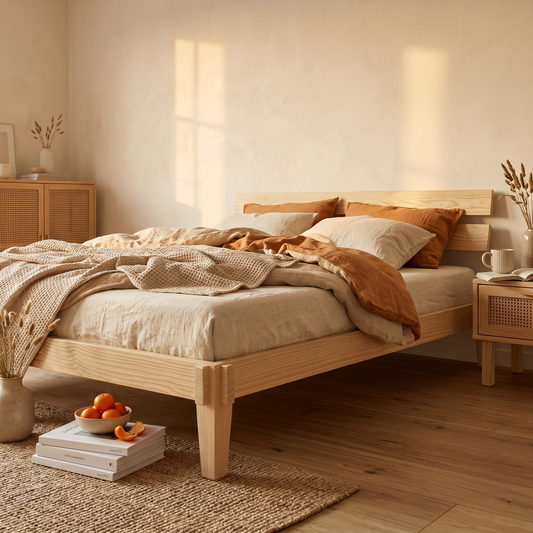
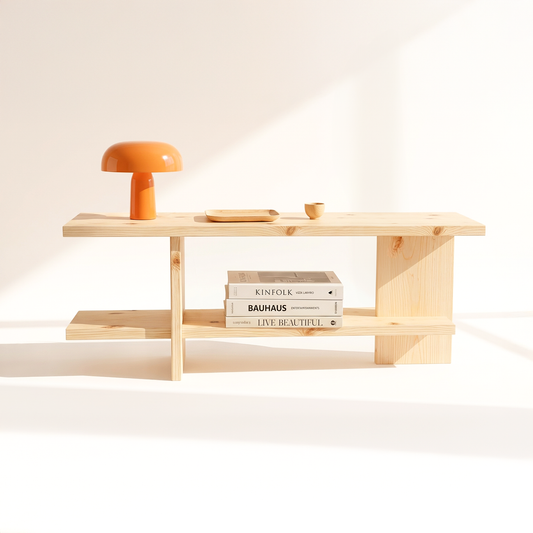
If you are styling a bedroom wall, it helps to relate the shelf to other natural wood elements in the room. A warm and quiet piece like the Quiet Console Table shows how simple wooden forms can add utility without visual heaviness, and the same principle applies when choosing shelves.
Bathroom
Bathroom shelves should be sized for daily essentials rather than decorative excess. Think folded towels, soap, jars, or a small tray. In smaller bathrooms, shallow to medium-depth shelves usually work best. Keep enough vertical space between shelves so items are easy to reach.
Kitchen
Kitchen shelves need practical depth and easy access. They can hold jars, cups, bowls, or frequently used ingredients. In a compact kitchen, open shelves should feel curated rather than overloaded. If everything is on display, visual clutter builds quickly.
Entryway
Entryway shelves work best when they are slim and purposeful. A small shelf for keys, a candle, and one object can be enough. In narrow entrances, less projection is better.
Home office
For small work corners, shelves should support focus rather than create distraction. One shelf above a desk can hold books, a notebook, and one calming object. Too many shelves above a workspace can make the area feel busy.
Common mistakes people make
Choosing based only on the photo
A shelf can look perfect in a styled image and still be wrong for your wall. Always translate the product into your actual room dimensions.
Ignoring depth
Many people measure width and forget depth. In small homes, depth affects movement and openness.
Installing too high
A shelf that is too high becomes decorative but not useful. Installation height should match how you plan to use it.
Overfilling the shelf
Even the right shelf can look wrong when it carries too many objects. Leave empty space. It helps the eye rest.
Matching everything too rigidly
A calm home does not need perfect symmetry everywhere. It needs balance. Let the shelf relate to the room without forcing exact sameness.
How to style shelves without making the room feel crowded
Good shelf styling in small homes is really about editing.
Try this simple formula:
- one practical object
- one taller object
- one softer element like a small plant or textile
- one area of empty space
This keeps the shelf useful and warm without turning it into visual noise.
A few more principles help:
- vary heights gently
- keep the color palette quiet
- use natural materials
- do not overcrowd corners
- leave some wood visible
When the wood itself is beautiful, you do not need to hide it under too many objects.
Best shelf choices for different needs
If you want display more than storage
Choose a shallower shelf with a lighter visual profile.
If you want everyday utility
Choose medium depth and a width that suits the wall and the objects you use daily.
If you want a shelf for a very small room
Choose one well-sized shelf rather than multiple pieces. Keep the arrangement simple.
If you want warmth in a modern home
Choose solid wood with visible grain and a clean silhouette. This gives character without heaviness.
If you want long-term flexibility
Choose a shelf that can move between rooms over time. The most useful pieces are often the simplest ones.