
Small bedrooms ask for more thought. When floor space is limited, every piece of furniture affects how the room feels and how easily it functions. A nightstand may seem like a small addition, but in a compact bedroom it can either support calm living or quietly create clutter.
The best minimalist nightstands do not try too hard. They offer enough surface for the things you actually use, enough storage for a few essentials, and a shape that does not make the room feel crowded. In that sense, good design is not about adding more. It is about removing what is unnecessary and keeping what truly helps.
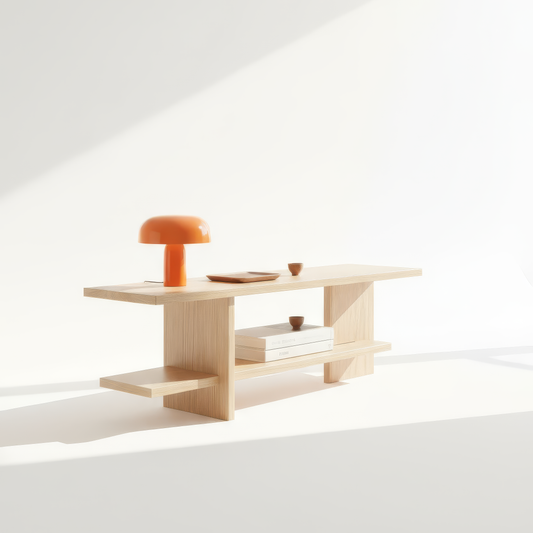
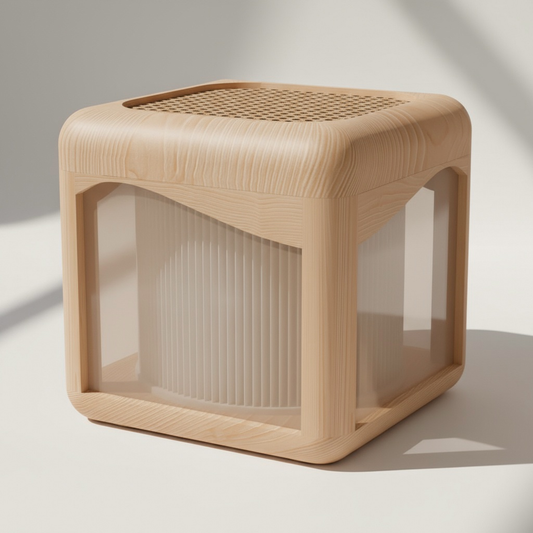
For homes that value warmth and simplicity, wooden furniture often works especially well. A piece like the Minimalist Quiet Nightstand shows how clean lines and natural material can create presence without heaviness. The same principle matters when choosing a nightstand for a smaller bedroom.
Why minimalist nightstands work better in small rooms
In a small room, visual weight matters as much as physical size. Furniture that is bulky, over detailed, or too deep can make the room feel tighter than it is. A minimalist nightstand helps because it keeps the form simple and the function clear.
This does not mean the piece has to feel plain or cold. A well made wooden nightstand can still feel warm, grounded, and beautiful. The difference is that it does not demand too much attention. It supports the room instead of competing with it.
Minimalist nightstands also make it easier to maintain order. When there is only enough room for what you truly need, the surface stays cleaner and the bedroom feels more restful.
What size actually works in a small bedroom
The right nightstand size depends on the bed, the room layout, and how much space you have to move around comfortably.
Height is the first thing to check. A nightstand should usually sit level with the top of the mattress or slightly lower. This makes it easy to reach for a lamp, book, or glass of water.
Width should be guided by available space. In a small bedroom, a narrow nightstand often works better than a wide one. You need enough surface area for essentials, but not so much that the table begins to dominate the side of the bed.
Depth is especially important. A very deep nightstand can interrupt movement and make the room feel cramped. Slimmer profiles usually feel more natural in compact spaces.
A few practical rules help:
- Match the height closely to the mattress
- Keep the width modest
- Choose a slim depth where possible
- Leave enough walking space around the bed
What kind of storage is actually useful
Not every small bedroom needs a nightstand with multiple drawers. In fact, too much storage can make the piece heavier both visually and physically.
The most useful nightstands usually offer one of these options:
- A simple top surface only
- One drawer for private essentials
- One open shelf for books or baskets
- A compact combination of drawer and shelf
Think about what you keep beside your bed every day. If it is only a lamp, phone, and book, a very simple table may be enough. If you store chargers, medication, notebooks, or skincare, one drawer can make a big difference.
The goal is not maximum storage. It is the right storage.
Materials and finishes that feel calm
For a bedroom that feels restful, material choice matters. Natural wood often works beautifully because it brings warmth, texture, and a sense of quiet permanence.
Pine wood in particular suits minimalist bedrooms well. It feels light enough for smaller spaces and still carries character. A natural or softly finished wooden surface can pair easily with neutral bedding, soft lighting, and simple decor.
If the room already has a lot happening visually, choose a nightstand with a restrained finish and clean lines. If the room is very plain, the wood grain itself can add enough depth and softness.
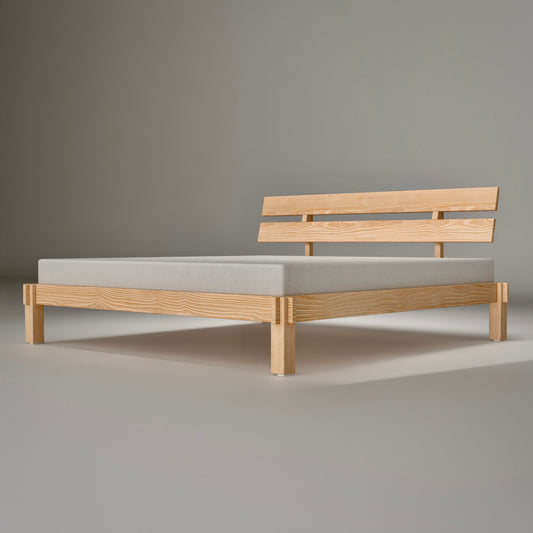
If you are shaping the bedroom as part of a larger home story, it helps to connect the nightstand with other wooden furniture and storage pieces so the home feels cohesive rather than assembled piece by piece.
Common mistakes people make
Small bedrooms leave less room for error, so a few common mistakes can have a big effect.
Choosing something too bulky
A heavy nightstand can overwhelm the bed and reduce movement around it.
Buying without measuring
Even a few extra inches in width or depth can make a compact room feel awkward.
Prioritizing looks over use
A beautiful piece that cannot hold your daily essentials will quickly become frustrating.
Adding too much decor
A nightstand works best when the top remains useful. One lamp and one or two personal objects are often enough.
Matching everything too exactly
A room feels more natural when pieces relate to each other without looking like a rigid set.
What actually works in different bedroom setups
Different room types need different solutions.
For very tight bedrooms
Choose a narrow nightstand with a light structure. Open bases or slim legs can help the room feel less crowded.
For guest rooms
A simple nightstand with enough room for a lamp, water, and a phone is usually enough.
For primary bedrooms
You may want one drawer or shelf for daily essentials, but keep the overall form clean and balanced.
For calm minimal interiors
Stick to natural materials, soft finishes, and restrained styling. Let proportion and craftsmanship lead the design.
Final thoughts
The best minimalist nightstand for a small bedroom is not the one with the most features. It is the one that quietly supports your routine while keeping the room open, calm, and easy to live in.
When space is limited, thoughtful choices matter more. A well proportioned wooden nightstand can bring utility, warmth, and visual ease without asking for too much room. And that is often what actually works best.
FAQ
What is the best nightstand for a small bedroom?
A slim nightstand with the right height, a modest width, and simple storage usually works best in a small bedroom.
A slim nightstand with the right height, a modest width, and simple storage usually works best in a small bedroom.
Should a nightstand have drawers?
Only if you need them. One drawer can be useful, but too much storage can make the piece feel bulky.
Only if you need them. One drawer can be useful, but too much storage can make the piece feel bulky.
What material is best for a minimalist nightstand?
Natural wood is a strong choice because it brings warmth and timelessness while still feeling simple.
Natural wood is a strong choice because it brings warmth and timelessness while still feeling simple.
Can I use different nightstands on each side of the bed?
Yes. As long as they feel balanced in scale and style, slight variation can make the room feel more natural.
Yes. As long as they feel balanced in scale and style, slight variation can make the room feel more natural.