
A well organized home is not one that looks perfect all the time. It is one that supports everyday life with less friction. It helps you find what you need, move through the day more easily, and return things without too much effort. That kind of organization is not built through strict systems alone. It is built through realistic choices.
Many people try to organize by creating ideal setups that look beautiful for a day but do not survive actual use. The problem is not a lack of effort. It is that the system was never shaped around real habits. A home works better when organization grows from the way people actually live inside it.
This is why the most effective home organization tips are often the simplest ones. They reduce pressure and increase ease.
Start with what causes daily friction
The easiest place to begin is not with the whole house. It is with the things that interrupt daily life most often.
This might be:
- Keys that are never where they should be
- Kitchen counters that collect everything
- Clothes that pile onto chairs
- Bathroom products with no clear place
- Shoes and bags gathering near the entrance
When you solve these repeated points of friction first, the home starts feeling lighter very quickly. Organization becomes meaningful because it improves real moments, not just appearance.
Give everyday items a visible home
One of the biggest reasons clutter builds up is that frequently used items do not have a clear place. If something is used every day, its storage needs to be easy to reach and easy to return to.
This does not always mean hiding it away. Sometimes a visible but intentional home works better. A tray for keys, a holder for napkins, a shelf for daily books, or a bench near the entrance can all support routine naturally.
The goal is not to make everything invisible. It is to make everything understandable.
Organize by routine, not only by category
Traditional organization advice often says to group things by type. That can help, but in daily life, grouping by routine is often more useful.
Examples:
- Tea, mugs, and spoons together
- Keys, wallet, and sunglasses near the door
- Nighttime essentials near the bed
- Daily skincare grouped in one bathroom area
When storage follows use, it becomes easier to maintain because it matches the flow of the day.
Reduce the number of surfaces that collect clutter
Clutter often gathers where there is open surface space with no defined purpose. Chairs, counters, console tops, side tables, and benches can all become accidental storage zones if they are not used intentionally.
A few ways to reduce this:
- Keep one part of each surface clear
- Use trays to contain smaller items
- Limit decorative objects on working surfaces
- Give loose items a nearby home
This helps the room feel calmer and makes cleaning easier too.
Use storage that supports calm
Not all storage improves a home. Some storage adds more visual noise than it removes. In calm and intentional homes, storage should feel useful without becoming heavy.
Look for pieces that are:
- Simple in shape
- Easy to access
- Warm in material
- Proportionate to the room
- Built for real use
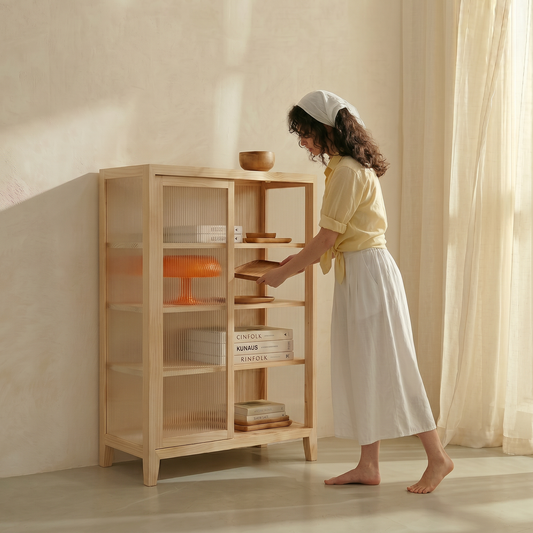
Wooden storage often works especially well because it adds warmth while still helping the space feel grounded. If you want to explore pieces that support this kind of everyday ease, the furniture collection offers useful options shaped by simplicity and function.
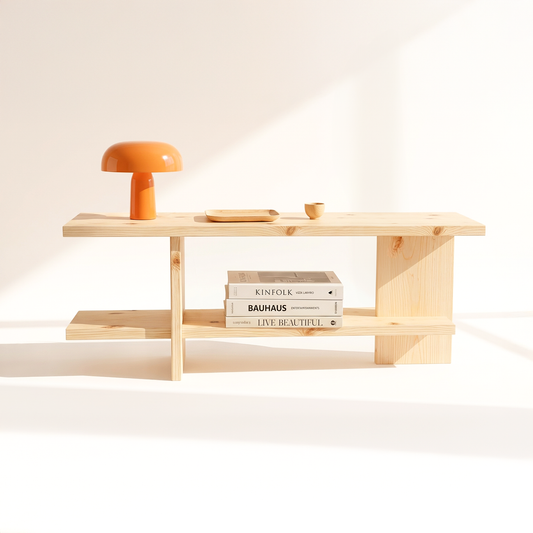
A piece like the Quiet Console Table can also help create an intentional drop zone in an entryway or living area without making the room feel crowded.
Make systems easy enough to repeat
A good organization system should ask very little from you. If it takes too many steps to maintain, it will eventually break down.
This is why simple systems usually last longer:
- One basket instead of many categories
- One tray instead of scattered small objects
- One cabinet for overflow instead of multiple temporary piles
- One shelf for daily use items instead of storing them far away
Ease is more sustainable than perfection.
Final thoughts
Realistic home organization is not about controlling every object. It is about making everyday life smoother. When storage follows routine, when surfaces are used with intention, and when useful objects are chosen well, the home begins to support you more quietly.
That kind of organization may not always look dramatic, but it lasts. And in the end, that is what matters most. A home that feels easier to live in every single day.
FAQ
How do I organize my home in a realistic way?
Start with daily friction points, give everyday items a clear home, and create systems that are easy to maintain.
Start with daily friction points, give everyday items a clear home, and create systems that are easy to maintain.
What is the biggest mistake in home organization?
Creating systems that look good but do not match real habits or daily routines.
Creating systems that look good but do not match real habits or daily routines.
Should everything be hidden away in an organized home?
No. Some items can stay visible if they are grouped well and placed intentionally.
No. Some items can stay visible if they are grouped well and placed intentionally.
What kind of storage works best for everyday life?
Simple, accessible, and useful storage that supports routine without adding visual clutter works best.
Simple, accessible, and useful storage that supports routine without adding visual clutter works best.