
A home can have beautiful furniture, good lighting, and carefully chosen decor and still feel like too much. This usually happens when every surface is filled, every corner is styled, and every object competes for attention. The result may look complete at first glance, but it often feels tiring to live in.
An intentional home feels different. It has clarity. The objects inside it seem to belong. There is enough warmth to make it welcoming and enough space to let the room breathe. It feels considered rather than crowded.
Building that kind of home is not about removing personality. It is about editing with care. It is about choosing what truly adds value to the room and letting go of what only adds noise.
Why homes become overdecorated
Overdecorating usually does not come from bad taste. It often comes from uncertainty. When a room feels unfinished, the instinct is to add more. Another vase, another cushion, another shelf, another object for the table. But more does not always create depth. Sometimes it only creates distraction.
A home may begin to feel overdecorated when:
- Too many small objects are left visible
- Furniture and decor are chosen without a clear role
- Styling is copied without considering the actual space
- Every surface is treated as a display area
- There is no visual pause in the room
The answer is rarely to buy more. It is usually to choose better.
Start with furniture that does enough on its own
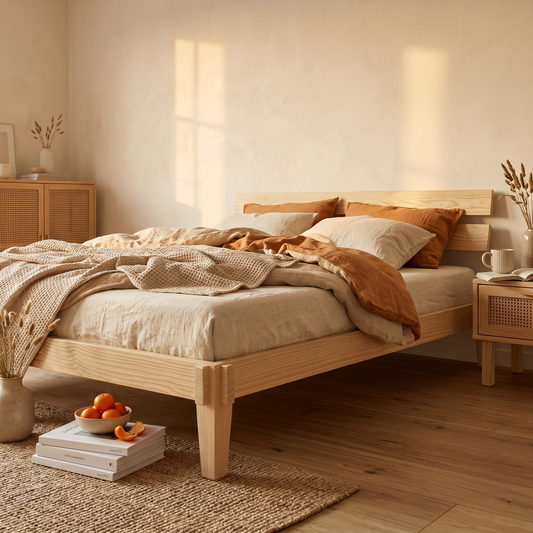
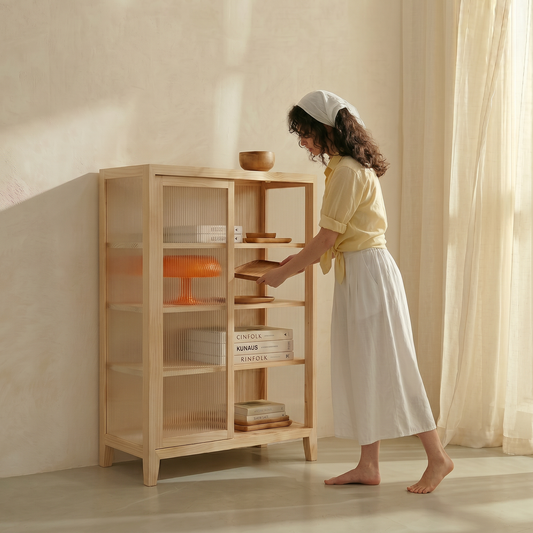
One of the best ways to build an intentional home is to begin with furniture that already carries presence through material, proportion, and usefulness. When furniture is chosen well, it reduces the need for excessive styling around it.
Natural wood is especially helpful here because it brings warmth and texture without needing visual complexity. A well made bench, console, cabinet, or bedside table can anchor a room quietly.
If you want to explore pieces that support this kind of calm and useful atmosphere, the furniture collection offers a thoughtful place to begin.
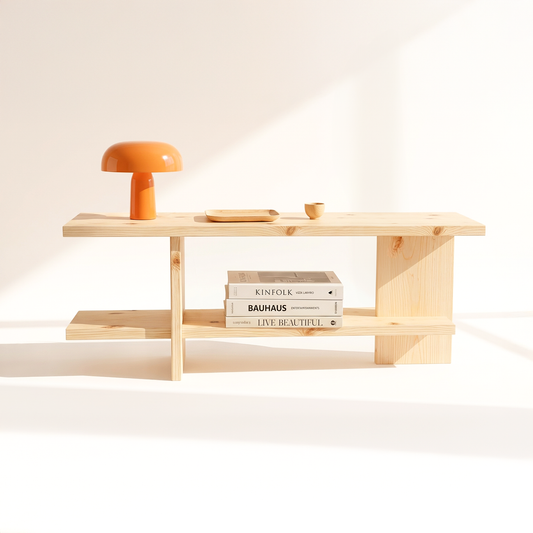
A piece like the Quiet Console Table is a strong example of furniture that feels complete through simplicity. It can hold daily essentials, support styling, and still leave the room feeling open.
Let useful objects lead
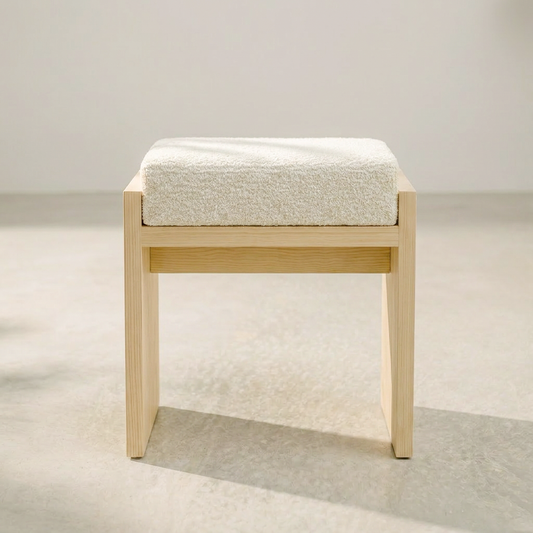
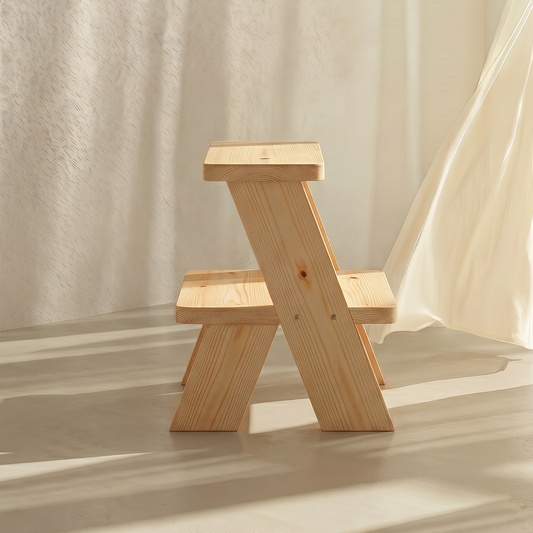
A home often feels more intentional when the visible objects are there for a reason. Functional decor creates this effect naturally. A tray for keys, a stool used daily, a tissue holder on the table, a bench near the entrance. These pieces support life while also contributing to the mood of the room.
When useful objects are chosen with care, they reduce the need for decorative fillers. The room begins to feel more honest and more connected to real living.
Leave some space unfilled
One of the clearest signs of an intentional home is the presence of breathing space. Not every wall needs art. Not every shelf needs objects. Not every table needs a full arrangement.
Open space is not emptiness. It is what allows the chosen pieces to feel more meaningful. It also helps the room feel calmer and easier to move through.
This is especially important in smaller homes where visual clutter builds quickly.
Edit by feeling, not only by category
When deciding what to keep visible, it helps to ask not only what the object is, but what it does to the room.
Ask:
- Does this support daily life
- Does this add warmth or only take up space
- Does this belong here
- Would the room feel calmer without it
- Is this object meaningful or just filling a gap
These questions help create a home that feels intentional from the inside, not just styled from the outside.
Final thoughts
A home that feels intentional is built through clarity, not excess. It comes from choosing furniture with care, letting useful objects lead, and allowing some space to remain open. The result is not a home with less personality. It is a home where personality feels more grounded and more believable.
When each object has a reason to be there, the room begins to feel calmer, warmer, and more complete. And often, that quiet sense of completeness is what makes a home truly beautiful.
FAQ
How do I make my home feel intentional?
Choose fewer better pieces, let useful objects stay visible, and avoid filling every surface or corner with decor.
Choose fewer better pieces, let useful objects stay visible, and avoid filling every surface or corner with decor.
What makes a home feel overdecorated?
Too many visible objects, excessive styling, and a lack of open space can make a home feel overdecorated.
Too many visible objects, excessive styling, and a lack of open space can make a home feel overdecorated.
Can a home be warm without a lot of decor?
Yes. Warmth often comes more from natural materials, thoughtful furniture, and useful objects than from quantity of decor.
Yes. Warmth often comes more from natural materials, thoughtful furniture, and useful objects than from quantity of decor.
Should every surface in a home be styled?
No. Leaving some surfaces open helps the room feel calmer and makes the chosen objects feel more meaningful.
No. Leaving some surfaces open helps the room feel calmer and makes the chosen objects feel more meaningful.